Clostera apicalis
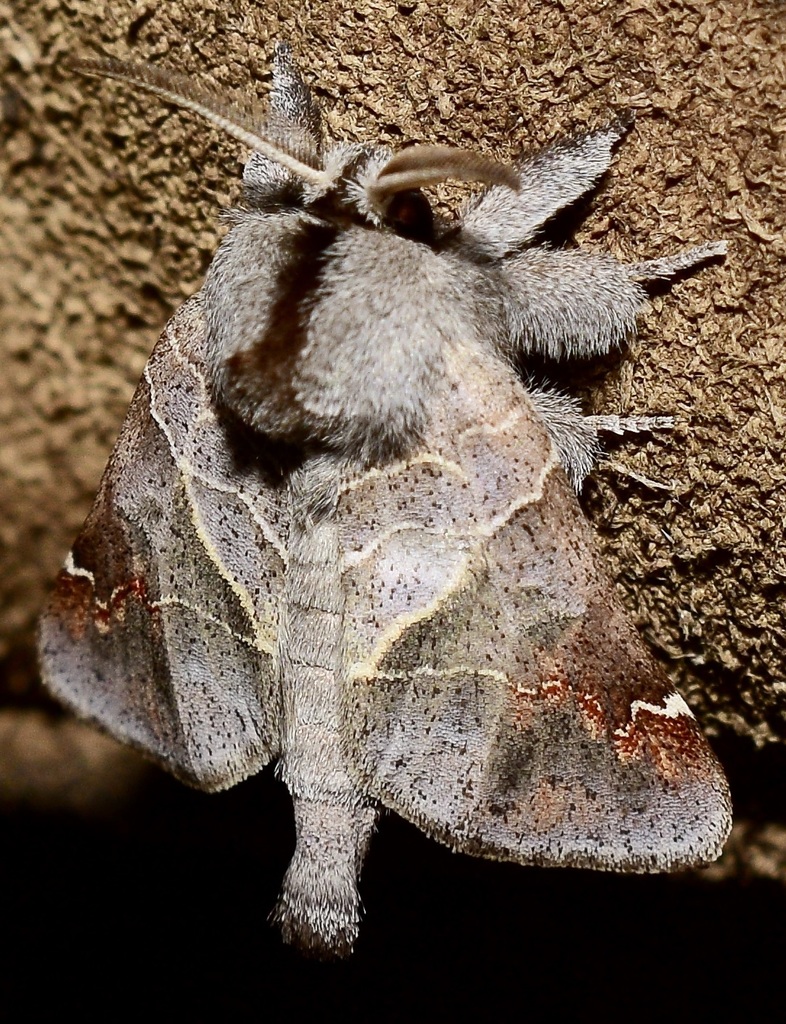
(c) Bernie Paquette, some rights reserved (CC BY) · licence
Family: Notodontidae · Class: Insecta · Order: Lepidoptera
Clostera apicalis is a California animal in the Notodontidae family.
Clostera apicalis is a moth in the family Notodontidae, commonly known as the prominent moths. This species belongs to the order Lepidoptera and represents one of the less well-documented members of its genus in North America. Adult moths typically measure 25 to 35 mm in wingspan, displaying the characteristic robust body structure common to notodontids. The forewings are generally brownish-gray with subtle darker markings, while the hindwings are lighter in coloration. The species exhibits sexual dimorphism, with males possessing more feathery antennae compared to females, a trait typical of many moth species for detecting female pheromones during mating. The range of Clostera apicalis in North America extends across portions of the western United States, though specific distribution records are limited in the literature. Based on available collection data, the species has been documented in California, where it appears to have a restricted range compared to other Clostera species. The moth's presence in California represents the southwestern extent of its known distribution, though comprehensive surveys may reveal additional populations. Clostera apicalis inhabits mixed deciduous and coniferous forests, particularly areas with suitable host plants from the Salicaceae family. The species shows a preference for riparian corridors and woodland edges where willows and poplars are abundant. Elevation preferences appear to range from near sea level to moderate montane zones, though specific elevation limits require further documentation. The moth favors areas with sufficient moisture to support healthy populations of its larval host plants. The larval stage feeds primarily on species within the Salicaceae family, including various willows (Salix species) and poplars (Populus species). Caterpillars are gregarious in early instars, often feeding in groups before dispersing as they mature. The larvae are characterized by their ability to raise their anterior and posterior ends when disturbed, a defensive behavior common among notodontid caterpillars. Adults are nocturnal and attracted to artificial lights, with flight periods typically occurring during late spring and early summer months. The species is presumed to be univoltine, producing one generation per year, though this requires confirmation through detailed life cycle studies. The conservation status of Clostera apicalis remains poorly defined due to limited survey data and taxonomic uncertainties within the genus. The species is not currently listed under federal or state endangered species legislation, and no formal conservation assessments have been conducted. Population trends are unknown, though habitat modification and loss of riparian woodland areas could potentially impact local populations. Climate change effects on host plant distribution may also influence the species' long-term viability. The moth's apparent rarity in collections suggests either naturally low population densities or insufficient survey effort in appropriate habitats. Additional research is needed to establish baseline population data, clarify distribution patterns, and assess potential conservation needs for this species in California and throughout its range.
Classification
Class: Insecta · Order: Lepidoptera · Family: Notodontidae
Frequently asked questions
How is Clostera apicalis classified?
Clostera apicalis belongs to class Insecta, order Lepidoptera, family Notodontidae.
What family does Clostera apicalis belong to?
Clostera apicalis is in the Notodontidae family.
What is Clostera apicalis?
Clostera apicalis is a moth in the family Notodontidae, commonly known as the prominent moths.
Is Clostera apicalis found in California?
Yes. Clostera apicalis is recorded in California in The California Species Project's catalogue.
Related species
Other California species in the same genus, family, or bioregion.
Data from The California Species Project — 14,000+ California species with verified data from CNPS, CDFW, USFWS, and more.