Closterotomus norwegicus
Potato Mirid
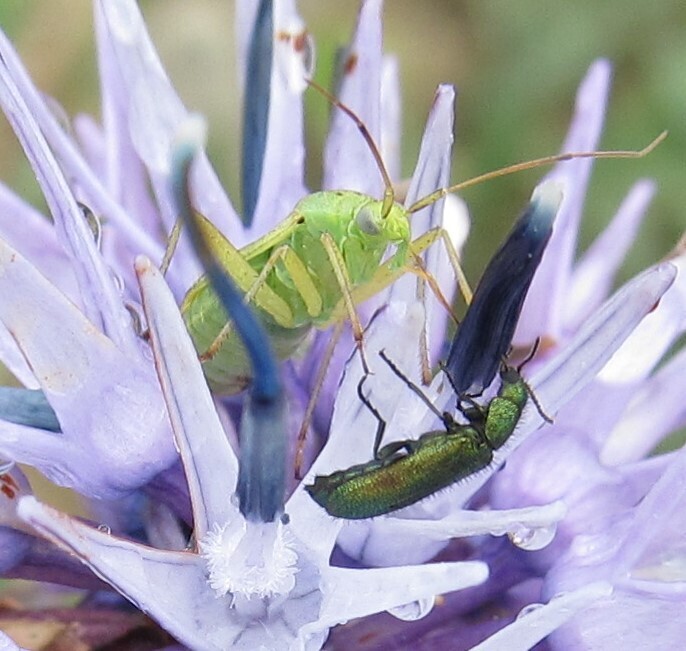
(c) zebedeugalinha, some rights reserved (CC BY) · licence
Family: Miridae · Class: Insecta · Order: Hemiptera
Closterotomus norwegicus (Potato Mirid) is a California animal in the Miridae family.
The Potato Mirid (Closterotomus norwegicus) is a small plant bug in the family Miridae, measuring approximately 7-8 mm in length. Adults display a greenish coloration with dense, fine hairs covering the body surface. The species belongs to the subfamily Mirinae and tribe Mirini, characterized by elongated antennae where the second antennal segment is approximately equal to the combined length of the third and fourth segments. The hind tibiae bear short spines that are shorter than the tibia width (BugGuide.Net). Native to the western Palearctic region, Closterotomus norwegicus has become established as an adventive species across eastern and western North America. The earliest North American record dates to Quebec in 1886 (BugGuide.Net). In California, the species has been documented in San Mateo County, where observations include multiple individuals found on flowering plants in open space preserves (BugGuide.Net). The species' current distribution extends throughout much of North America following its initial introduction. Potato Mirids inhabit meadows, hedgerows, and weedy fields where they feed on various herbaceous plants. The species demonstrates a preference for areas with abundant flowering vegetation and can be found in both agricultural and natural landscapes. In California, specimens have been observed in open grassland habitats with diverse wildflower communities during summer months (BugGuide.Net). Adults are present from May through October in their native European range, with peak activity during summer months. The species exhibits polyphagous feeding habits, utilizing multiple host plant species. In New Zealand, Potato Mirids feed on alfalfa, white clover, and lotus seed crops, while also utilizing nettle, poppy, thistle, and other members of the Asteraceae family (BugGuide.Net). In California, the species has gained recognition as a key agricultural pest of pistachio crops, where feeding damage can significantly impact yield and nut quality (BugGuide.Net). As an introduced species, Closterotomus norwegicus is not protected under federal or state endangered species legislation. The Potato Mirid's successful establishment across North America demonstrates its adaptability to diverse climatic conditions and host plant availability. While not considered a conservation concern, the species represents an example of successful biological invasion, having spread from its initial Quebec introduction point to establish populations across the continent. In agricultural systems, particularly pistachio cultivation in California, the species requires monitoring and management to prevent economic damage. The Potato Mirid's broad host plant range and extended activity period contribute to its persistence in both natural and managed landscapes, making it a permanent component of North American mirid fauna.
Classification
Class: Insecta · Order: Hemiptera · Family: Miridae
Frequently asked questions
How is Closterotomus norwegicus classified?
Closterotomus norwegicus belongs to class Insecta, order Hemiptera, family Miridae.
What family does Closterotomus norwegicus belong to?
Closterotomus norwegicus is in the Miridae family.
What is Closterotomus norwegicus?
The Potato Mirid (Closterotomus norwegicus) is a small plant bug in the family Miridae, measuring approximately 7-8 mm in length.
Is Closterotomus norwegicus found in California?
Yes. Closterotomus norwegicus is recorded in California in The California Species Project's catalogue.
Related species
Other California species in the same genus, family, or bioregion.
Data from The California Species Project — 14,000+ California species with verified data from CNPS, CDFW, USFWS, and more.