Clupea pallasi
Pacific herring
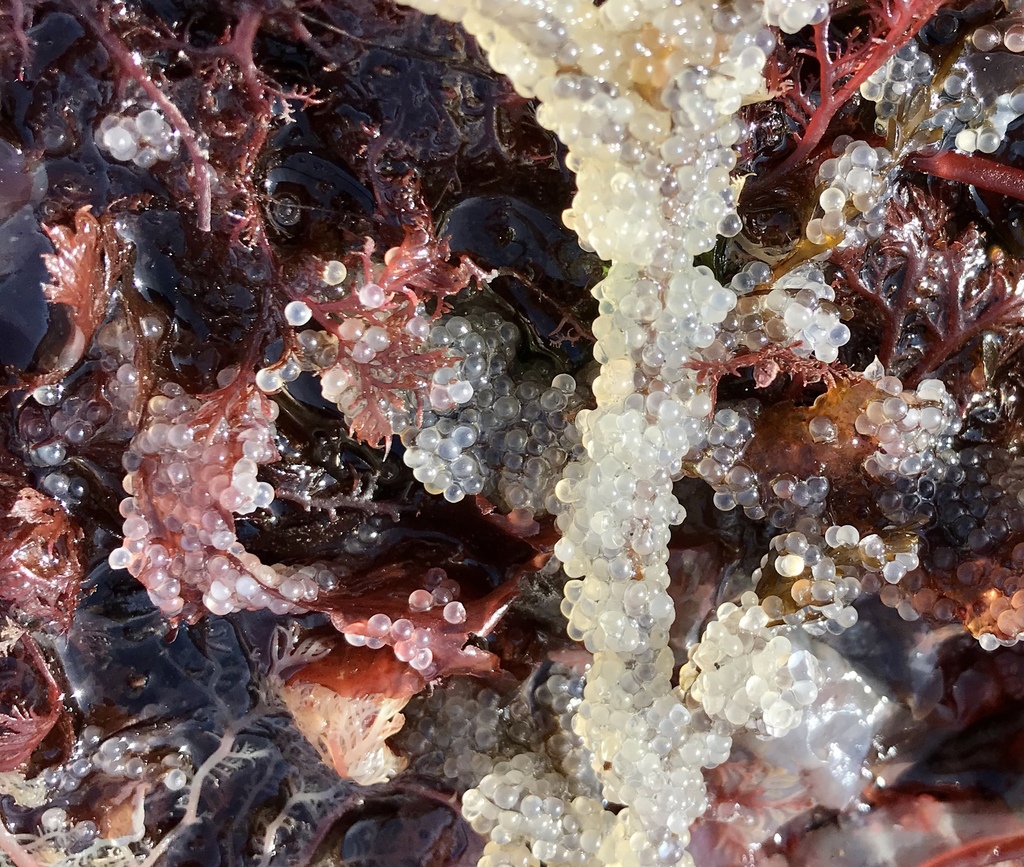
(c) rlacroix, some rights reserved (CC BY) · licence
Family: Clupeidae · Class: Actinopterygii · Order: Clupeiformes
Clupea pallasi (Pacific herring) is a California animal in the Clupeidae family.
The Pacific herring is a small, schooling marine fish belonging to the family Clupeidae. Adults typically measure 200 to 380 mm (7.9 to 15.0 inches) in total length and weigh 200 to 700 grams (0.4 to 1.5 pounds). The body is laterally compressed and elongated, with a silvery appearance and blue-green to olive-green coloration on the dorsal surface. The belly is bright silver, and the fins are generally clear to dusky. A distinctive row of scutes (sharp, bony plates) runs along the ventral edge of the body. Pacific herring possess a single dorsal fin positioned near the middle of the back and deeply forked caudal fin. Pacific herring range along the North Pacific coast from Korea and Japan to Baja California, Mexico. In California waters, populations occur from the Oregon border south to Point Conception, with the largest concentrations in San Francisco Bay, Tomales Bay, and Humboldt Bay. Historically, substantial populations existed in southern California bays, but these have largely disappeared since the 1960s. The species inhabits nearshore marine waters, estuaries, and bays, typically at depths ranging from surface waters to 200 meters (656 feet). Adult herring prefer waters with temperatures between 4 and 15 degrees Celsius (39 to 59 degrees Fahrenheit) and salinities of 30 to 35 parts per thousand. Spawning occurs in shallow intertidal and subtidal zones on eelgrass beds, kelp, pilings, and rocky substrates where eggs can adhere to vegetation and hard surfaces. Pacific herring are planktivorous filter feeders, consuming copepods, euphausiids, larval fish, and other small zooplankton. They exhibit diel vertical migration patterns, feeding near the surface at night and moving to deeper waters during daylight hours. The species forms large, dense schools that can number in the millions of individuals. Spawning occurs from December through April, with peak activity varying by location. Females broadcast 10,000 to 40,000 adhesive eggs in shallow water, where males simultaneously release sperm to fertilize them externally. Eggs incubate for 10 to 14 days depending on water temperature. Pacific herring are not federally or state listed as threatened or endangered species. However, California populations have experienced significant declines since the mid-20th century. According to the California Department of Fish and Wildlife, commercial landings dropped from over 9,000 metric tons in the 1970s to fewer than 1,000 metric tons in recent decades. Primary threats include habitat loss from coastal development, water quality degradation, overfishing, climate change effects on ocean temperatures and prey availability, and predation pressure from marine mammals and seabirds. The species supports important commercial and recreational fisheries, particularly the roe fishery in San Francisco Bay, which remains the largest Pacific herring fishery on the U.S. West Coast.
Classification
Class: Actinopterygii · Order: Clupeiformes · Family: Clupeidae
Frequently asked questions
How is Clupea pallasi classified?
Clupea pallasi belongs to class Actinopterygii, order Clupeiformes, family Clupeidae.
What family does Clupea pallasi belong to?
Clupea pallasi is in the Clupeidae family.
What is Clupea pallasi?
The Pacific herring is a small, schooling marine fish belonging to the family Clupeidae.
Is Clupea pallasi found in California?
Yes. Clupea pallasi is recorded in California in The California Species Project's catalogue.
Related species
Other California species in the same genus, family, or bioregion.
Data from The California Species Project — 14,000+ California species with verified data from CNPS, CDFW, USFWS, and more.