Clytus planifrons
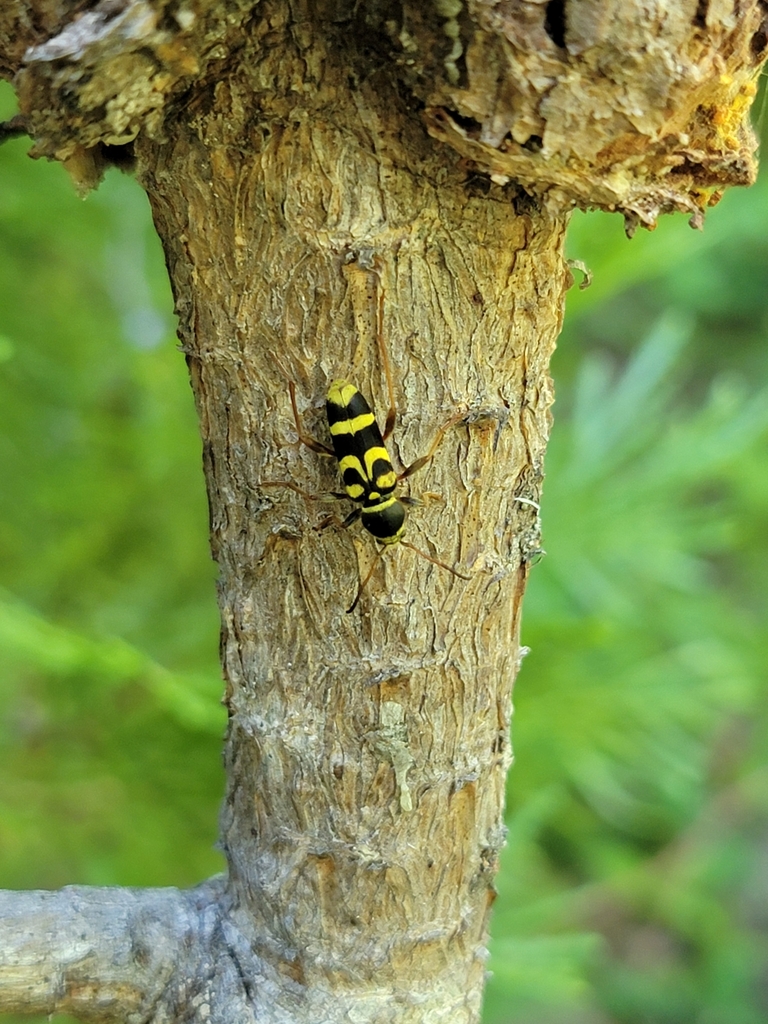
(c) Colin J Pryor, some rights reserved (CC BY) · licence
Family: Cerambycidae · Class: Insecta · Order: Coleoptera
Clytus planifrons is a California animal in the Cerambycidae family.
Clytus planifrons is a longhorn beetle in the family Cerambycidae, subfamily Cerambycinae, tribe Clytini. This species is part of a large family of wood-boring beetles characterized by their elongated antennae and wood-dependent larval development. Like other members of the genus Clytus, adults are typically medium-sized beetles with distinctive body patterns, though specific morphological details for C. planifrons have not been comprehensively documented in accessible literature. The distribution of Clytus planifrons appears to be restricted to western North America, with documented occurrences in California. The species is included in USFWS taxonomic databases, indicating its recognition within the federal system for tracking native fauna. However, specific county-level distribution data and detailed range maps for this species remain limited in published sources. The beetle likely occurs in areas with suitable host tree species, following the typical distribution patterns of related Clytus species in the region. Habitat requirements for C. planifrons are not well-documented in current literature. As a member of the Cerambycidae, the species almost certainly depends on woody plant hosts for larval development. Adult beetles typically emerge from dead or dying wood where larvae have completed development. The specific host tree preferences, elevation range, and microhabitat requirements for this species have not been thoroughly studied or published in accessible scientific literature. Ecological information for Clytus planifrons is extremely limited. Cerambycid beetles generally follow a predictable life cycle where adults mate and females deposit eggs in bark crevices or directly into wood. Larvae develop by boring through wood tissue, creating galleries as they feed. Development time varies significantly among cerambycid species, ranging from one to several years depending on host plant characteristics and environmental conditions. Adult activity periods, mating behaviors, and specific dietary preferences for C. planifrons have not been documented in available sources. Clytus planifrons currently has no federal or state conservation listing status, indicating it is not considered immediately threatened with extinction. The species appears in USFWS taxonomic databases but lacks detailed conservation assessments. Population trends, primary threats, and conservation needs remain undocumented. As with many beetle species, potential threats could include habitat loss through forest management practices, urban development, or climate change impacts on host plant distributions. Scientific documentation for this species remains extremely limited despite thorough literature review. The information presented here synthesizes available data from USFWS taxonomic records and general knowledge of cerambycid beetle ecology (Hovore & Giesbert 1976). We welcome contributions of verified scientific data, photographs, field observations, or taxonomic studies to enhance this species account. Researchers with additional information about C. planifrons biology, distribution, or ecology are encouraged to contact appropriate scientific databases to improve documentation of this western North American beetle species.
Classification
Class: Insecta · Order: Coleoptera · Family: Cerambycidae
Frequently asked questions
How is Clytus planifrons classified?
Clytus planifrons belongs to class Insecta, order Coleoptera, family Cerambycidae.
What family does Clytus planifrons belong to?
Clytus planifrons is in the Cerambycidae family.
What is Clytus planifrons?
Clytus planifrons is a longhorn beetle in the family Cerambycidae, subfamily Cerambycinae, tribe Clytini.
Is Clytus planifrons found in California?
Yes. Clytus planifrons is recorded in California in The California Species Project's catalogue.
Related species
Other California species in the same genus, family, or bioregion.
Data from The California Species Project — 14,000+ California species with verified data from CNPS, CDFW, USFWS, and more.