Coccinella californica
California Lady Beetle
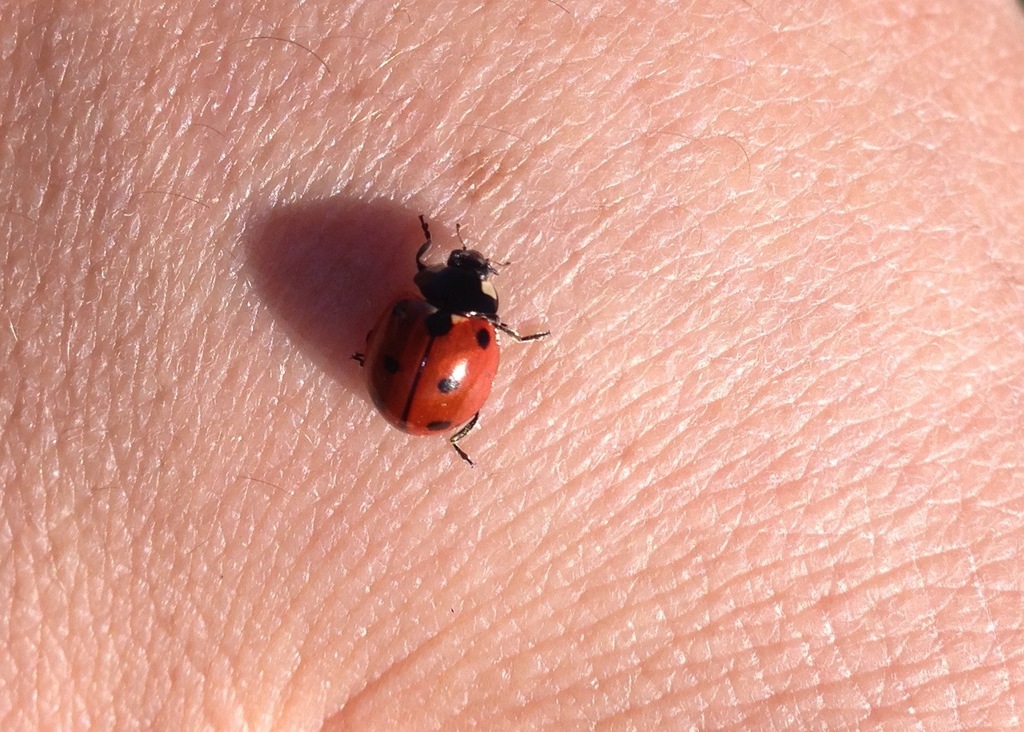
(c) Adam J. Searcy, some rights reserved (CC BY) · licence
Family: Coccinellidae · Class: Insecta · Order: Coleoptera
Coccinella californica (California Lady Beetle) is a California animal in the Coccinellidae family.
The California lady beetle is a native coccinellid species measuring approximately 4-7 mm in length. Adults display the typical convex, hemispherical body shape characteristic of lady beetles. The elytra are typically orange to red with variable black spotting patterns, though some individuals may exhibit darker forms. The pronotum is black with white or pale markings along the anterior margin. Like other Coccinella species, this beetle has a narrow black elytral suture running down the center of the back where the wing covers meet (BugGuide). Coccinella californica is endemic to California and occurs throughout much of the state, from coastal regions to inland valleys and foothill areas. The species has been documented in various counties including those in the Central Valley, San Francisco Bay Area, and Southern California regions. Its distribution appears to overlap with areas where agricultural and natural habitats intersect, suggesting adaptation to both modified and native ecosystems. This species inhabits diverse habitats including agricultural fields, gardens, coastal scrub, grasslands, and riparian areas. California lady beetles are commonly found on vegetation where aphid populations are present, as these soft-bodied insects constitute their primary prey. The beetles are active during warmer months and seek overwintering sites in leaf litter, under bark, or in other protected locations during colder periods. As predaceous beetles, California lady beetles are important biological control agents that feed primarily on aphids, scale insects, and other small soft-bodied arthropods. Adults and larvae both consume these pest species, making them valuable allies in agricultural systems. Females lay clusters of yellow, oval eggs on plant surfaces, typically near aphid colonies to ensure food availability for emerging larvae. The larvae are elongate, spiny, and alligator-like in appearance, molting through four instars before pupating. Development from egg to adult typically takes 3-4 weeks under favorable conditions, with multiple generations possible per year in suitable climates. Unlike some native coccinellid species that have experienced dramatic population declines, Coccinella californica appears to maintain stable populations throughout its range. However, native lady beetle communities in general face challenges from habitat loss, pesticide use, and competition from introduced species. The widespread establishment of non-native coccinellids like the seven-spotted lady beetle (Coccinella septempunctata) has altered predator communities in many California ecosystems (Gordon 1985). Agricultural intensification and urbanization continue to modify habitats where native beneficial insects occur, potentially affecting population dynamics and distribution patterns. The species receives no special conservation status but represents an important component of California's native beneficial insect fauna. Conservation of California lady beetles benefits from integrated pest management practices that reduce pesticide applications, maintenance of diverse plant communities that support prey populations, and preservation of overwintering habitat. As native biological control agents, these beetles provide ecosystem services that support both agricultural productivity and natural ecosystem function throughout their California range.
Classification
Class: Insecta · Order: Coleoptera · Family: Coccinellidae
Frequently asked questions
How is Coccinella californica classified?
Coccinella californica belongs to class Insecta, order Coleoptera, family Coccinellidae.
What family does Coccinella californica belong to?
Coccinella californica is in the Coccinellidae family.
What is Coccinella californica?
The California lady beetle is a native coccinellid species measuring approximately 4-7 mm in length.
Is Coccinella californica found in California?
Yes. Coccinella californica is recorded in California in The California Species Project's catalogue.
Related species
Other California species in the same genus, family, or bioregion.
Data from The California Species Project — 14,000+ California species with verified data from CNPS, CDFW, USFWS, and more.