Coccinella difficilis
Satellite Lady Beetle
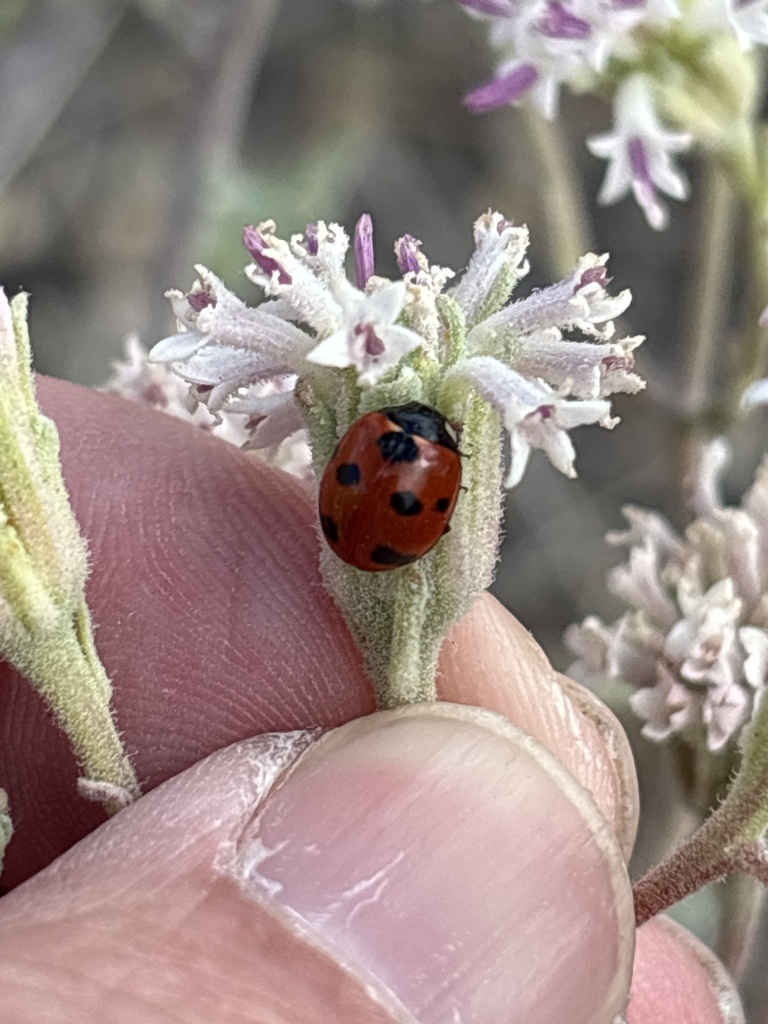
(c) Sam Kieschnick, some rights reserved (CC BY) · licence
Family: Coccinellidae · Class: Insecta · Order: Coleoptera
Coccinella difficilis (Satellite Lady Beetle) is a California animal in the Coccinellidae family.
The Satellite Lady Beetle (Coccinella difficilis) is a small predatory beetle belonging to the family Coccinellidae. Adults typically measure 4-6 mm in length with the characteristic dome-shaped body profile common to lady beetles. The species displays variable coloration patterns, with elytra ranging from yellow-orange to red, often marked with black spots that may vary in number and size between individuals. The pronotum is typically black with pale margins, and the head is yellow to orange with dark markings. Coccinella difficilis occurs across much of North America, with documented populations extending from southern Canada through the United States. The species' range includes both eastern and western regions, though distribution patterns and local abundance vary considerably across this broad geographic area. In California, the species has been recorded from various locations, though specific county-level distribution data remains incompletely documented. This beetle inhabits diverse terrestrial environments including grasslands, agricultural areas, gardens, and forest edges. The species shows particular affinity for areas supporting abundant aphid populations, which serve as primary prey. Satellite Lady Beetles are typically found on herbaceous plants and shrubs where aphid colonies establish, including both native vegetation and cultivated crops. The species demonstrates considerable habitat flexibility, adapting to both natural and anthropogenic landscapes. As predatory insects, adult Satellite Lady Beetles feed primarily on soft-bodied insects, particularly aphids, though they also consume other small arthropods including scale insects, thrips, and mites. Larvae are similarly predaceous and may consume several dozen aphids during their development. Adults typically overwinter in protected sites such as under bark, in leaf litter, or beneath rocks and logs. Mating occurs in spring, with females depositing clusters of yellow eggs on vegetation near aphid colonies. Complete development from egg to adult requires approximately 3-6 weeks depending on temperature conditions. The species typically produces multiple generations per year in favorable climates. No federal or state conservation listing currently applies to Coccinella difficilis, and the species is not considered threatened or endangered. However, like many native lady beetle species, populations may face pressure from habitat modification and competition with introduced species such as the Seven-spotted Lady Beetle (Coccinella septempunctata), which was repeatedly introduced from Europe for biological control purposes (BugGuide). The widespread distribution and habitat adaptability of C. difficilis suggest relatively stable population status, though comprehensive population monitoring data is lacking. The species continues to play a beneficial ecological role as a natural predator of pest insects in both agricultural and natural systems across its range.
Classification
Class: Insecta · Order: Coleoptera · Family: Coccinellidae
Frequently asked questions
How is Coccinella difficilis classified?
Coccinella difficilis belongs to class Insecta, order Coleoptera, family Coccinellidae.
What family does Coccinella difficilis belong to?
Coccinella difficilis is in the Coccinellidae family.
What is Coccinella difficilis?
The Satellite Lady Beetle (Coccinella difficilis) is a small predatory beetle belonging to the family Coccinellidae.
Is Coccinella difficilis found in California?
Yes. Coccinella difficilis is recorded in California in The California Species Project's catalogue.
Related species
Other California species in the same genus, family, or bioregion.
Data from The California Species Project — 14,000+ California species with verified data from CNPS, CDFW, USFWS, and more.