Coccinella septempunctata
Seven-spotted Lady Beetle
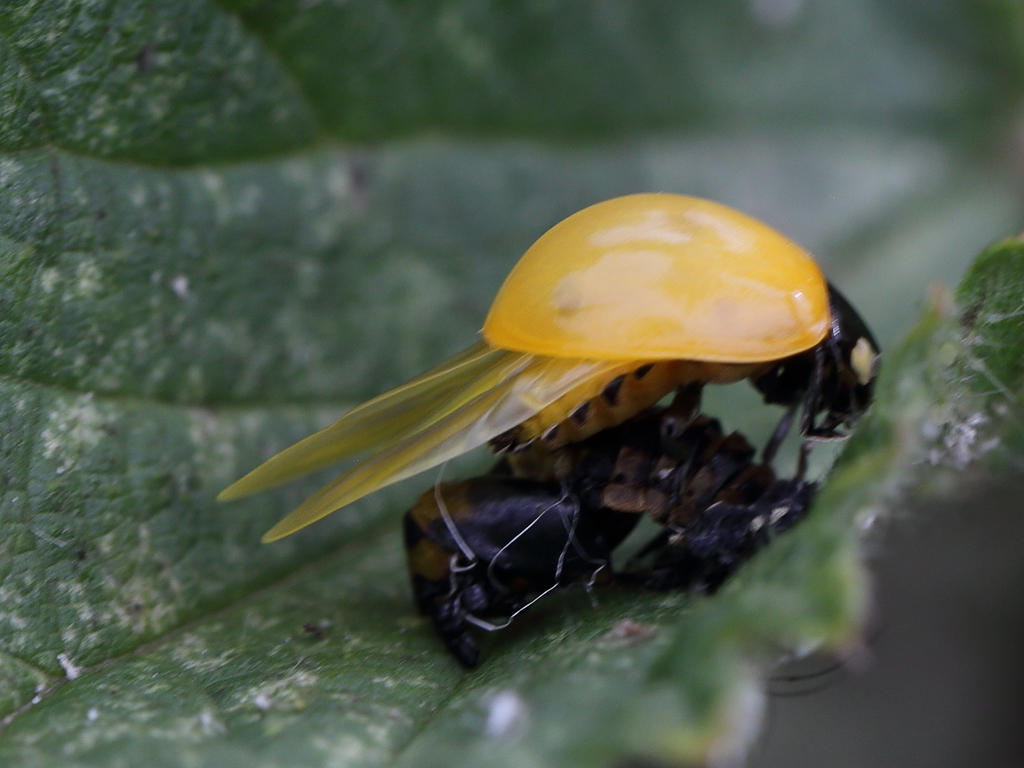
(c) Guido Bohne, some rights reserved (CC BY-SA) · licence
Family: Coccinellidae · Class: Insecta · Order: Coleoptera
Coccinella septempunctata (Seven-spotted Lady Beetle) is a California animal in the Coccinellidae family.
The seven-spotted lady beetle is a small, dome-shaped beetle measuring 6 to 8 mm (0.24 to 0.31 inches) in length. The species displays distinctive coloration with bright red or orange elytra (wing covers) marked by seven black spots - three spots on each wing cover and one additional spot straddling the suture between the elytra. The head and pronotum are black with white or yellowish markings. Adults have short, clubbed antennae and legs that can be retracted beneath the body when threatened. Native to Europe and Asia, Coccinella septempunctata was intentionally introduced to North America beginning in the 1950s as a biological control agent for aphids. The species is now established across most of the United States and southern Canada. In California, populations occur throughout the state from coastal areas to inland valleys and mountainous regions. The beetle has become one of the most widespread and common coccinellid species in North America. Seven-spotted lady beetles inhabit diverse environments including agricultural fields, gardens, meadows, parks, and forest edges. Adults are found on various plants where aphid colonies occur, including crop plants such as alfalfa, wheat, and vegetables, as well as native and ornamental vegetation. The species tolerates a wide range of elevations and climatic conditions, contributing to its successful establishment across varied California habitats. Adults and larvae are voracious predators of aphids, with a single individual capable of consuming 50 or more aphids per day. Adults also feed on other soft-bodied insects including scale insects, mites, and small caterpillars. Mating occurs in spring, and females deposit yellow, oval eggs in clusters of 10 to 50 on leaf undersides near aphid colonies. Larvae are elongated, dark-colored with orange markings, and undergo three molts before pupating. The species typically completes two to three generations per year in California. Adults overwinter in aggregations under rocks, logs, or leaf litter, often in hillside locations away from summer feeding areas. The seven-spotted lady beetle holds no federal or state conservation listing status, as it is a non-native species that has established stable populations throughout its introduced range. Rather than requiring protection, this species represents a successful biological control introduction. However, concerns have been raised about potential impacts on native coccinellid species through competition and intraguild predation. Research suggests that C. septempunctata may contribute to declines of some native lady beetle species, though the extent of this impact remains under investigation. The species' abundance and widespread distribution make it an important component of integrated pest management systems in agricultural settings, where it provides significant economic benefits through aphid suppression. Recent studies have documented the species' continued expansion and adaptation to new environments, indicating its establishment as a permanent component of North American ecosystems.
Classification
Class: Insecta · Order: Coleoptera · Family: Coccinellidae
Frequently asked questions
How is Coccinella septempunctata classified?
Coccinella septempunctata belongs to class Insecta, order Coleoptera, family Coccinellidae.
What family does Coccinella septempunctata belong to?
Coccinella septempunctata is in the Coccinellidae family.
What is Coccinella septempunctata?
The seven-spotted lady beetle is a small, dome-shaped beetle measuring 6 to 8 mm (0.24 to 0.31 inches) in length.
Is Coccinella septempunctata found in California?
Yes. Coccinella septempunctata is recorded in California in The California Species Project's catalogue.
Related species
Other California species in the same genus, family, or bioregion.
Data from The California Species Project — 14,000+ California species with verified data from CNPS, CDFW, USFWS, and more.