Coccyzus americanus
Yellow-billed Cuckoo
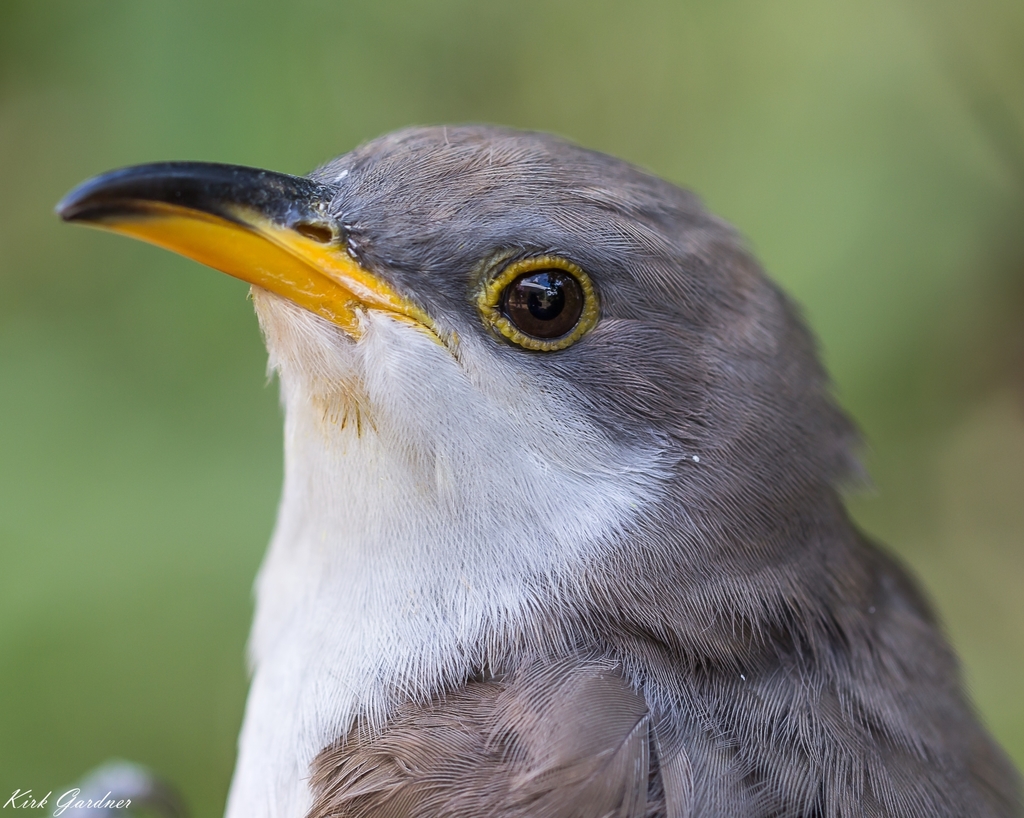
(c) kirk gardner, some rights reserved (CC BY) · licence
Family: Cuculidae · Class: Aves · Order: Cuculiformes
Conservation status: Threatened
Coccyzus americanus (Yellow-billed Cuckoo) is a California animal in the Cuculidae family.
The Yellow-billed Cuckoo is a medium-sized songbird measuring 28 to 32 cm (11 to 12.6 inches) in length with a wingspan of 38 to 46 cm (15 to 18 inches). Adults weigh between 55 to 65 grams. The species displays a distinctive yellow lower mandible contrasting with a dark upper mandible. The upperparts are grayish-brown while the underparts are white. The long, graduated tail features prominent white spots on the undersides of the outer feathers, creating a distinctive pattern visible in flight. Males and females appear similar, though males average slightly larger. Historically, Yellow-billed Cuckoos bred throughout much of North America, but the western population has experienced severe range contraction. The Western Distinct Population Segment, listed as federally threatened, occurs in western states including Arizona, California, Colorado, Idaho, Montana, New Mexico, Nevada, Oregon, Texas, Utah, Washington, and Wyoming. In California, the species now breeds primarily along the Colorado River and in isolated locations in the Sacramento and Kern River valleys. Small populations persist in riparian corridors of the South Fork Kern River and scattered locations in the Central Valley. The species also ranges into southwestern Canada and northwestern Mexico, including Baja California, Sonora, and other western Mexican states. Yellow-billed Cuckoos require large patches of riparian forest with dense canopy cover and diverse vertical structure. Essential habitat components include cottonwood, willow, and other native deciduous trees near water sources. The species typically nests in areas with at least 25 hectares of continuous riparian habitat, though larger patches of 100 hectares or more support higher breeding success. Elevation ranges from sea level to approximately 1,200 meters, with most breeding occurring below 600 meters in valleys and floodplains. The species is insectivorous, specializing in tent caterpillars, cicadas, and other large insects. Adults consume significant quantities of hairy caterpillars that other bird species avoid. Yellow-billed Cuckoos are late-season breeders, typically nesting from June through August. Females construct platform nests 1 to 4 meters above ground in dense foliage. Clutches contain 2 to 4 pale blue-green eggs. The incubation period lasts 9 to 11 days, and nestlings fledge after 7 to 9 days. The species is highly secretive, more often heard than seen, producing a distinctive wooden knocking call. The Western DPS was listed as threatened under the Endangered Species Act in 2014 due to severe population decline and habitat loss. According to USFWS, the western population has declined by more than 90 percent since the early 1900s, with fewer than 1,000 breeding pairs remaining. Primary threats include riparian habitat destruction, water diversions, invasive plant species, and agricultural conversion. Climate change poses additional challenges through altered precipitation patterns and increased drought frequency. Recovery efforts focus on habitat restoration, water management coordination, and monitoring of existing populations across the species' reduced western range.
Classification
Class: Aves · Order: Cuculiformes · Family: Cuculidae
Conservation status
Threatened
Frequently asked questions
How is Coccyzus americanus classified?
Coccyzus americanus belongs to class Aves, order Cuculiformes, family Cuculidae.
What family does Coccyzus americanus belong to?
Coccyzus americanus is in the Cuculidae family.
Is Coccyzus americanus protected or of conservation concern?
Coccyzus americanus carries the following status: Threatened.
What is Coccyzus americanus?
The Yellow-billed Cuckoo is a medium-sized songbird measuring 28 to 32 cm (11 to 12.6 inches) in length with a wingspan of 38 to 46 cm (15 to 18 inches).
Is Coccyzus americanus found in California?
Yes. Coccyzus americanus is recorded in California in The California Species Project's catalogue.
Related species
Other California species in the same genus, family, or bioregion.
Data from The California Species Project — 14,000+ California species with verified data from CNPS, CDFW, USFWS, and more.