Coccyzus americanus occidentalis
Western yellow- billed cuckoo
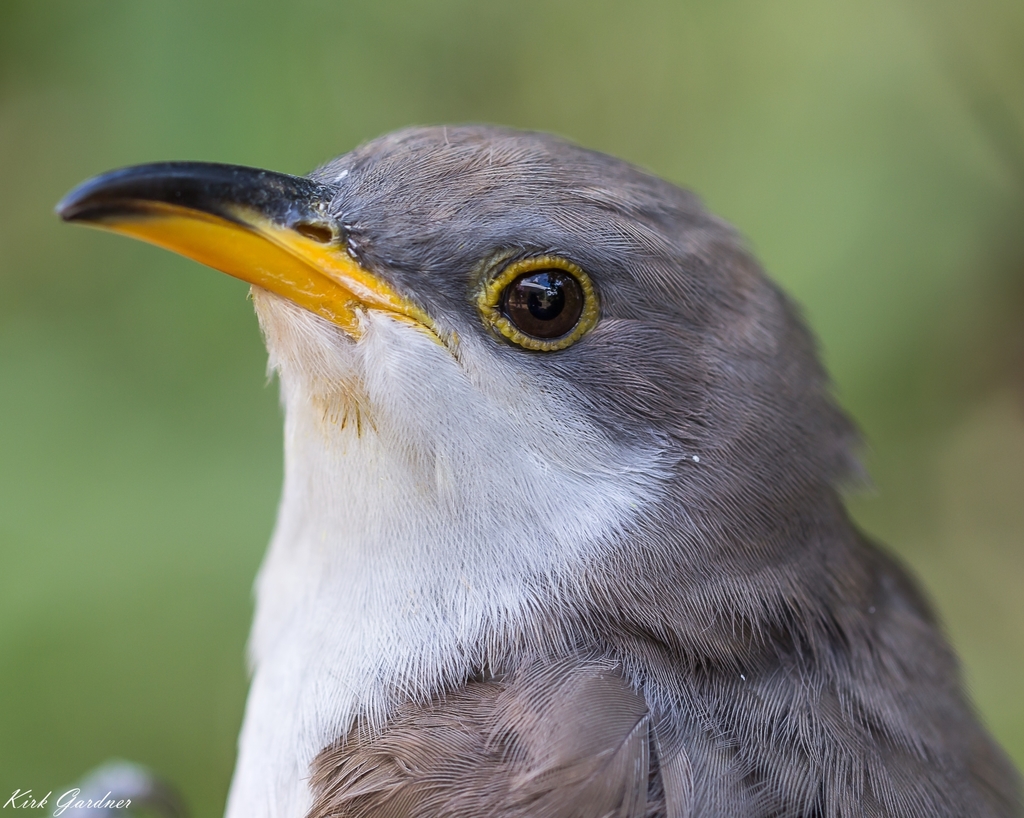
(c) kirk gardner, some rights reserved (CC BY) · licence
Family: Cuculidae · Class: Aves · Order: Cuculiformes
Conservation status: SE ST · Threatened · G5T2T3 S1
Coccyzus americanus occidentalis (Western yellow- billed cuckoo) is a California animal in the Cuculidae family.
The western yellow-billed cuckoo (Coccyzus americanus occidentalis) is a subspecies of the yellow-billed cuckoo and represents the western distinct population segment of this Neotropical migrant bird. Adults measure approximately 28-32 centimeters (11-12.6 inches) in length with a wingspan of 43-48 centimeters (17-19 inches). The species displays a slender, elongated body with a fairly stout, slightly down-curved yellow bill marked with a black upper mandible tip. The upperparts are grayish-brown while the underparts are white. The long tail is distinctively marked with large white spots on black undertail feathers, creating bold white patches visible during flight. Wings show rufous patches in flight, distinguishing this species from the black-billed cuckoo. Historically, western yellow-billed cuckoos bred throughout riparian areas of the western United States, from southern British Columbia through California, Nevada, Arizona, New Mexico, Colorado, Utah, Wyoming, and portions of Texas. The species has experienced dramatic range contraction and no longer breeds in western Canada or the northwestern continental United States, including Washington, Oregon, and Montana (USFWS 2014). In California, the species was once distributed from San Diego County north to Sonoma County and throughout the Central Valley from Kern County to Shasta County. Current breeding populations are severely restricted, with approximately 40-50 territories remaining within California as of 2019. Western yellow-billed cuckoos are riparian obligates requiring low to moderate elevation riparian woodlands with native broadleaf trees and shrubs. Breeding habitat must be at least 20 hectares (50 acres) in extent within arid to semiarid landscapes. The species is most commonly associated with cottonwood-willow dominated vegetation, though riparian composition varies across its range. In California, cuckoos are most likely found in willow-cottonwood riparian habitat patches greater than 80 hectares (200 acres). They rarely use smaller patches under 20 hectares, particularly when isolated from other riparian areas. The species avoids narrow linear habitats less than 10-20 meters (33-66 feet) wide for nesting, though individuals may use such areas during migration. Western yellow-billed cuckoos are late spring migrants, wintering in South America east of the Andes, primarily south of the Amazon Basin. In Arizona and California, individuals occasionally arrive in mid to late May, but most do not arrive until mid-June. The species exhibits opportunistic feeding behavior, consuming large insects including caterpillars, cicadas, and grasshoppers. Breeding occurs from late June through August, with females laying 2-4 pale blue-green eggs in loosely constructed platform nests placed in dense foliage 1-4 meters above ground. Incubation lasts 9-11 days, with nestlings fledging after 7-9 days. The western distinct population segment was federally listed as threatened on October 3, 2014, due to extensive habitat loss from water diversions, agricultural conversion, and urban development. Primary threats include alteration of natural hydrological processes, invasive plant species, livestock grazing, and climate change. Critical habitat was designated in 2013, encompassing 34,330 acres in the Sacramento River Unit and 2,377 acres in the South Fork Kern River Valley Unit. The species is also listed as endangered under California law. Recovery efforts focus on habitat restoration, water management improvements, and invasive species control within remaining riparian corridors.
Classification
Class: Aves · Order: Cuculiformes · Family: Cuculidae
Conservation status
SE ST · Threatened · G5T2T3 S1
Frequently asked questions
How is Coccyzus americanus occidentalis classified?
Coccyzus americanus occidentalis belongs to class Aves, order Cuculiformes, family Cuculidae.
What family does Coccyzus americanus occidentalis belong to?
Coccyzus americanus occidentalis is in the Cuculidae family.
Is Coccyzus americanus occidentalis protected or of conservation concern?
Coccyzus americanus occidentalis carries the following status: SE ST · Threatened · G5T2T3 S1.
What is Coccyzus americanus occidentalis?
The western yellow-billed cuckoo (Coccyzus americanus occidentalis) is a subspecies of the yellow-billed cuckoo and represents the western distinct population segment of this Neotropical migrant bird.
Is Coccyzus americanus occidentalis found in California?
Yes. Coccyzus americanus occidentalis is recorded in California in The California Species Project's catalogue.
Related species
Other California species in the same genus, family, or bioregion.
Data from The California Species Project — 14,000+ California species with verified data from CNPS, CDFW, USFWS, and more.