Coccyzus erythropthalmus
Black-billed Cuckoo
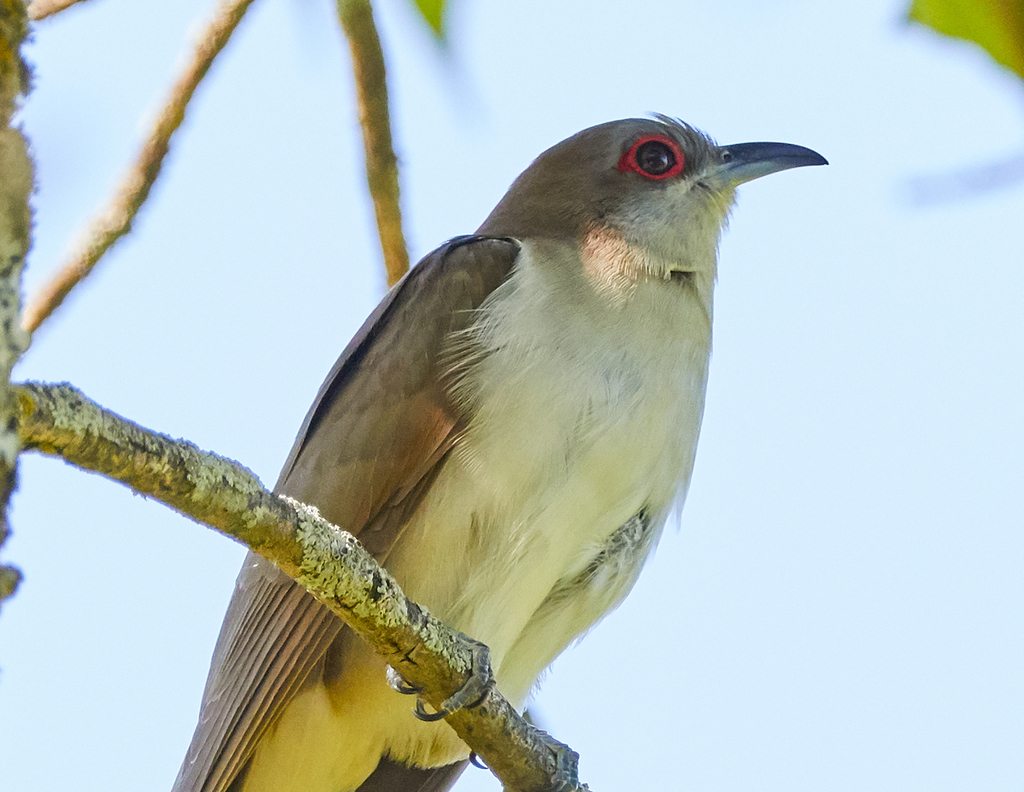
no rights reserved · CC0
Family: Cuculidae · Class: Aves · Order: Cuculiformes
Coccyzus erythropthalmus (Black-billed Cuckoo) is a California animal in the Cuculidae family.
The Black-billed Cuckoo is a slender, medium-sized bird measuring 28-32 cm (11-12.6 inches) in length with a wingspan of 43-46 cm (17-18 inches). Adults weigh 43-55 grams. The species exhibits subtle but distinctive plumage, with brown upperparts and white underparts. The bill is entirely black, distinguishing it from the similar Yellow-billed Cuckoo, and the tail is long with prominent white spots on the undersides of the outer tail feathers. Adults display a distinctive red eye-ring during breeding season. The species shows minimal sexual dimorphism, though males may be slightly larger than females. The Black-billed Cuckoo breeds across much of eastern and central North America, from southeastern Canada south to the central United States. In California, the species is considered a rare migrant and vagrant, with most records occurring during spring and fall migration periods. Documented sightings in California are scattered across the state but are most frequent in desert oases and riparian areas along the Colorado River and in the Central Valley. The species winters primarily in South America, from Colombia and Venezuela south to northern Argentina. During migration through California, Black-billed Cuckoos utilize dense riparian woodlands, willow thickets, and desert oases with substantial tree cover. In their primary breeding range, they prefer deciduous and mixed forests, particularly areas with dense understory vegetation. The species shows a strong association with caterpillar outbreaks, which influences local distribution patterns. They typically occupy elevations from sea level to 1,500 meters, though in California they are most often recorded at lower elevations near water sources. Black-billed Cuckoos are primarily insectivorous, specializing in caterpillars including tent caterpillars and gypsy moth larvae that other birds typically avoid. They also consume beetles, grasshoppers, cicadas, and occasionally small fruits. The species is known for its secretive behavior and is more often heard than seen. Their call consists of a series of rapid "cu-cu-cu" notes, typically given in groups of two to five. Breeding occurs from May through August in their primary range, with females laying 2-4 blue-green eggs in a loose platform nest constructed of twigs and lined with rootlets and leaves. Incubation lasts 10-11 days, and young fledge after 7-9 days in the nest. The Black-billed Cuckoo is not federally listed but faces population pressures throughout its range. According to the North American Breeding Bird Survey, populations have declined by approximately 1.9% annually since 1966, representing a cumulative decline of over 60%. Primary threats include habitat loss due to forest fragmentation, agricultural intensification, and pesticide use that reduces insect prey availability. Climate change may also affect the species through altered timing of caterpillar emergence and changes in forest composition. In California, the species remains a rare visitor with no established breeding population, making conservation efforts focused primarily on maintaining high-quality stopover habitat during migration periods.
Classification
Class: Aves · Order: Cuculiformes · Family: Cuculidae
Frequently asked questions
How is Coccyzus erythropthalmus classified?
Coccyzus erythropthalmus belongs to class Aves, order Cuculiformes, family Cuculidae.
What family does Coccyzus erythropthalmus belong to?
Coccyzus erythropthalmus is in the Cuculidae family.
What is Coccyzus erythropthalmus?
The Black-billed Cuckoo is a slender, medium-sized bird measuring 28-32 cm (11-12.6 inches) in length with a wingspan of 43-46 cm (17-18 inches).
Is Coccyzus erythropthalmus found in California?
Yes. Coccyzus erythropthalmus is recorded in California in The California Species Project's catalogue.
Related species
Other California species in the same genus, family, or bioregion.
Data from The California Species Project — 14,000+ California species with verified data from CNPS, CDFW, USFWS, and more.