Cocytius antaeus
Giant sphinx
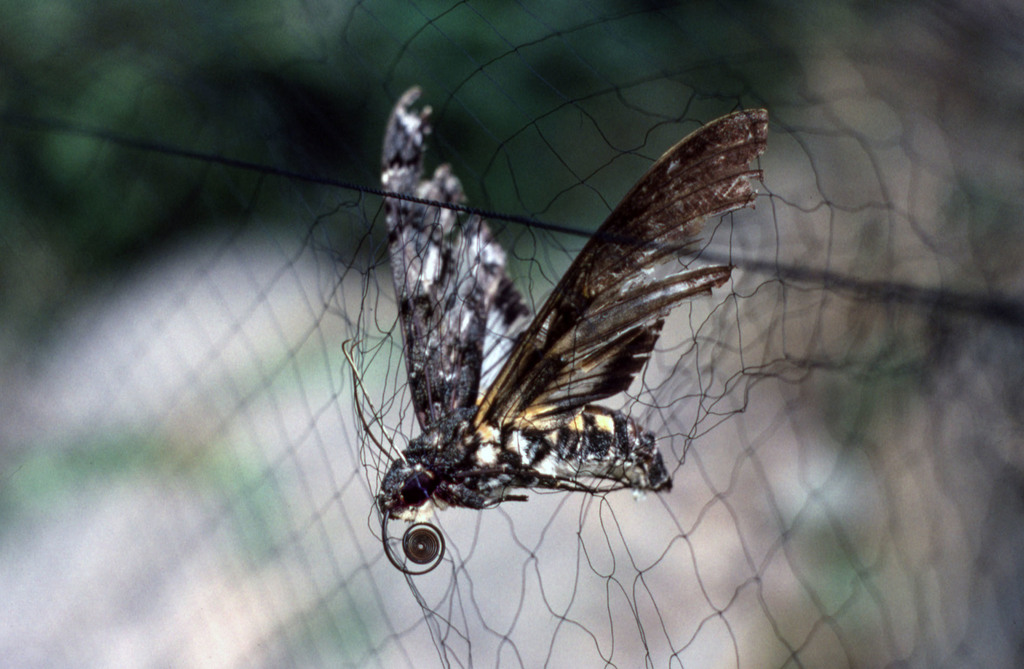
(c) Kristof Zyskowski, some rights reserved (CC BY) · licence
Family: Sphingidae · Class: Insecta · Order: Lepidoptera
Cocytius antaeus (Giant sphinx) is a California animal in the Sphingidae family.
The giant sphinx (Cocytius antaeus) is one of North America's largest sphinx moths, with adults reaching wingspans of up to 140 mm (5.5 inches). The forewings are typically gray-brown with darker banding and white spotting, while the hindwings display orange-red coloration with black borders. The robust body is marked with alternating dark and light bands, and the species can be distinguished from other large sphingids by its size and distinctive wing patterns. This species has a broad neotropical distribution, resident in Florida and tropical America south to Brazil and Peru. It occurs rarely in South Texas and occasionally strays as far north as Chicago, representing one of the most wide-ranging sphinx moths in the Americas. In the United States, the species is primarily established in southern Florida, with vagrant individuals documented northward along the Atlantic coast. Giant sphinx moths inhabit tropical and subtropical forests, woodland edges, and urban areas with suitable host plants. In Florida, they are associated with various habitats from coastal hammocks to inland forests. The species shows a preference for areas with Rubiaceae family plants, which serve as primary larval hosts. Adults are attracted to artificial lights and may be encountered in suburban settings. Adults are nocturnal and possess extremely long proboscises, enabling them to feed on nectar from deep, tubular flowers. The species plays a crucial ecological role as a pollinator of the ghost orchid (Dendrophylax lindenii) in south Florida. According to the U.S. Fish and Wildlife Service, only about 10% of ghost orchids that bloom each year are pollinated, and Cocytius antaeus is believed to be the primary pollinator of this rare epiphytic orchid (USFWS 2015). Larvae, known as hornworms, feed on various plants in the madder family (Rubiaceae) and can reach lengths of 120 mm (4.7 inches). The species is multivoltine in tropical regions, with continuous breeding throughout the year where climate permits. The giant sphinx is not federally listed and appears to maintain stable populations throughout its core tropical range. However, climate change and habitat loss in Florida may affect northern populations. The species' role as the suspected primary pollinator of the endangered ghost orchid makes its conservation indirectly important for orchid recovery efforts. In Florida, habitat preservation in the Everglades and Big Cypress ecosystems benefits both the moth and the orchids it pollinates. Urban development and pesticide use in suburban areas may impact local populations, though the species' broad host range and mobility provide some resilience against localized threats.
Classification
Class: Insecta · Order: Lepidoptera · Family: Sphingidae
Frequently asked questions
How is Cocytius antaeus classified?
Cocytius antaeus belongs to class Insecta, order Lepidoptera, family Sphingidae.
What family does Cocytius antaeus belong to?
Cocytius antaeus is in the Sphingidae family.
What is Cocytius antaeus?
The giant sphinx (Cocytius antaeus) is one of North America's largest sphinx moths, with adults reaching wingspans of up to 140 mm (5.5 inches).
Is Cocytius antaeus found in California?
Yes. Cocytius antaeus is recorded in California in The California Species Project's catalogue.
Related species
Other California species in the same genus, family, or bioregion.
Data from The California Species Project — 14,000+ California species with verified data from CNPS, CDFW, USFWS, and more.