Coelioxys rufitarsis
Red-footed Cuckoo Leafcutter
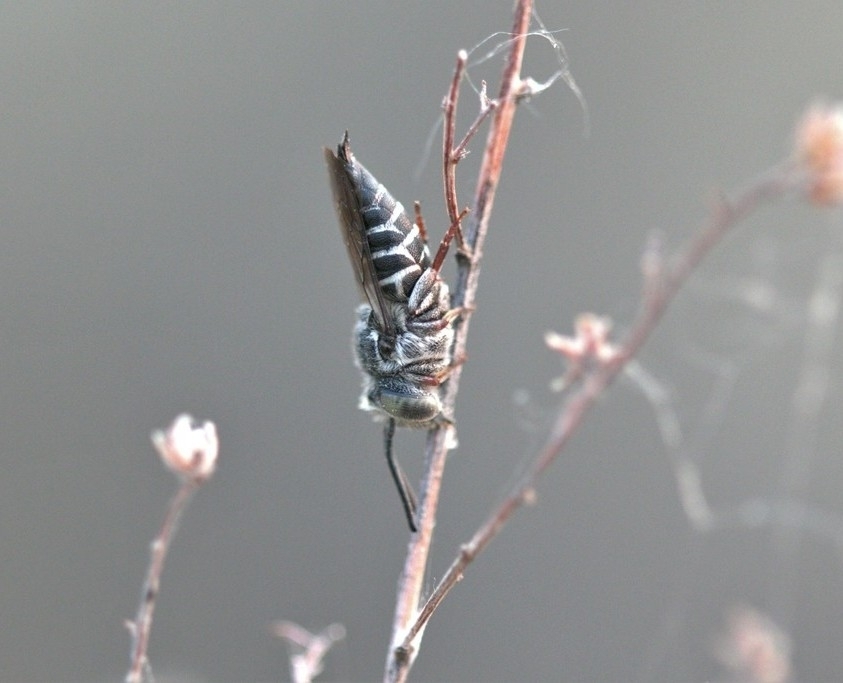
no rights reserved · CC0
Family: Megachilidae · Class: Insecta · Order: Hymenoptera
Coelioxys rufitarsis (Red-footed Cuckoo Leafcutter) is a California animal in the Megachilidae family.
The Red-footed Cuckoo Leafcutter (Coelioxys rufitarsis) is a parasitic bee species in the family Megachilidae. This cuckoo bee exhibits the typical sharp-tailed morphology characteristic of the genus Coelioxys, with females possessing a distinctly pointed abdominal tip used for penetrating host nests. The species is distinguished by its reddish tarsi (feet), which give it its common name. Like other members of the genus, females lack pollen-collecting structures since they do not provision their own nests. Coelioxys rufitarsis occurs across North America, with documented presence in multiple states. The species has been recorded visiting native thistle species including Cirsium altissimum, C. horridulum, C. neomexicanum, and C. undulatum (Xerces Society 2018). In California, the species is found within suitable habitat ranges where its host bees occur. This cuckoo bee inhabits areas where its leafcutter bee hosts are active, typically in open habitats with abundant flowering plants. The species shows a preference for areas with native thistle populations, which serve as nectar sources for both the cuckoo bee and its hosts. Habitat requirements are closely tied to those of its host species, primarily other members of the Megachilidae family. As a cleptoparasitic species, Coelioxys rufitarsis does not construct its own nests or collect pollen. Instead, females locate the nests of leafcutter bees and other megachilid species, then lay their eggs within the host's brood cells. The cuckoo bee larvae consume the pollen provisions intended for the host larvae, often resulting in the death of the host's offspring. Adults visit flowers for nectar, with documented foraging on various native thistle species (Xerces Society 2018). Like most solitary bees, this species likely has relatively small foraging ranges, though individuals may disperse considerably farther than their typical foraging distance (NatureServe 2025). Currently, Coelioxys rufitarsis does not appear on federal or state endangered species lists. The species is tracked in the U.S. Fish and Wildlife Service taxonomic database as of December 2025, indicating ongoing monitoring of its status. As a parasitic species dependent on healthy populations of host bees, the Red-footed Cuckoo Leafcutter faces indirect threats from factors affecting native bee communities, including habitat loss, pesticide use, and the decline of native plant communities that support both host species and adult nectar sources. Conservation of native thistle populations and protection of nesting sites for leafcutter bees would benefit this species. The maintenance of diverse native plant communities and reduction of pesticide applications in agricultural and natural areas are important for supporting the complex host-parasite relationships that sustain cuckoo bee populations.
Classification
Class: Insecta · Order: Hymenoptera · Family: Megachilidae
Frequently asked questions
How is Coelioxys rufitarsis classified?
Coelioxys rufitarsis belongs to class Insecta, order Hymenoptera, family Megachilidae.
What family does Coelioxys rufitarsis belong to?
Coelioxys rufitarsis is in the Megachilidae family.
What is Coelioxys rufitarsis?
The Red-footed Cuckoo Leafcutter (Coelioxys rufitarsis) is a parasitic bee species in the family Megachilidae.
Is Coelioxys rufitarsis found in California?
Yes. Coelioxys rufitarsis is recorded in California in The California Species Project's catalogue.
Related species
Other California species in the same genus, family, or bioregion.
Data from The California Species Project — 14,000+ California species with verified data from CNPS, CDFW, USFWS, and more.