Coelus globosus
Globose Dune Beetle
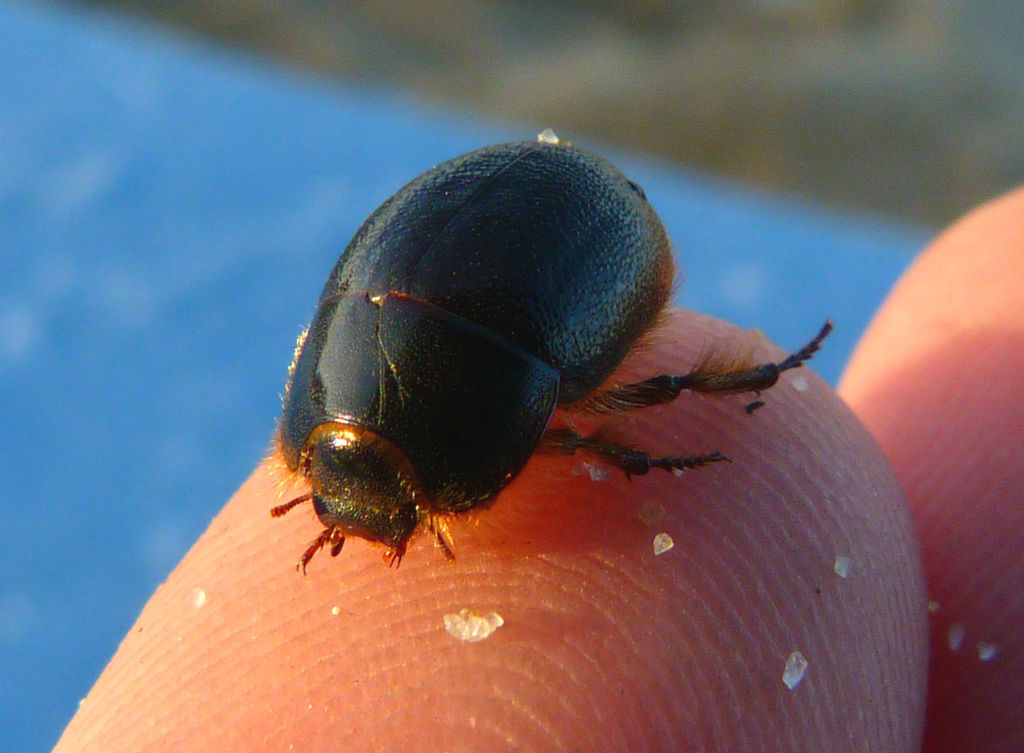
(c) Zack Abbey, some rights reserved (CC BY) · licence
Family: Tenebrionidae · Class: Insecta · Order: Coleoptera
Conservation status: G1G2 S1S2
Coelus globosus (Globose Dune Beetle) is a California animal in the Tenebrionidae family.
The globose dune beetle (Coelus globosus) is a small darkling beetle endemic to California's coastal dune systems. This species belongs to the subfamily Pimeliinae, tribe Coniontini, and was first described by LeConte in 1851. The beetle exhibits variable morphology across populations, with differences in size and punctation patterns, but can be distinguished from related species by its deeply emarginate epistoma and distinctive setation that extends only to the frontoclypeal suture (Doyen 1976). The globose dune beetle occurs exclusively along California's coastline, with populations documented in various coastal counties. The species has a limited distribution within the state's coastal zone, reflecting its specialized habitat requirements and adaptation to maritime environments. This species inhabits coastal dune ecosystems, specifically foredunes and sand hummocks. According to Doyen (1976), the globose dune beetle typically occurs within 50 meters of the ocean, demonstrating its close association with active coastal dune systems. The species appears to be restricted to these dynamic sandy habitats where it has evolved specialized adaptations for life in shifting sand substrates. The beetle's habitat preference for areas close to the shoreline makes it particularly vulnerable to coastal development and human disturbance. Specific details about the globose dune beetle's behavior, diet, and life cycle remain poorly documented in the scientific literature. Like other members of the darkling beetle family Tenebrionidae, this species likely feeds on decomposing organic matter, plant material, or fungal resources within its dune habitat. The timing of reproduction, larval development, and seasonal activity patterns have not been well studied, representing significant knowledge gaps for this specialized coastal species. The globose dune beetle has a global conservation rank of G1G2, indicating it is critically imperiled to imperiled globally, and a state rank of S1S2, reflecting similar conservation concern within California. The species is listed as a Species of Concern by the U.S. Fish and Wildlife Service and appears on California Department of Fish and Wildlife's Special Animals List (CDFW 2016). The beetle's restricted distribution, specialized habitat requirements, and vulnerability to coastal development make it particularly susceptible to population decline. Coastal dune systems face ongoing threats from urban development, recreational activities, invasive plant species, and sea-level rise associated with climate change. The species' requirement for habitat within 50 meters of the ocean places populations at risk from both human development pressures and natural coastal processes. Conservation of remaining coastal dune habitats and restoration of degraded areas are essential for maintaining viable populations of this endemic California beetle. The limited scientific knowledge about this species' basic biology and ecology hampers effective conservation planning, highlighting the need for additional research to inform management strategies.
Classification
Class: Insecta · Order: Coleoptera · Family: Tenebrionidae
Conservation status
G1G2 S1S2
Frequently asked questions
How is Coelus globosus classified?
Coelus globosus belongs to class Insecta, order Coleoptera, family Tenebrionidae.
What family does Coelus globosus belong to?
Coelus globosus is in the Tenebrionidae family.
Is Coelus globosus protected or of conservation concern?
Coelus globosus carries the following status: G1G2 S1S2.
What is Coelus globosus?
The globose dune beetle (Coelus globosus) is a small darkling beetle endemic to California's coastal dune systems.
Is Coelus globosus found in California?
Yes. Coelus globosus is recorded in California in The California Species Project's catalogue.
Related species
Other California species in the same genus, family, or bioregion.
Data from The California Species Project — 14,000+ California species with verified data from CNPS, CDFW, USFWS, and more.