Coenonycha clementina
San Clemente Island Coenonycha Beetle
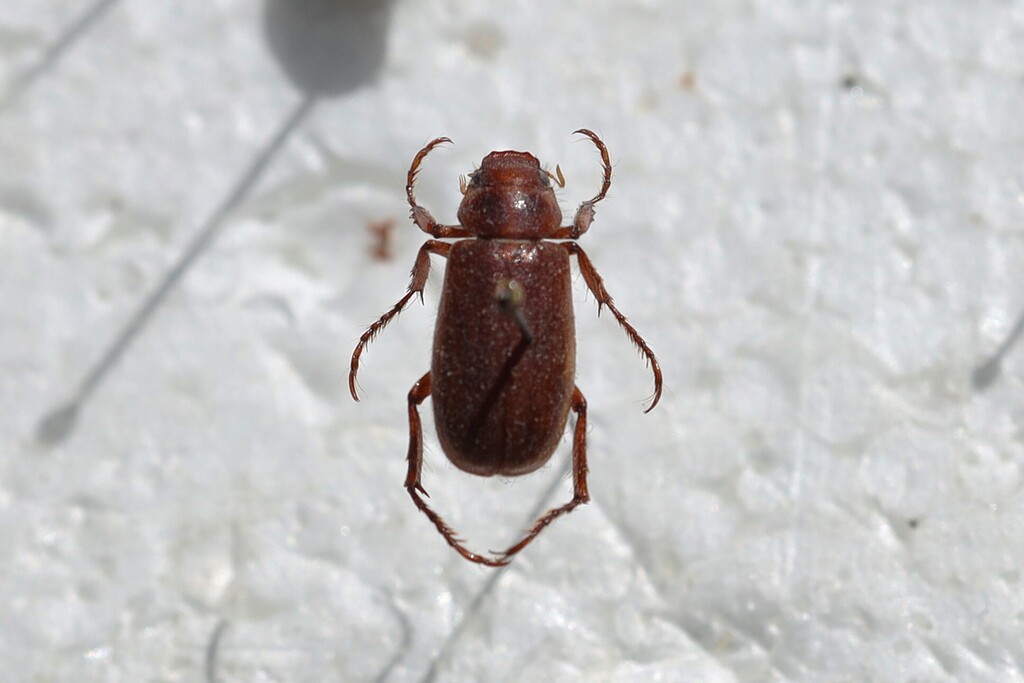
(c) nmoorhatch, some rights reserved (CC BY) · licence
Family: Scarabaeidae · Class: Insecta · Order: Coleoptera
Conservation status: G1G2 S1S2
Coenonycha clementina (San Clemente Island Coenonycha Beetle) is a California animal in the Scarabaeidae family.
The San Clemente Island coenonycha beetle (Coenonycha clementina) is a scarab beetle in the family Scarabaeidae, subfamily Melolonthinae, belonging to the tribe Dichelonychini. This beetle is endemic to San Clemente Island, located approximately 68 miles off the coast of Southern California. As a member of the genus Coenonycha, it shares morphological characteristics with other scarab beetles in this group, though specific physical descriptions of C. clementina remain poorly documented in the scientific literature. The species' range is restricted entirely to San Clemente Island, making it one of California's most geographically limited beetle species. This 147-square-kilometer island represents the beetle's entire known distribution, with no populations recorded from the mainland or other Channel Islands. The island's isolation has likely contributed to the beetle's evolution as a distinct endemic species. Habitat requirements for C. clementina have not been thoroughly documented, though the species presumably occupies terrestrial environments on San Clemente Island. The island features diverse habitats including coastal sage scrub, grasslands, and woodland areas, though the specific microhabitat preferences of this beetle remain unstudied. Elevation ranges and substrate preferences for the species are not well documented in available literature. Ecological information about the San Clemente Island coenonycha beetle is extremely limited. Most Coenonycha species are known to be root feeders during their larval stage, developing in soil and feeding on plant roots. Adult beetles in this genus typically emerge during specific seasonal periods, often associated with rainfall patterns. However, detailed studies of C. clementina's life cycle, feeding habits, reproductive behavior, and seasonal activity patterns have not been conducted or published. The conservation status of C. clementina reflects significant concern for its persistence. The species carries a Global/State Rank of G1G2 S1S2, indicating it is critically imperiled to imperiled both globally and within California. The U.S. Fish and Wildlife Service has designated it as a Species of Concern, and it appears on the eligible species list for Traditional Conservation Grants (USFWS). This status reflects the species' extremely limited range and potential vulnerability to habitat modification or loss. San Clemente Island's history of military use and introduced species may pose ongoing threats to endemic beetles like C. clementina. The island has experienced significant ecological changes due to grazing by introduced herbivores and habitat modification, though specific impacts on this beetle species have not been quantified. Recovery and management efforts for the island's endemic species have focused primarily on vegetation restoration and invasive species control. Scientific documentation for this species remains extremely limited despite its conservation concern status. The information presented here synthesizes available data from federal wildlife databases and taxonomic resources. Detailed ecological studies, population assessments, and threat analyses are urgently needed to inform conservation planning for this endemic island beetle.
Classification
Class: Insecta · Order: Coleoptera · Family: Scarabaeidae
Conservation status
G1G2 S1S2
Frequently asked questions
How is Coenonycha clementina classified?
Coenonycha clementina belongs to class Insecta, order Coleoptera, family Scarabaeidae.
What family does Coenonycha clementina belong to?
Coenonycha clementina is in the Scarabaeidae family.
Is Coenonycha clementina protected or of conservation concern?
Coenonycha clementina carries the following status: G1G2 S1S2.
What is Coenonycha clementina?
The San Clemente Island coenonycha beetle (Coenonycha clementina) is a scarab beetle in the family Scarabaeidae, subfamily Melolonthinae, belonging to the tribe Dichelonychini.
Is Coenonycha clementina found in California?
Yes. Coenonycha clementina is recorded in California in The California Species Project's catalogue.
Related species
Other California species in the same genus, family, or bioregion.
Data from The California Species Project — 14,000+ California species with verified data from CNPS, CDFW, USFWS, and more.