Coenonympha california
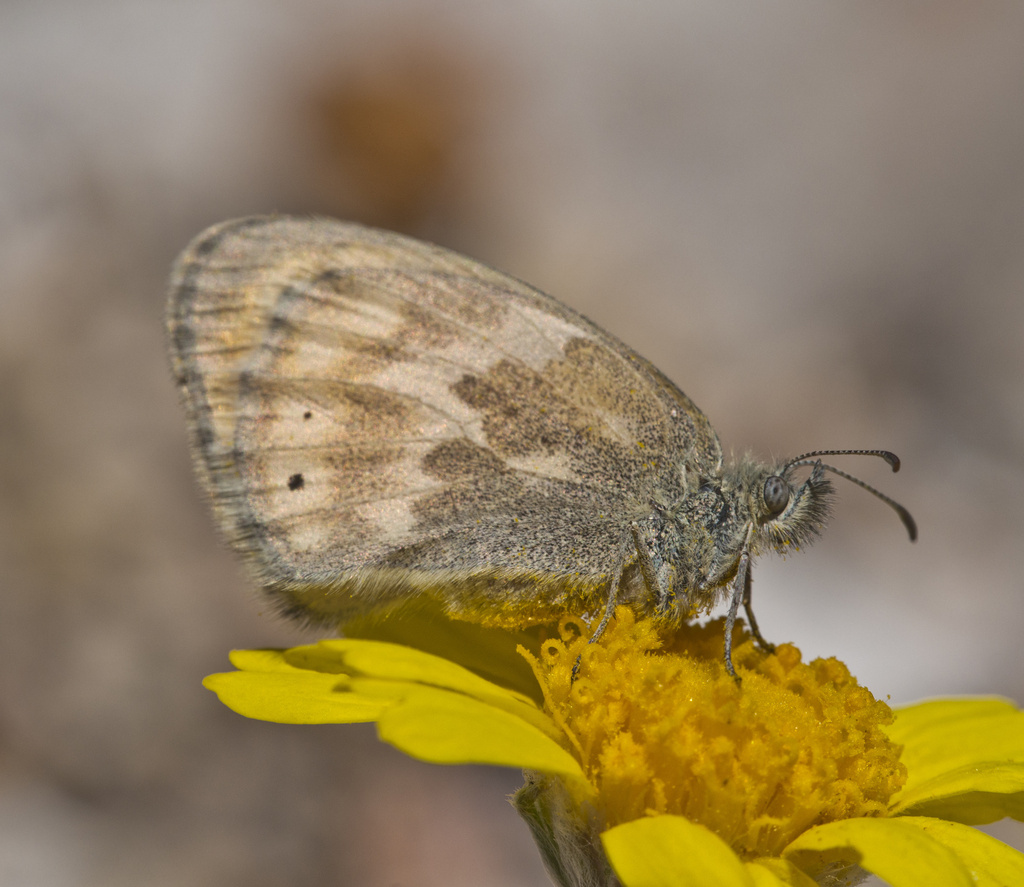
no rights reserved · CC0
Family: Nymphalidae · Class: Insecta · Order: Lepidoptera
Coenonympha california is a California animal in the Nymphalidae family.
The Common Ringlet (Coenonympha california) is a small butterfly in the family Nymphalidae, subfamily Satyrinae. Recent genetic studies have elevated this taxon from a subspecies of the European Coenonympha tullia to a distinct North American species (NatureServe 2024). The species exhibits considerable variation across its range through multiple recognized subspecies. Adults are small butterflies with wingspan typically measuring 25-35 mm. The forewings and hindwings display muted earth tones ranging from pale ochre to darker brown, with subtle eyespots on the undersides that give the group its "ringlet" common name. Males tend to be slightly smaller and more orange-brown, while females are generally larger with more subdued coloration. The underside wing patterns vary considerably among subspecies, with some displaying prominent eyespots and others showing reduced or absent ocelli. Coenonympha california ranges across much of North America, from Alaska south to southern California and east through Canada and the northern United States to the Atlantic coast from Newfoundland to Virginia (NatureServe 2024). In California, the species occurs in suitable habitat throughout much of the state, with different subspecies occupying distinct geographic regions and habitat types. The species inhabits a diverse array of grassland and meadow habitats where larval host grasses are present. These include mountain meadows, coastal prairies, serpentine grasslands, and both natural and disturbed grassland areas. Different subspecies show varying habitat preferences, with some restricted to specialized environments such as coastal dunes or high-elevation meadows. The species typically occurs from sea level to moderate elevations, though specific elevation ranges vary by subspecies and geographic location. Larvae feed exclusively on grasses (Poaceae), though specific host plant relationships may vary among subspecies and populations. Adults are typically single-brooded in most locations, with flight periods varying by latitude and elevation but generally occurring during summer months. Males establish territories and engage in patrolling behavior to locate females. Females deposit eggs singly on or near host grass plants. The species overwinters in the larval stage. The overall species is considered widespread and common across much of its range, with stable populations in many areas. According to NatureServe, the species is "abundant and reported to be increasing its range in eastern North America." However, conservation status varies significantly among subspecies. The Yontocket Ringlet (C. c. yontocket) is federally listed as endangered, restricted to coastal dune habitats in Del Norte County, California (USFWS 1990). This subspecies faces threats from habitat destruction, invasive plant species, and recreational activities in its limited coastal dune ecosystem. Other subspecies may face localized threats from habitat conversion, urban development, and changes in land management practices that affect grassland habitats, though most maintain stable populations across their ranges.
Classification
Class: Insecta · Order: Lepidoptera · Family: Nymphalidae
Frequently asked questions
How is Coenonympha california classified?
Coenonympha california belongs to class Insecta, order Lepidoptera, family Nymphalidae.
What family does Coenonympha california belong to?
Coenonympha california is in the Nymphalidae family.
What is Coenonympha california?
The Common Ringlet (Coenonympha california) is a small butterfly in the family Nymphalidae, subfamily Satyrinae.
Is Coenonympha california found in California?
Yes. Coenonympha california is recorded in California in The California Species Project's catalogue.
Related species
Other California species in the same genus, family, or bioregion.
Data from The California Species Project — 14,000+ California species with verified data from CNPS, CDFW, USFWS, and more.