Colias alexandra
Queen Alexandra's Sulphur
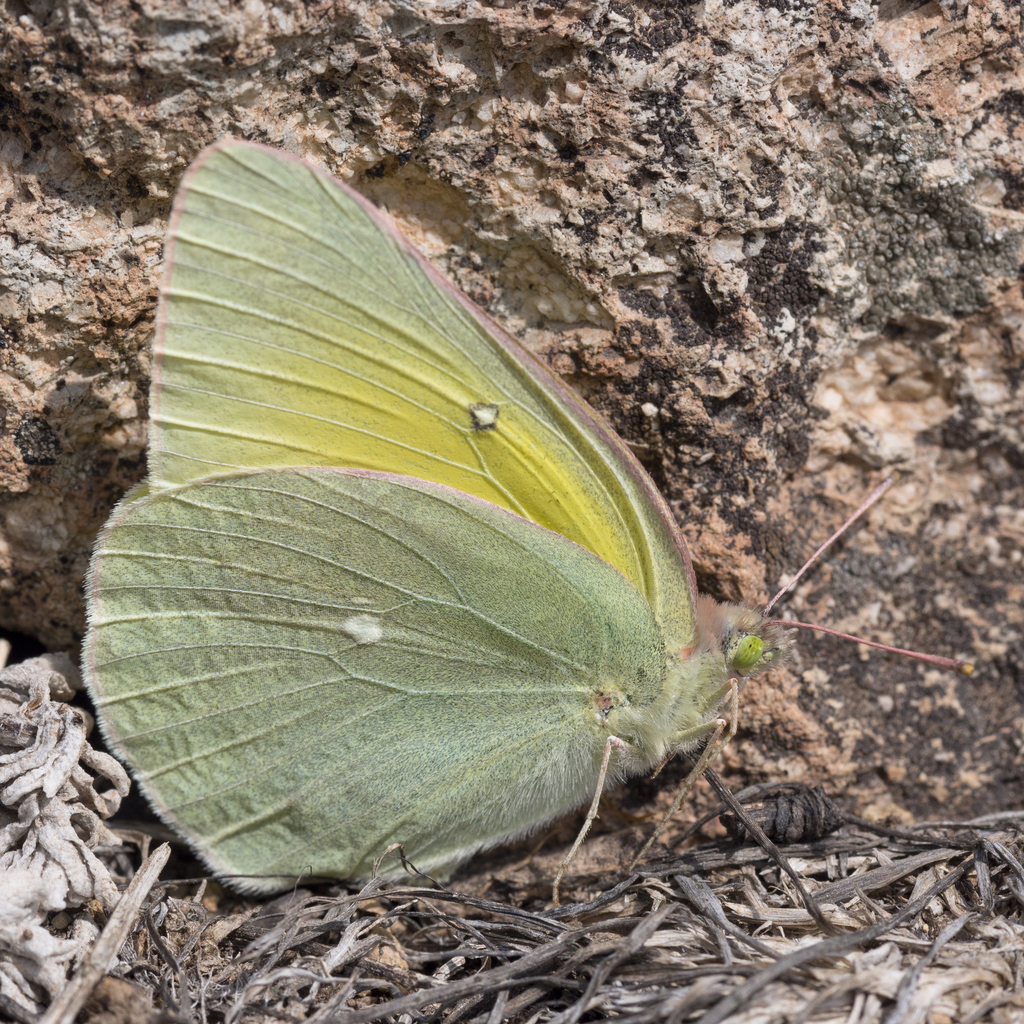
no rights reserved · CC0
Family: Pieridae · Class: Insecta · Order: Lepidoptera
Colias alexandra (Queen Alexandra's Sulphur) is a California animal in the Pieridae family.
Queen Alexandra's sulphur (Colias alexandra) is a medium-sized butterfly in the white and sulphur family Pieridae. Adults have a wingspan of 38 to 51 mm (1.5 to 2.0 inches). Males display bright yellow dorsal wing surfaces with distinct black borders along the wing margins. The forewings feature a small black discal spot, while the hindwings show an orange or silver spot in the center. Females exhibit more variable coloration, ranging from pale yellow to white, with broader and more diffuse black wing borders than males. The ventral surfaces of both sexes are pale yellow or greenish-yellow with distinctive silver or white spots on the hindwings. This species ranges from British Columbia south and east to eastern California, Arizona, and New Mexico. In California, Queen Alexandra's sulphur occurs primarily in mountainous regions of the Sierra Nevada, Cascade Range, and northern Coast Ranges. The species is typically found at elevations between 1,200 and 3,400 meters (4,000 to 11,200 feet), though it may occur at lower elevations in northern latitudes. Queen Alexandra's sulphur inhabits open areas including mountain meadows, forest clearings, sagebrush flats, and alpine zones. Adults are commonly observed along streams, near springs, and in areas with abundant nectar sources. The species shows a strong association with habitats containing its larval host plants and requires areas with sufficient moisture and diverse flowering plants for adult feeding. Larvae feed exclusively on various plants in the pea family (Fabaceae), including milk vetch (Astragalus), lupines (Lupinus), and clover (Trifolium) species. Adult butterflies are active from late May through September, with peak flight periods varying by elevation and latitude. Males engage in patrolling behavior, flying low over suitable habitat in search of females. Mating typically occurs during mid-morning hours. Females deposit single eggs on or near host plant foliage, selecting young, tender growth when available. The species overwinters as a first-instar larva in a state of diapause. Adults are strong fliers and may disperse considerable distances from breeding areas. They frequently visit flowers for nectar, showing preferences for purple and pink blooms including thistles, asters, and various members of the mint family. Males also engage in puddling behavior, congregating at mud puddles, stream edges, and other moist areas to obtain minerals. Queen Alexandra's sulphur is not currently listed under federal or state endangered species legislation. However, like many mountain-dwelling species, it faces potential threats from climate change, which may force populations to higher elevations as temperatures increase. Habitat modification from recreational activities, grazing, and development in montane areas may also impact local populations. The species' dependence on specific host plants and high-elevation habitats makes it potentially vulnerable to environmental changes that alter the distribution or abundance of Fabaceae species in mountain ecosystems.
Classification
Class: Insecta · Order: Lepidoptera · Family: Pieridae
Frequently asked questions
How is Colias alexandra classified?
Colias alexandra belongs to class Insecta, order Lepidoptera, family Pieridae.
What family does Colias alexandra belong to?
Colias alexandra is in the Pieridae family.
What is Colias alexandra?
Queen Alexandra's sulphur (Colias alexandra) is a medium-sized butterfly in the white and sulphur family Pieridae.
Is Colias alexandra found in California?
Yes. Colias alexandra is recorded in California in The California Species Project's catalogue.
Related species
Other California species in the same genus, family, or bioregion.
Data from The California Species Project — 14,000+ California species with verified data from CNPS, CDFW, USFWS, and more.