Colinus virginianus ridgwayi
Masked bobwhite (quail)
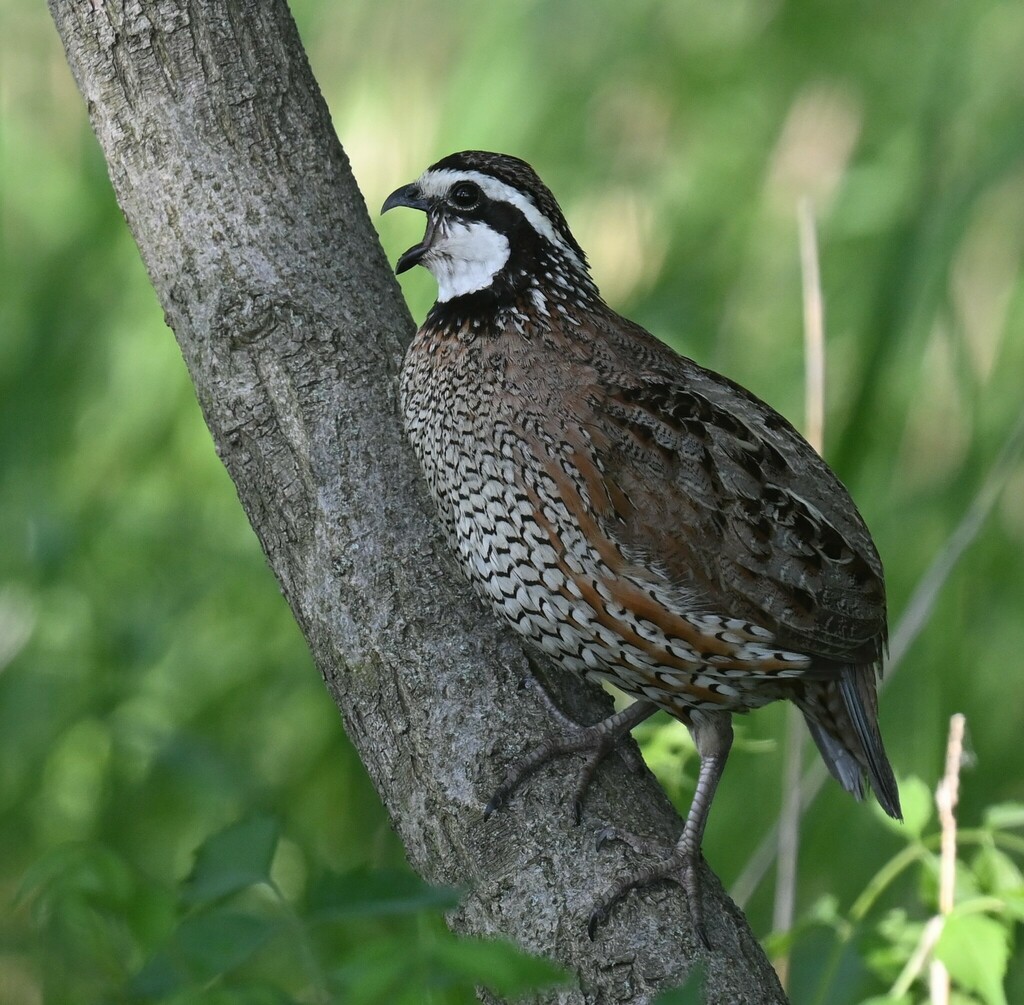
no rights reserved · CC0
Family: Odontophoridae · Class: Aves · Order: Galliformes
Conservation status: Endangered
Colinus virginianus ridgwayi (Masked bobwhite (quail)) is a California animal in the Odontophoridae family.
The masked bobwhite is a subspecies of the northern bobwhite quail distinguished by the male's distinctive black facial mask extending from the bill through the eye to the throat, contrasting with white markings on the head and neck. Males measure approximately 24-25 cm (9.5-9.8 inches) in length and weigh 170-180 grams, while females are slightly smaller and lack the prominent facial markings, displaying mottled brown and buff plumage typical of female bobwhites. Both sexes have compact, rounded bodies with short tails and strong legs adapted for ground-dwelling. Historically, the masked bobwhite occupied native grasslands of the Sonoran Desert region in southern Arizona and northwestern Mexico (Sonora). In the United States, the subspecies was extirpated by 1900, with the last confirmed wild birds observed in Arizona's Altar Valley. The species' current range is limited to captive populations at Buenos Aires National Wildlife Refuge in southern Arizona and breeding facilities including the Sutton Avian Research Center. Wild populations persist in northwestern Mexico, primarily in Sonora. Masked bobwhites inhabit desert grasslands characterized by native grass species interspersed with scattered shrubs and cacti. They require areas with 25-50% grass cover for nesting and foraging, preferring elevations between 900-1,200 meters (2,950-3,940 feet). The subspecies depends on native grass species and avoids areas dominated by invasive grasses such as buffelgrass (Pennisetum ciliare) and Lehmann lovegrass (Eragrostis lehmanniana), which lack the structural characteristics needed for nesting and provide poor foraging habitat. The species exhibits typical bobwhite behavior, forming coveys of 8-15 individuals outside the breeding season from September through February. Breeding occurs from July through September, coinciding with summer monsoon rains that increase insect availability and seed production. Females construct ground nests in grass clumps, laying 12-16 cream-colored eggs. Diet consists primarily of seeds from native grasses and forbs, supplemented by insects, particularly during the breeding season when protein requirements increase for egg production and chick development. Listed as federally endangered in 1967, the masked bobwhite faces severe conservation challenges. Primary threats include habitat loss from livestock overgrazing, invasive grass species establishment, and prolonged drought periods. According to the U.S. Fish and Wildlife Service, Buenos Aires National Wildlife Refuge has maintained a captive breeding program since 1996, releasing birds into restored grassland habitat. Recent program modifications have shown promising results, with released birds surviving through winter months and producing wild chicks for the first time since refuge establishment. The recovery program has expanded to include partnerships with the Sutton Avian Research Center since 2015. Current recovery efforts focus on habitat restoration, invasive species control, and refined release techniques to establish self-sustaining populations in Arizona.
Classification
Class: Aves · Order: Galliformes · Family: Odontophoridae
Conservation status
Endangered
Frequently asked questions
How is Colinus virginianus ridgwayi classified?
Colinus virginianus ridgwayi belongs to class Aves, order Galliformes, family Odontophoridae.
What family does Colinus virginianus ridgwayi belong to?
Colinus virginianus ridgwayi is in the Odontophoridae family.
Is Colinus virginianus ridgwayi protected or of conservation concern?
Colinus virginianus ridgwayi carries the following status: Endangered.
What is Colinus virginianus ridgwayi?
The masked bobwhite is a subspecies of the northern bobwhite quail distinguished by the male's distinctive black facial mask extending from the bill through the eye to the throat, contrasting with white markings on the head and neck.
Is Colinus virginianus ridgwayi found in California?
Yes. Colinus virginianus ridgwayi is recorded in California in The California Species Project's catalogue.
Related species
Other California species in the same genus, family, or bioregion.
Data from The California Species Project — 14,000+ California species with verified data from CNPS, CDFW, USFWS, and more.