Coluber lateralis
Striped Racer
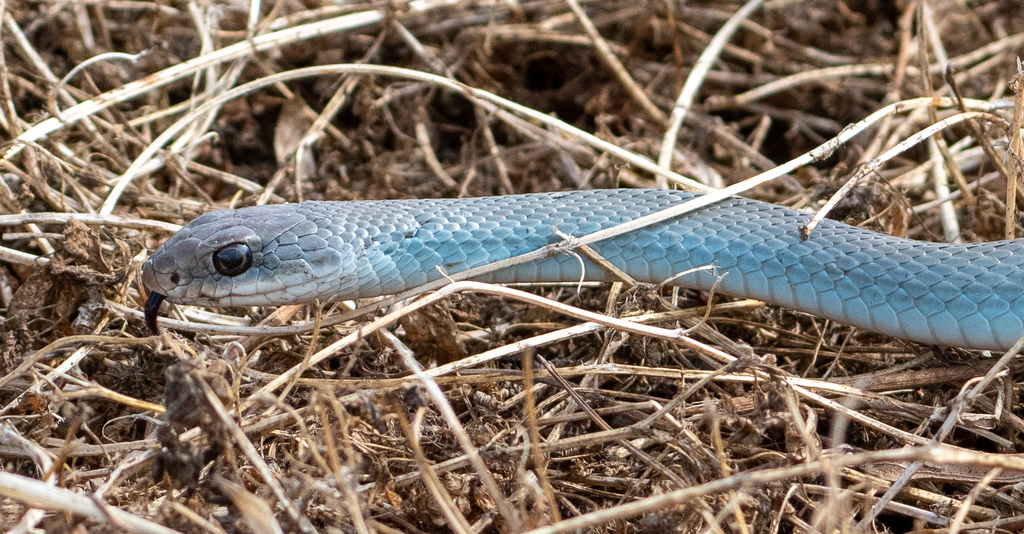
(c) Jonathan Eisen, some rights reserved (CC BY) · licence
Family: Colubridae · Class: Reptilia · Order: Squamata
Coluber lateralis (Striped Racer) is a California animal in the Colubridae family.
The striped racer (Coluber lateralis), also known by the synonym Masticophis lateralis, is a slender, fast-moving colubrid snake native to western North America. Adults typically measure 0.9 to 1.5 meters (3 to 5 feet) in total length, with some individuals reaching up to 1.8 meters (6 feet). The body is characterized by a cream, yellow, or light gray ground color with distinctive longitudinal dark stripes running along the sides. These lateral stripes are typically black or dark brown and extend from the neck to the tail. The dorsal surface may display a faint vertebral stripe. The head is relatively small and distinct from the neck, with large eyes and round pupils. Juveniles often exhibit a more pronounced pattern with clearer striping that may fade with age. In California, striped racers are distributed throughout much of the state, from the coastal ranges to the Sierra Nevada foothills and into the Mojave Desert regions. Their range extends from sea level to approximately 2,100 meters (7,000 feet) in elevation. The species occurs from Baja California north through California, Nevada, Arizona, and into southern Oregon. Within California, populations are documented in both the Coast Ranges and the western slopes of the Sierra Nevada, with scattered populations in desert mountain ranges. Striped racers inhabit a variety of habitat types including chaparral, oak woodlands, pine-oak forests, desert scrub, and riparian areas. They show a preference for areas with moderate to dense vegetation cover, often associating with rocky outcrops, fallen logs, and dense shrub growth. The species is commonly found in elevations ranging from coastal scrublands to montane forests, demonstrating considerable habitat flexibility. They require areas with adequate prey populations and suitable retreat sites such as rock crevices, rodent burrows, or dense vegetation. This diurnal species is highly active and fast-moving, earning its common name through rapid locomotion when disturbed. Striped racers are primarily terrestrial but capable climbers, often ascending into shrubs and low trees while foraging or escaping predators. Their diet consists primarily of lizards, small snakes, birds, bird eggs, and small mammals. Reproduction occurs through egg-laying, with females typically depositing 3 to 12 eggs in summer months. Eggs are laid in loose soil, rotting logs, or other protected locations and incubate for approximately 65 to 75 days. Mating generally occurs in spring following emergence from winter dormancy. The striped racer currently holds no special conservation status at federal or state levels and is not listed under the California Endangered Species Act. Populations appear stable across most of the species' range, though localized declines may occur due to habitat loss from urban development, agriculture, and fire management practices. The species' adaptability to various habitat types and elevation ranges contributes to its overall population stability. Climate change effects on habitat distribution and prey availability represent potential long-term concerns, but current population trends do not indicate immediate conservation needs.
Classification
Class: Reptilia · Order: Squamata · Family: Colubridae
Frequently asked questions
How is Coluber lateralis classified?
Coluber lateralis belongs to class Reptilia, order Squamata, family Colubridae.
What family does Coluber lateralis belong to?
Coluber lateralis is in the Colubridae family.
What is Coluber lateralis?
The striped racer (Coluber lateralis), also known by the synonym Masticophis lateralis, is a slender, fast-moving colubrid snake native to western North America.
Is Coluber lateralis found in California?
Yes. Coluber lateralis is recorded in California in The California Species Project's catalogue.
Related species
Other California species in the same genus, family, or bioregion.
Data from The California Species Project — 14,000+ California species with verified data from CNPS, CDFW, USFWS, and more.