Columbina passerina
Common Ground-Dove
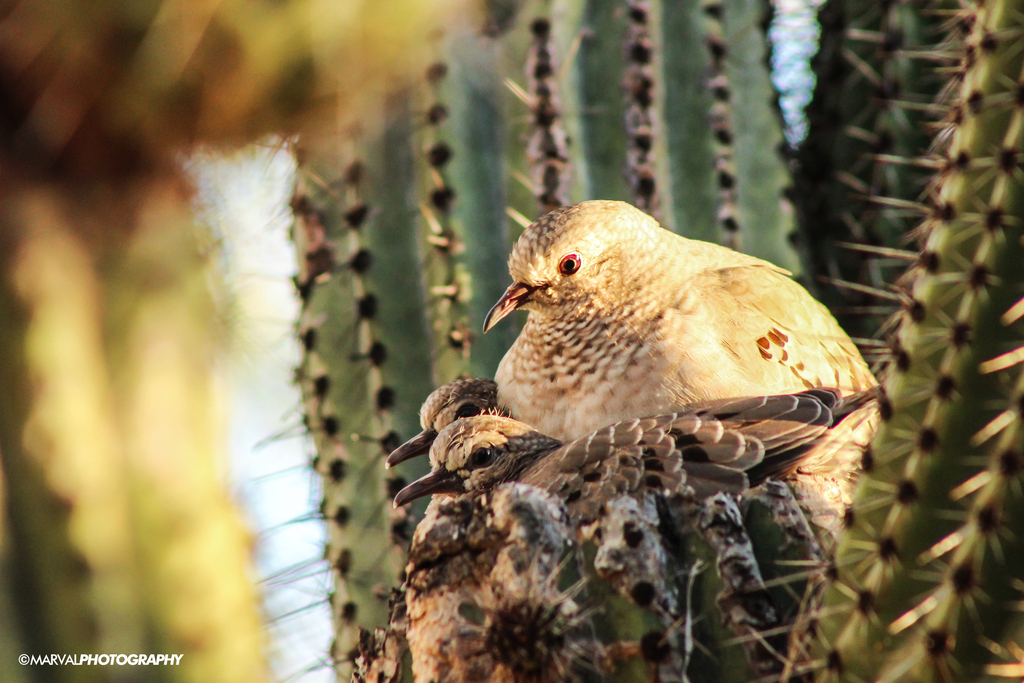
(c) MarvalPhotography19, some rights reserved (CC BY) · licence
Family: Columbidae · Class: Aves · Order: Columbiformes
Columbina passerina (Common Ground-Dove) is a California animal in the Columbidae family.
The Common Ground-Dove is North America's smallest dove, measuring 15 to 18 cm (6 to 7 inches) in length with a wingspan of 27 cm (10.5 inches). Adults weigh 26 to 40 grams. Males display a pale gray head and breast with a pinkish wash, while the back and wings show a rich brown coloration with distinctive dark spots on the wing coverts. Females are generally duller with more brownish tones throughout. Both sexes exhibit bright chestnut patches on the underwings visible during flight, and their short, rounded tails have dark outer feathers with white tips. The legs and feet are bright pink to red, and the bill is orange-pink with a dark tip. Historically, Common Ground-Doves occurred throughout the southern United States from California to Florida. In California, the species was once found in the Colorado Desert region of Imperial and eastern Riverside counties, as well as the lower Colorado River valley. However, the species has experienced significant range contraction throughout the southwestern United States. The most recent confirmed California breeding records date to the 1990s, with occasional vagrant individuals still reported in the desert regions near the Arizona border. Common Ground-Doves inhabit open, dry areas with scattered vegetation including desert scrub, agricultural fields, golf courses, parks, and residential areas with bare ground for foraging. They prefer areas with a mix of open ground for feeding and low shrubs or trees for nesting and roosting. The species typically occurs at elevations below 500 meters in California's desert regions, favoring areas near water sources. These doves are primarily granivorous, feeding almost exclusively on small seeds collected from the ground. They consume seeds from grasses, forbs, and cultivated crops, often foraging in pairs or small groups. Ground-doves walk rather than hop while feeding, frequently flicking their tails upward. Breeding occurs from March through September in suitable habitat. Females construct flimsy nests of twigs, grass, and rootlets placed on the ground or in low vegetation up to 3 meters high. Clutch size is typically two white eggs, which are incubated for 12 to 14 days. Young fledge after 11 to 14 days but continue to receive parental care for several additional days. The Common Ground-Dove is not federally listed and lacks special conservation status in California, though it is considered extirpated as a breeding species in the state. Population declines throughout the southwestern United States have been attributed to habitat loss from urban development, agricultural intensification, and invasive plant species that alter seed availability. Climate change and prolonged drought conditions may further impact remaining populations. While the species remains locally common in parts of the southeastern United States, western populations have experienced substantial reductions, with California representing the northwestern edge of the historical range where breeding populations have been lost.
Classification
Class: Aves · Order: Columbiformes · Family: Columbidae
Frequently asked questions
How is Columbina passerina classified?
Columbina passerina belongs to class Aves, order Columbiformes, family Columbidae.
What family does Columbina passerina belong to?
Columbina passerina is in the Columbidae family.
What is Columbina passerina?
The Common Ground-Dove is North America's smallest dove, measuring 15 to 18 cm (6 to 7 inches) in length with a wingspan of 27 cm (10.5 inches).
Is Columbina passerina found in California?
Yes. Columbina passerina is recorded in California in The California Species Project's catalogue.
Related species
Other California species in the same genus, family, or bioregion.
Data from The California Species Project — 14,000+ California species with verified data from CNPS, CDFW, USFWS, and more.