Condica discistriga
The White-dotted Groundling Moth
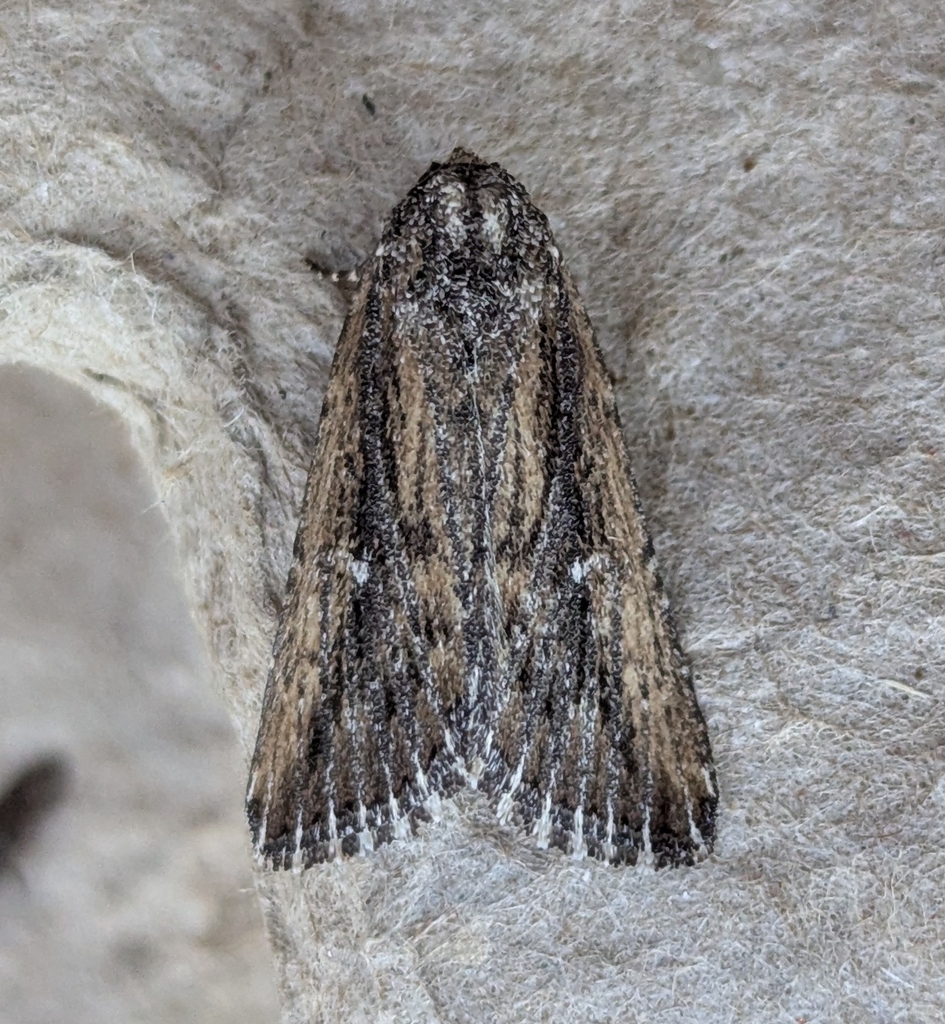
no rights reserved · CC0
Family: Noctuidae · Class: Insecta · Order: Lepidoptera
Condica discistriga (The White-dotted Groundling Moth) is a California animal in the Noctuidae family.
The White-dotted Groundling Moth (Condica discistriga) is a nocturnal moth in the family Noctuidae. Adults have gray-brown forewings with distinctive white dots at the scalloped wing margins and a small, indistinct white bar representing the reniform spot. The forewings display gray shading throughout, giving the wings a mottled appearance. The wing fringe is conspicuously checkered, primarily black with white scales at the ends of veins. Hindwings are dirty white in males and pale brownish in females, with a thin dark terminal line and white fringe. Both sexes have simple antennae. This species can be distinguished from the closely related White-dotted Groundling (Condica videns) by its more extensive gray shading and more conspicuously checkered fringe (BugGuide). Condica discistriga ranges from California to British Columbia, extending east to Saskatchewan, Colorado, and Arizona. The species has been documented across multiple western states, with records from Colorado localities including areas near Thompson Springs, Cortez at 6,120 feet elevation, and Pueblo County (Lepidopterists' Society records). Adults have been collected at elevations ranging from approximately 4,315 feet in New Mexico to over 7,500 feet in Colorado. The species inhabits dry open areas and sagebrush grasslands throughout its range (BugGuide). These arid and semi-arid ecosystems provide the specific microhabitat conditions required by this moth. Adults are strictly nocturnal and are attracted to artificial light sources, making light trapping an effective collection method for researchers studying this species. Adults fly from June to August, with peak activity varying by location and elevation (BugGuide). The species appears to have a single generation per year across its range. Like other members of the genus Condica, larvae likely feed on herbaceous plants, though specific host plant relationships for this species have not been well documented in the available literature. Adult moths are attracted to ultraviolet and mercury vapor light traps, suggesting they are active foragers during nighttime hours. Condica discistriga does not appear on federal or state endangered species lists, and its conservation status has not been formally assessed. The species maintains a broad geographic distribution across western North America, suggesting stable populations in suitable habitat. However, like many moths associated with sagebrush ecosystems, potential threats may include habitat conversion, grazing pressure, and climate change impacts on arid grassland communities. The species has been included in some regional species surveys and moth inventories, indicating it remains present across portions of its historic range. Continued monitoring through citizen science projects and professional lepidopteran surveys will be important for tracking population trends of this and other nocturnal moths in western ecosystems.
Classification
Class: Insecta · Order: Lepidoptera · Family: Noctuidae
Frequently asked questions
How is Condica discistriga classified?
Condica discistriga belongs to class Insecta, order Lepidoptera, family Noctuidae.
What family does Condica discistriga belong to?
Condica discistriga is in the Noctuidae family.
What is Condica discistriga?
The White-dotted Groundling Moth (Condica discistriga) is a nocturnal moth in the family Noctuidae.
Is Condica discistriga found in California?
Yes. Condica discistriga is recorded in California in The California Species Project's catalogue.
Related species
Other California species in the same genus, family, or bioregion.
Data from The California Species Project — 14,000+ California species with verified data from CNPS, CDFW, USFWS, and more.