Condylostylus longicornis
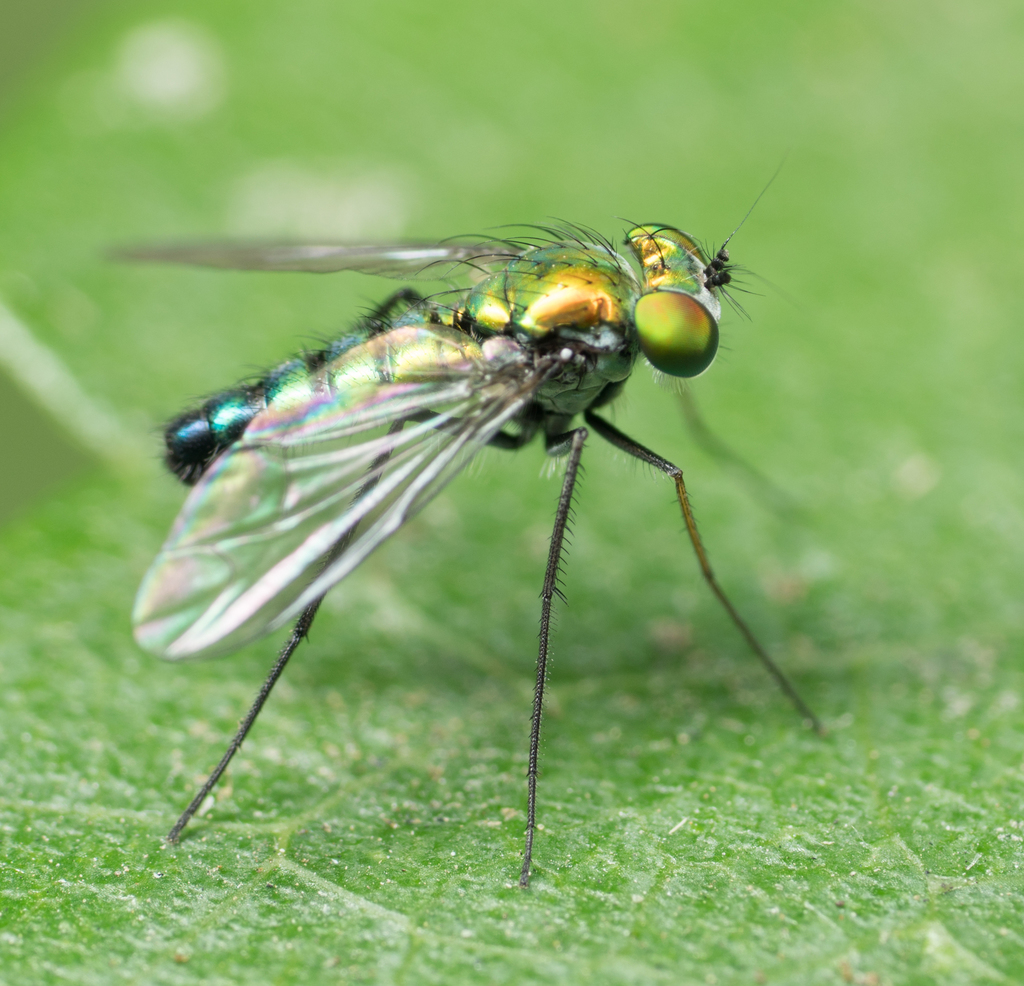
no rights reserved · CC0
Family: Dolichopodidae · Class: Insecta · Order: Diptera
Condylostylus longicornis is a California animal in the Dolichopodidae family.
Condylostylus longicornis is a small fly belonging to the family Dolichopodidae, commonly known as long-legged flies. This species exhibits the characteristic features of its family, including elongated legs, metallic coloration, and relatively small body size typical of dolichopodid flies. Adult flies typically measure 2-6 mm in body length, though specific measurements for this species have not been well documented in scientific literature. The range and distribution of C. longicornis remains poorly documented in published scientific sources. According to BugGuide observations, the species has been recorded in North America, though specific locality data and the extent of its California distribution require further documentation. The species appears to be part of the diverse dolichopodid fauna found across temperate regions, but detailed range maps and population surveys are lacking. Habitat preferences for C. longicornis have not been thoroughly studied or documented in available literature. Most dolichopodid flies are associated with moist environments, including wetlands, stream margins, and areas with abundant organic matter, but specific microhabitat requirements for this species remain unknown. The flies are typically found in areas that support their predatory lifestyle and provide suitable surfaces for their courtship displays. Like other members of the family Dolichopodidae, C. longicornis is presumed to be predatory, feeding on smaller arthropods including other flies, aphids, and various soft-bodied insects. Long-legged flies are known for their aerial hunting abilities and their elaborate mating displays, where males perform intricate dances using their elongated legs and wings to attract females. The specific behavioral patterns, seasonal activity, and reproductive biology of C. longicornis have not been documented in detail. Conservation status information for C. longicornis is not available from standard wildlife databases. The species does not appear on federal or California state listing databases, and no formal conservation assessments have been conducted. This data gap is common among dipteran species, particularly within diverse families like Dolichopodidae where many species remain understudied despite their ecological importance as predators of pest insects. The lack of comprehensive biological and ecological data for C. longicornis reflects broader knowledge gaps in dipteran taxonomy and natural history. Many dolichopodid species remain poorly known beyond their initial taxonomic descriptions, despite their potential ecological significance as predators in various ecosystems. Further research is needed to document the distribution, habitat requirements, life history, and conservation needs of this and other members of the genus Condylostylus in California. Scientific documentation for this species remains extremely limited. The information presented here synthesizes available sources including BugGuide community observations and general knowledge of dolichopodid biology. Additional field studies and taxonomic research are needed to provide comprehensive biological data for C. longicornis and to assess its status within California's diverse dipteran fauna.
Classification
Class: Insecta · Order: Diptera · Family: Dolichopodidae
Frequently asked questions
How is Condylostylus longicornis classified?
Condylostylus longicornis belongs to class Insecta, order Diptera, family Dolichopodidae.
What family does Condylostylus longicornis belong to?
Condylostylus longicornis is in the Dolichopodidae family.
What is Condylostylus longicornis?
Condylostylus longicornis is a small fly belonging to the family Dolichopodidae, commonly known as long-legged flies.
Is Condylostylus longicornis found in California?
Yes. Condylostylus longicornis is recorded in California in The California Species Project's catalogue.
Related species
Other California species in the same genus, family, or bioregion.
Data from The California Species Project — 14,000+ California species with verified data from CNPS, CDFW, USFWS, and more.