Condylostylus occidentalis
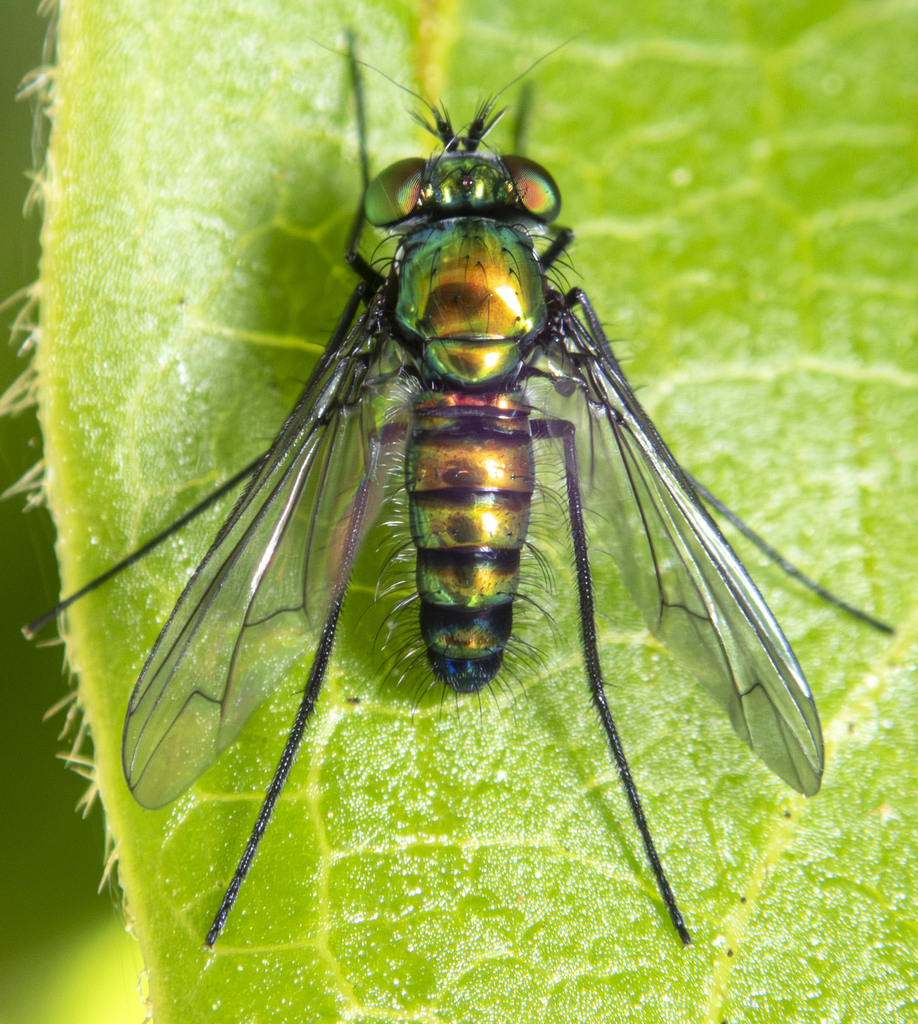
(c) Don Loarie, some rights reserved (CC BY) · licence
Family: Dolichopodidae · Class: Insecta · Order: Diptera
Condylostylus occidentalis is a California animal in the Dolichopodidae family.
Condylostylus occidentalis is a species of long-legged fly in the family Dolichopodidae. Like other members of this diverse dipteran family, this species exhibits the characteristic elongated legs that give the group its common name. Dolichopodid flies are typically small to medium-sized insects with metallic coloration, though specific morphological details for C. occidentalis are not well documented in the scientific literature. The distribution and range of Condylostylus occidentalis within California have not been comprehensively documented. The genus Condylostylus is represented by multiple species across North America, but detailed range maps and locality records for C. occidentalis specifically are lacking in accessible databases. According to NatureServe, the global conservation status is listed as GNR (Global Not Ranked), indicating insufficient data to assign a conservation rank. Like other dolichopodid species, C. occidentalis likely inhabits areas near water sources, as the family Dolichopodidae typically occurs in lightly shaded areas near swamps and streams, in meadows and woodlands. The larvae of long-legged flies generally develop in wet to dry soil or in standing or slow-moving water, suggesting that adult C. occidentalis would be found in proximity to such breeding habitats. However, specific microhabitat preferences and elevation ranges for this species have not been well documented. The ecological role and behavior of C. occidentalis remain poorly studied. Members of the Dolichopodidae family are generally predaceous as both larvae and adults, with adults often hunting smaller insects on vegetation or substrate surfaces. Many dolichopodid species are considered beneficial as biological control agents due to their predatory nature. The flies typically exhibit complex mating displays involving wing movements and positioning, though specific behavioral observations for C. occidentalis are not available in the literature. Seasonal activity patterns, reproductive timing, and specific prey preferences for this species have not been documented. The conservation status of Condylostylus occidentalis is poorly understood due to limited scientific study and documentation. The species does not appear on federal or California state listing databases, and its global status remains unranked by NatureServe as of December 2025. This lack of conservation assessment likely reflects the broader challenge of studying and monitoring small dipteran species, particularly those in diverse families like Dolichopodidae where taxonomic work is ongoing and many species remain inadequately described. The limited available information about C. occidentalis highlights the need for additional taxonomic and ecological research on California's dipteran fauna. Many fly species, particularly in speciose families like Dolichopodidae, remain understudied despite potentially playing important ecological roles as predators and pollinators. Enhanced survey work and taxonomic studies would improve understanding of this species' distribution, habitat requirements, and conservation needs within California's diverse ecosystems.
Classification
Class: Insecta · Order: Diptera · Family: Dolichopodidae
Frequently asked questions
How is Condylostylus occidentalis classified?
Condylostylus occidentalis belongs to class Insecta, order Diptera, family Dolichopodidae.
What family does Condylostylus occidentalis belong to?
Condylostylus occidentalis is in the Dolichopodidae family.
What is Condylostylus occidentalis?
Condylostylus occidentalis is a species of long-legged fly in the family Dolichopodidae.
Is Condylostylus occidentalis found in California?
Yes. Condylostylus occidentalis is recorded in California in The California Species Project's catalogue.
Related species
Other California species in the same genus, family, or bioregion.
Data from The California Species Project — 14,000+ California species with verified data from CNPS, CDFW, USFWS, and more.