Conocephalus fasciatus
Slender Meadow Katydid
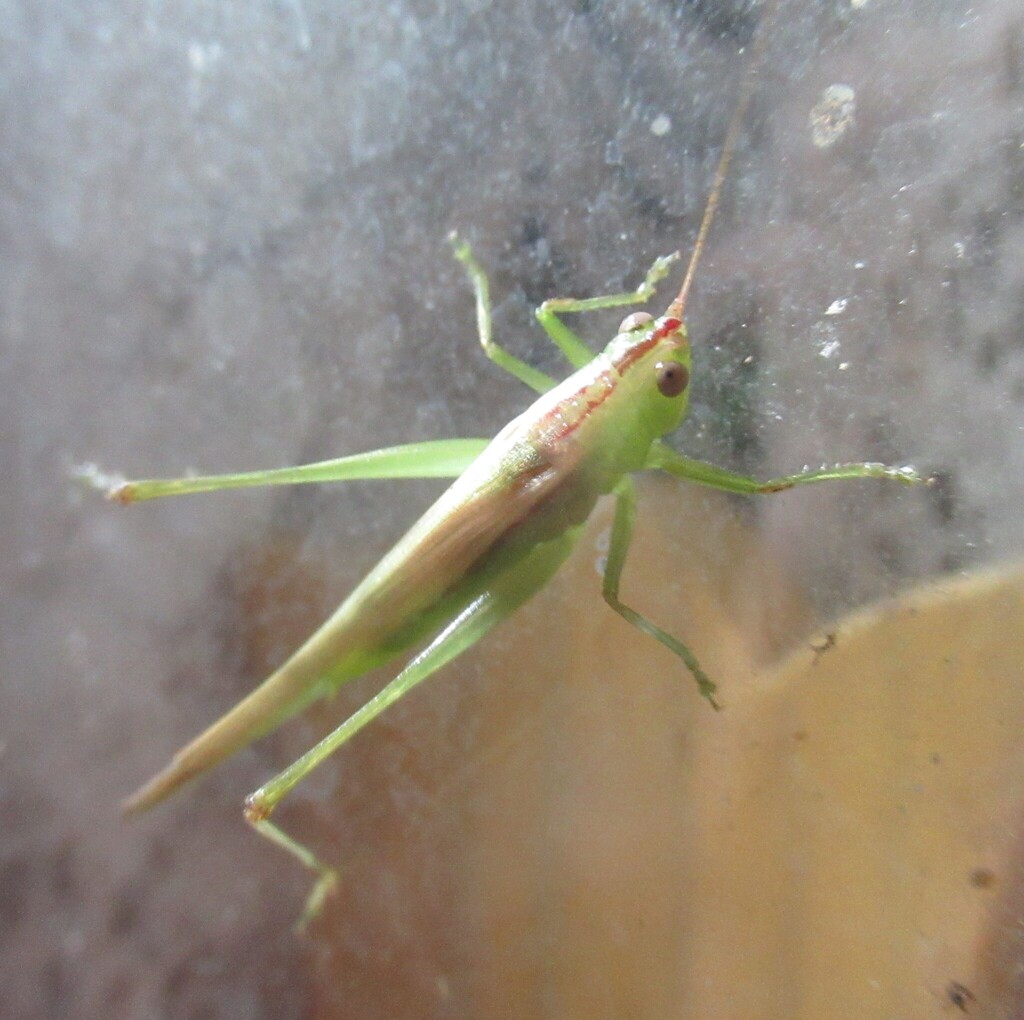
(c) Linda Jo Conn, some rights reserved (CC BY) · licence
Family: Tettigoniidae · Class: Insecta · Order: Orthoptera
Conocephalus fasciatus (Slender Meadow Katydid) is a California animal in the Tettigoniidae family.
The Slender Meadow Katydid (Conocephalus fasciatus) is a member of the family Tettigoniidae, subfamily Conocephalinae. This species belongs to the tribe Conocephalini and is classified among the lesser meadow katydids. The species exhibits the typical elongated, slender body form characteristic of meadow katydids, with long antennae extending well beyond the body length. Adults are generally green to brown in coloration, providing camouflage among grasses and herbaceous vegetation. Males possess distinctive cerci used in species identification, and females have straight ovipositors adapted for inserting eggs into plant tissues. Conocephalus fasciatus occurs widely across North America, with documented populations extending from southern Canada through much of the United States. The species demonstrates considerable geographic variation, with at least two recognized subspecies: C. f. fasciatus and C. f. vicinus (BugGuide). Distribution records indicate presence in multiple states, though specific California distribution data requires further documentation. The species' range overlaps with other Conocephalus species, necessitating careful identification based on morphological characters and acoustic signatures. This katydid inhabits grasslands, meadows, and areas with abundant tall grasses. The species shows preference for habitats with mixed herbaceous vegetation, including both native and cultivated grasslands. Slender Meadow Katydids are typically found in areas with sufficient vertical structure provided by grasses and forbs, which serve both as food sources and oviposition sites. They may occur from lowland areas to moderate elevations, though specific elevation ranges require further study. Conocephalus fasciatus exhibits typical orthopteran feeding behavior, consuming various grasses and herbaceous plants. Adults are primarily active during warmer months, with peak activity occurring in late summer and early fall. Males produce species-specific calling songs to attract females, with acoustic characteristics serving as important taxonomic features. Mating occurs following acoustic courtship, after which females deposit eggs in plant stems or soil using their specialized ovipositors. The species likely overwinters in the egg stage, with nymphs emerging the following spring to complete development through multiple molts. Currently, Conocephalus fasciatus does not appear on federal or state threatened species lists, suggesting stable populations across its range. However, like many grassland-dependent insects, the species may face localized pressures from habitat conversion, agricultural intensification, and urban development. Grassland ecosystems have experienced significant decline across North America, potentially affecting meadow katydid populations. The species' relatively broad distribution and apparent adaptability to various grassland types likely contribute to its current conservation status. Continued monitoring of grassland habitats and their associated insect communities remains important for detecting potential population changes in this and related species.
Classification
Class: Insecta · Order: Orthoptera · Family: Tettigoniidae
Frequently asked questions
How is Conocephalus fasciatus classified?
Conocephalus fasciatus belongs to class Insecta, order Orthoptera, family Tettigoniidae.
What family does Conocephalus fasciatus belong to?
Conocephalus fasciatus is in the Tettigoniidae family.
What is Conocephalus fasciatus?
The Slender Meadow Katydid (Conocephalus fasciatus) is a member of the family Tettigoniidae, subfamily Conocephalinae.
Is Conocephalus fasciatus found in California?
Yes. Conocephalus fasciatus is recorded in California in The California Species Project's catalogue.
Related species
Other California species in the same genus, family, or bioregion.
Data from The California Species Project — 14,000+ California species with verified data from CNPS, CDFW, USFWS, and more.