Contia tenuis
Sharp-tailed Snake
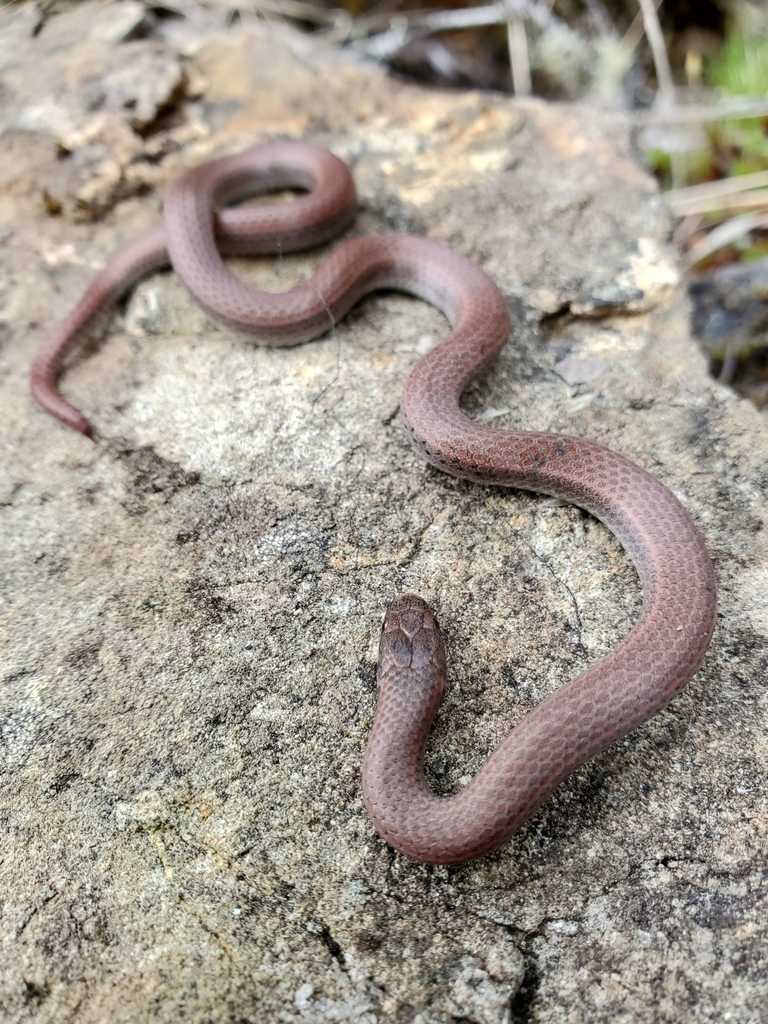
no rights reserved · CC0
Family: Colubridae · Class: Reptilia · Order: Squamata
Contia tenuis (Sharp-tailed Snake) is a California animal in the Colubridae family.
The sharp-tailed snake (Contia tenuis) is a small, secretive colubrid snake endemic to the Pacific Coast region. Adults typically measure 200 to 460 mm (7.9 to 18.1 inches) in total length, making it one of the smallest snake species in its range. The dorsal surface is gray to reddish-brown with a distinctive pattern of dark crossbands or blotches. The ventral surface is cream to yellow with a characteristic black-and-white checkered pattern on the underside of the tail. The species derives its common name from the sharp, spine-like scale at the tip of the tail, which distinguishes it from other small colubrids in the region. Sharp-tailed snakes occur along the Pacific Coast from British Columbia south through Washington, Oregon, and California. In California, the species is documented from the North Coast Ranges, San Francisco Bay Area, and scattered locations in the Central Coast Ranges. The distribution extends from sea level to approximately 1,220 meters (4,000 feet) elevation, with most populations occurring below 600 meters (2,000 feet). California populations represent the southern extent of the species' range. This species inhabits coniferous and mixed forests, oak woodlands, and chaparral communities. Sharp-tailed snakes show a strong association with areas containing abundant woody debris, including fallen logs, bark piles, and dense leaf litter. They are frequently found under rocks, rotting logs, and other surface cover objects in moist microhabitats. The species appears to prefer areas with moderate to high canopy cover and relatively stable soil moisture levels. Sharp-tailed snakes are fossorial and crepuscular, spending most daylight hours beneath surface cover or in shallow burrows. The species feeds almost exclusively on slugs, using specialized jaw mechanics to extract slugs from their shells. Prey items include both native and introduced slug species. Reproduction occurs in spring, with females laying 2 to 8 elongated eggs in summer. Eggs are typically deposited in rotting logs or under bark where moisture levels remain stable. Young snakes measure approximately 75 to 90 mm (3.0 to 3.5 inches) at hatching and reach sexual maturity in their second or third year. The sharp-tailed snake has no federal conservation status but is considered a species of conservation concern in portions of its range. Population trends are poorly documented due to the species' secretive nature and limited survey efforts. Primary threats include habitat loss from urban development, logging practices that remove woody debris, and potential impacts from introduced slug species that may alter prey availability. Climate change may affect the species through changes in precipitation patterns and soil moisture regimes. The species' dependence on specific microhabitat conditions makes it particularly vulnerable to habitat fragmentation and degradation of forest floor ecosystems.
Classification
Class: Reptilia · Order: Squamata · Family: Colubridae
Frequently asked questions
How is Contia tenuis classified?
Contia tenuis belongs to class Reptilia, order Squamata, family Colubridae.
What family does Contia tenuis belong to?
Contia tenuis is in the Colubridae family.
What is Contia tenuis?
The sharp-tailed snake (Contia tenuis) is a small, secretive colubrid snake endemic to the Pacific Coast region.
Is Contia tenuis found in California?
Yes. Contia tenuis is recorded in California in The California Species Project's catalogue.
Related species
Other California species in the same genus, family, or bioregion.
Data from The California Species Project — 14,000+ California species with verified data from CNPS, CDFW, USFWS, and more.