Copaeodes aurantiaca
Orange Skipperling
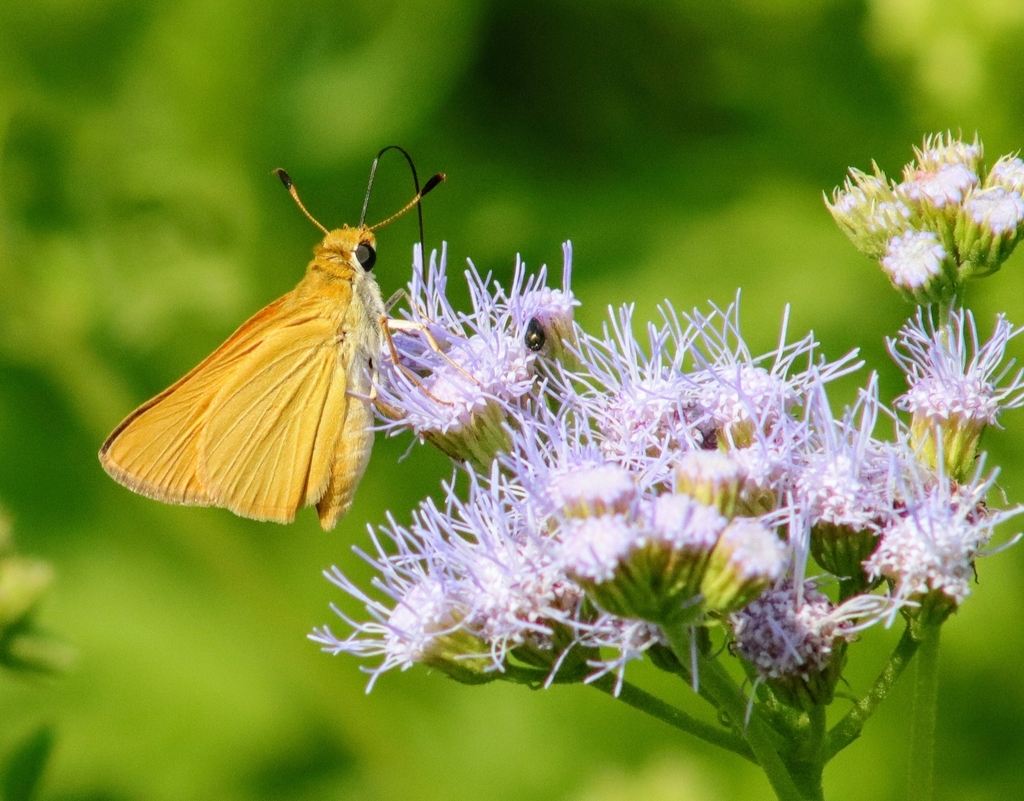
no rights reserved · CC0
Family: Hesperiidae · Class: Insecta · Order: Lepidoptera
Copaeodes aurantiaca (Orange Skipperling) is a California animal in the Hesperiidae family.
The Orange Skipperling is a small butterfly in the family Hesperiidae, measuring approximately 19-25 mm (0.75-1.0 inches) in wingspan. Males display bright orange dorsal wing surfaces with narrow black borders, while the undersides are paler orange to yellow-orange. Females are typically larger and duller, with more extensive dark markings on the forewings and brownish coloration on the hindwings. The antennae are short with distinctly hooked clubs, characteristic of skipper butterflies. Both sexes have rapid, darting flight patterns typical of the family. The Orange Skipperling occurs across southern California, southern Arizona, southern New Mexico, and west Texas, extending south through Central America to Panama. The species occasionally strays beyond its core range to eastern Texas, central Arkansas, central Kansas, and Colorado. In California, populations are documented primarily in the southern counties, including Imperial, Riverside, San Bernardino, and occasionally Los Angeles and Orange counties. The species shows seasonal movement patterns, with northern populations potentially representing temporary colonizations from more southern breeding areas. This species inhabits open, sunny areas including desert washes, agricultural fields, roadsides, parks, and disturbed grasslands from sea level to approximately 1,500 meters (4,900 feet) elevation. Orange Skipperlings favor areas with abundant grass growth and nectar sources. They are commonly found in irrigated agricultural zones where host grasses are maintained, as well as riparian areas in otherwise arid landscapes. The species adapts well to human-modified environments and benefits from irrigation that supports grass growth. Orange Skipperlings utilize various grass species (Poaceae) as larval host plants, including Bermuda grass (Cynodon dactylon), sideoats grama (Bouteloua curtipendula), and green spangletop (Leptochloa dubia). Females deposit single eggs on grass blades, and larvae feed within rolled leaf shelters they construct by binding grass blades with silk. The species is multivoltine, producing multiple generations annually in warmer climates, with continuous breeding possible in frost-free areas. Adults nectar on various small flowers including lantana, asters, and other low-growing plants. Flight period extends from February through November in southern California, with peak activity during warmer months. The Orange Skipperling is not federally or state-listed and appears to maintain stable populations throughout most of its range. The species benefits from agricultural practices that maintain grass cover and irrigation, though it may be negatively affected by intensive pesticide use. Urban development can eliminate suitable habitat, but the butterfly's ability to utilize common grass species and adapt to disturbed environments provides some resilience. Climate change may potentially expand suitable habitat northward while making southern desert areas less hospitable. Population monitoring is limited, but the species appears secure given its broad distribution and habitat adaptability.
Classification
Class: Insecta · Order: Lepidoptera · Family: Hesperiidae
Frequently asked questions
How is Copaeodes aurantiaca classified?
Copaeodes aurantiaca belongs to class Insecta, order Lepidoptera, family Hesperiidae.
What family does Copaeodes aurantiaca belong to?
Copaeodes aurantiaca is in the Hesperiidae family.
What is Copaeodes aurantiaca?
The Orange Skipperling is a small butterfly in the family Hesperiidae, measuring approximately 19-25 mm (0.75-1.0 inches) in wingspan.
Is Copaeodes aurantiaca found in California?
Yes. Copaeodes aurantiaca is recorded in California in The California Species Project's catalogue.
Related species
Other California species in the same genus, family, or bioregion.
Data from The California Species Project — 14,000+ California species with verified data from CNPS, CDFW, USFWS, and more.