Copanarta sexpunctata
Six-Spotted Copanarta
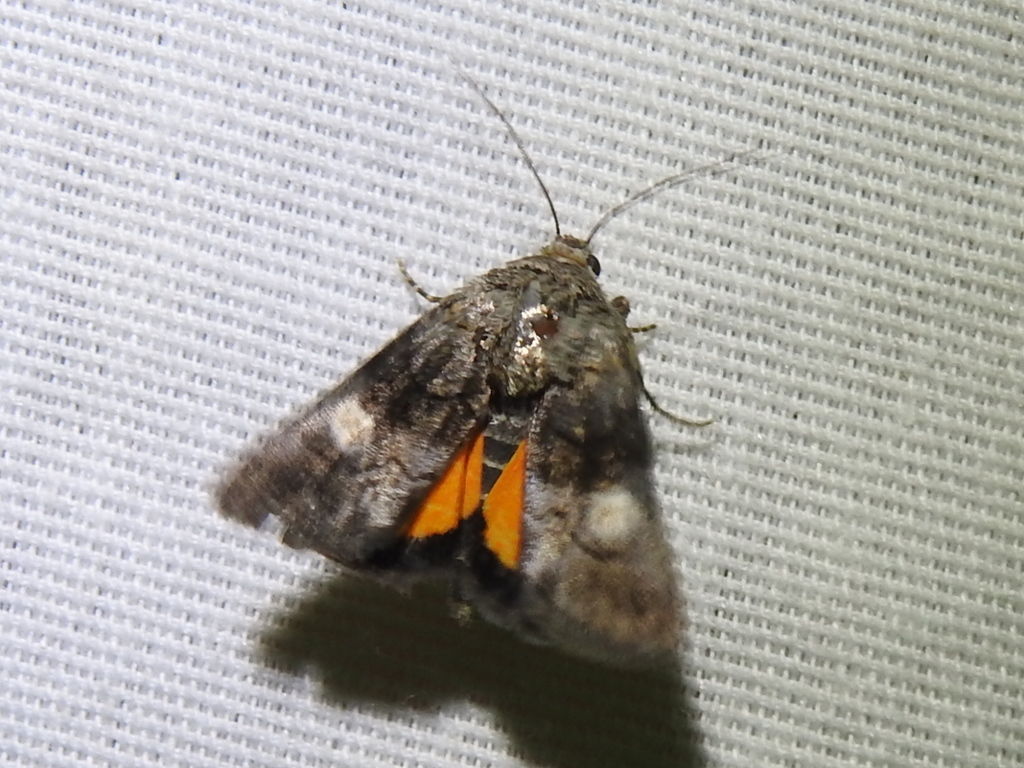
(c) Sam Kieschnick, some rights reserved (CC BY) · licence
Family: Noctuidae · Class: Insecta · Order: Lepidoptera
Copanarta sexpunctata (Six-Spotted Copanarta) is a California animal in the Noctuidae family.
The Six-Spotted Copanarta is a moth in the family Noctuidae, subfamily Oncocnemidinae. This species belongs to the superfamily Noctuoidea within the order Lepidoptera. The common name refers to the characteristic spotting pattern found on the wings, though detailed morphological descriptions of this species remain limited in the scientific literature. Copanarta sexpunctata occurs in western North America, with documented records from several states including Colorado, California, and Arkansas. In Colorado, specimens have been collected from various elevations and habitat types, including locations near Glenwood Springs in Garfield County at elevations around 5,937 to 6,478 feet (Lepidopterists' Society records). The species appears to have a broader distribution than initially documented, with records extending across multiple western states. The species inhabits diverse habitats ranging from oak thickets to dry juniper-Ericameria woodland environments. In Colorado, specimens have been documented in edge habitats of oak thickets and dry woodland areas dominated by juniper and rabbitbrush species. The elevation range appears to span from lower montane zones to mid-elevation areas, typically between 1,500 and 6,500 feet based on collection records. The species shows adaptability to various vegetation types within its range. Behavioral and ecological information for Copanarta sexpunctata remains poorly documented in the scientific literature. Like other noctuids, adults are likely nocturnal and attracted to artificial light sources, as evidenced by collection records from ultraviolet and mercury vapor light traps. Collection dates from various locations suggest adult flight periods may extend from spring through early fall, with records spanning from April through September in different regions. Specific host plant relationships and larval biology have not been well documented for this species. Copanarta sexpunctata does not appear on federal endangered species lists and lacks specific conservation status designations at the federal level. However, the species was included on Arkansas's list of Species of Greatest Conservation Need in 2006, indicating some level of conservation concern in at least part of its range (BugGuide). Species were included on this list due to rarity, population decline, or insufficient knowledge about their taxonomic, life history, or conservation status. The inclusion does not confer regulatory protection but highlights the need for additional research and monitoring. The limited scientific documentation available for this species reflects a broader knowledge gap common among many noctuid moths. Current understanding is based primarily on specimen collection records and brief mentions in lepidopterological surveys. The species' true distribution, population trends, and ecological requirements remain poorly understood, emphasizing the need for systematic surveys and biological studies to better assess its conservation status and habitat needs across its range.
Classification
Class: Insecta · Order: Lepidoptera · Family: Noctuidae
Frequently asked questions
How is Copanarta sexpunctata classified?
Copanarta sexpunctata belongs to class Insecta, order Lepidoptera, family Noctuidae.
What family does Copanarta sexpunctata belong to?
Copanarta sexpunctata is in the Noctuidae family.
What is Copanarta sexpunctata?
The Six-Spotted Copanarta is a moth in the family Noctuidae, subfamily Oncocnemidinae.
Is Copanarta sexpunctata found in California?
Yes. Copanarta sexpunctata is recorded in California in The California Species Project's catalogue.
Related species
Other California species in the same genus, family, or bioregion.
Data from The California Species Project — 14,000+ California species with verified data from CNPS, CDFW, USFWS, and more.