Copestylum avidum
Yellow-spotted Bromeliad Fly
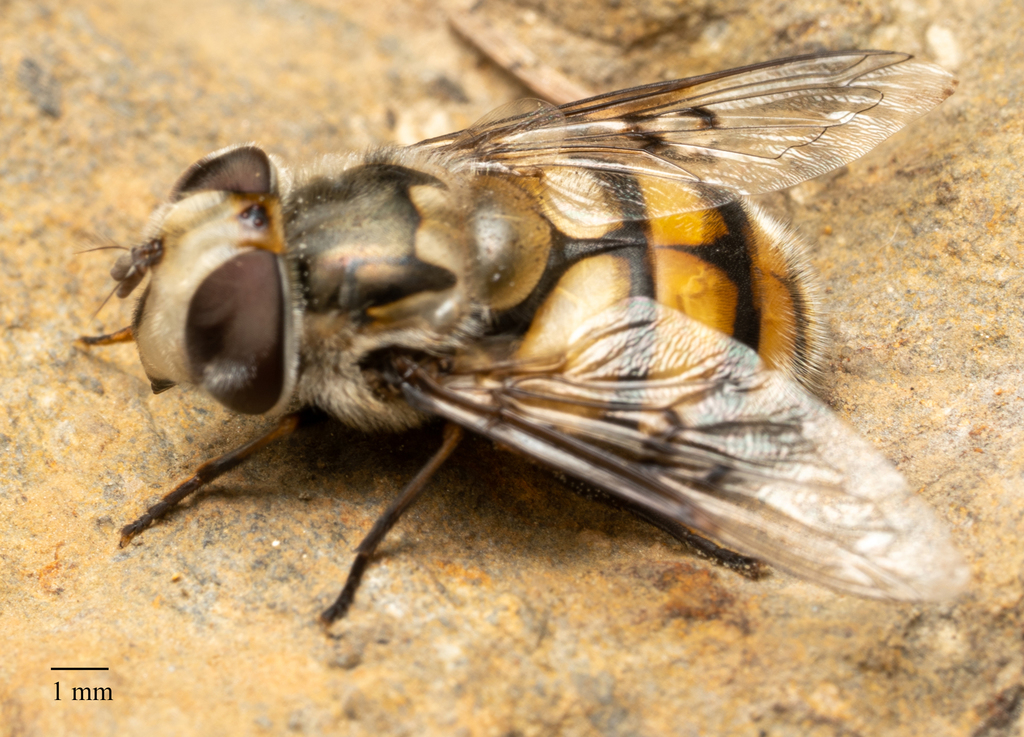
no rights reserved · CC0
Family: Syrphidae · Class: Insecta · Order: Diptera
Copestylum avidum (Yellow-spotted Bromeliad Fly) is a California animal in the Syrphidae family.
The Yellow-spotted Bromeliad Fly (Copestylum avidum) is a hover fly species in the family Syrphidae, subfamily Eristalinae. This species belongs to the genus Copestylum, which comprises numerous New World flower flies that often exhibit bee-like mimicry. Adults are characterized by their distinctive yellow spotting pattern, though detailed morphological descriptions are limited in the scientific literature. Copestylum avidum occurs across multiple regions of North America, with documented populations from the southeastern United States through parts of the western states. The species has been recorded in California, though specific county-level distribution data within the state remains incompletely documented. According to NatureServe Explorer, the species maintains populations across a broader geographic range that extends beyond California's borders. This hover fly inhabits diverse habitat types including woodlands, desert environments, scrubland, and agricultural areas such as orchards (Cusser 2018; Hazelhurst et al. 2023). The species demonstrates considerable ecological flexibility, adapting to both natural and human-modified landscapes. Desert populations suggest tolerance for arid conditions, while woodland occurrences indicate adaptability to more mesic environments. The presence in orchards suggests potential agricultural value as a pollinator, though specific pollination relationships have not been thoroughly studied. Like other members of the family Syrphidae, adult Yellow-spotted Bromeliad Flies are likely nectar feeders that visit flowers for nutrition and reproduction. The larvae of Copestylum species typically develop in aquatic or semi-aquatic environments, often in tree holes, plant cavities, or other water-holding structures. The common name suggests an association with bromeliads, indicating larvae may develop in the water-filled leaf axils of these epiphytic plants, though this ecological relationship requires further documentation. Seasonal activity patterns and specific breeding requirements have not been well characterized in the scientific literature. The conservation status of Copestylum avidum appears stable, with no federal or state listing designations. However, the species has been identified as a Species of Greatest Conservation Need in multiple state wildlife action plans, including Arkansas and New York (BugGuide 2023). This designation typically indicates either population declines, habitat threats, or insufficient data to assess conservation status adequately. The inclusion across multiple state conservation lists suggests potential vulnerability to habitat loss or environmental changes, though specific population trends have not been quantified. As with many invertebrate species, comprehensive population monitoring and ecological research are needed to better understand conservation needs and ensure long-term persistence across the species' range.
Classification
Class: Insecta · Order: Diptera · Family: Syrphidae
Frequently asked questions
How is Copestylum avidum classified?
Copestylum avidum belongs to class Insecta, order Diptera, family Syrphidae.
What family does Copestylum avidum belong to?
Copestylum avidum is in the Syrphidae family.
What is Copestylum avidum?
The Yellow-spotted Bromeliad Fly (Copestylum avidum) is a hover fly species in the family Syrphidae, subfamily Eristalinae.
Is Copestylum avidum found in California?
Yes. Copestylum avidum is recorded in California in The California Species Project's catalogue.
Related species
Other California species in the same genus, family, or bioregion.
Data from The California Species Project — 14,000+ California species with verified data from CNPS, CDFW, USFWS, and more.