Copestylum haagii
Haag's Bromeliad Fly
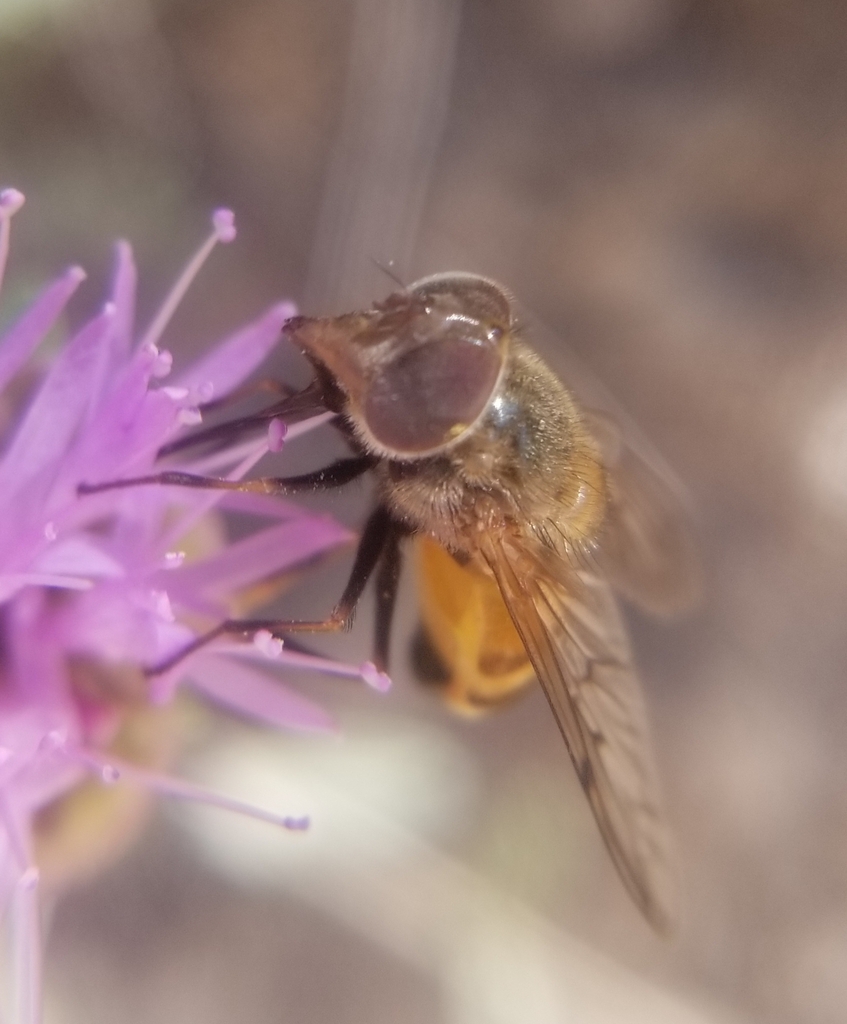
(c) Jack Byrley, some rights reserved (CC BY) · licence
Family: Syrphidae · Class: Insecta · Order: Diptera
Copestylum haagii (Haag's Bromeliad Fly) is a California animal in the Syrphidae family.
Haag's Bromeliad Fly (Copestylum haagii) is a member of the hover fly family Syrphidae, characterized by the typical syrphid body plan with large compound eyes and a distinctive wasp-like appearance. This species exhibits the characteristic hovering flight behavior of its family, with adults capable of remaining stationary in mid-air before darting quickly to new positions. Copestylum haagii occurs across the southwestern United States, with documented populations in California, Arizona, Nevada, Utah, Colorado, and New Mexico (BugGuide). In California, the species has been recorded from multiple counties, with observations spanning from March through October, showing peak activity during spring and summer months. The distribution extends from the Sonoran Desert region through various montane and desert transitional habitats. The species inhabits diverse arid and semi-arid environments typical of the southwestern United States. Adults are commonly found in desert scrub, chaparral, and oak woodland communities where they visit flowers for nectar. The larvae, like other members of the genus Copestylum, are believed to develop in decaying organic matter, though specific larval habitat requirements for this species have not been thoroughly documented. The common name "Bromeliad Fly" suggests an association with bromeliad plants, though this relationship requires further scientific verification for North American populations. Adults are active flower visitors and have been documented as part of the non-apoid flower-visiting fauna in various southwestern ecosystems (Pascarella et al. 2001). Based on BugGuide observations, the flight period extends from February through October, with peak abundance occurring from April through September. Like other hover flies, adults feed primarily on nectar and pollen, while females seek appropriate sites for egg-laying. The species exhibits seasonal patterns consistent with desert-adapted insects, with reduced activity during extreme summer heat in lower elevation habitats. Copestylum haagii does not currently hold federal or state conservation listing status. The species appears to maintain stable populations across its range, with regular observations documented through citizen science platforms. However, like many desert-adapted species, populations may face long-term pressures from habitat modification, urban development, and climate change impacts on southwestern ecosystems. The species' reliance on native flowering plants for adult nutrition makes it potentially vulnerable to landscape-level changes in plant community composition. Detailed ecological studies of this species remain limited, with most current knowledge derived from observational data collected by naturalists and citizen scientists. The specific host plant relationships, detailed life cycle timing, and population dynamics require additional research to fully understand the species' ecological requirements and conservation needs. Current distribution data suggests the species maintains a relatively stable presence across suitable habitats in the southwestern United States.
Classification
Class: Insecta · Order: Diptera · Family: Syrphidae
Frequently asked questions
How is Copestylum haagii classified?
Copestylum haagii belongs to class Insecta, order Diptera, family Syrphidae.
What family does Copestylum haagii belong to?
Copestylum haagii is in the Syrphidae family.
What is Copestylum haagii?
Haag's Bromeliad Fly (Copestylum haagii) is a member of the hover fly family Syrphidae, characterized by the typical syrphid body plan with large compound eyes and a distinctive wasp-like appearance.
Is Copestylum haagii found in California?
Yes. Copestylum haagii is recorded in California in The California Species Project's catalogue.
Related species
Other California species in the same genus, family, or bioregion.
Data from The California Species Project — 14,000+ California species with verified data from CNPS, CDFW, USFWS, and more.