Copestylum marginatum
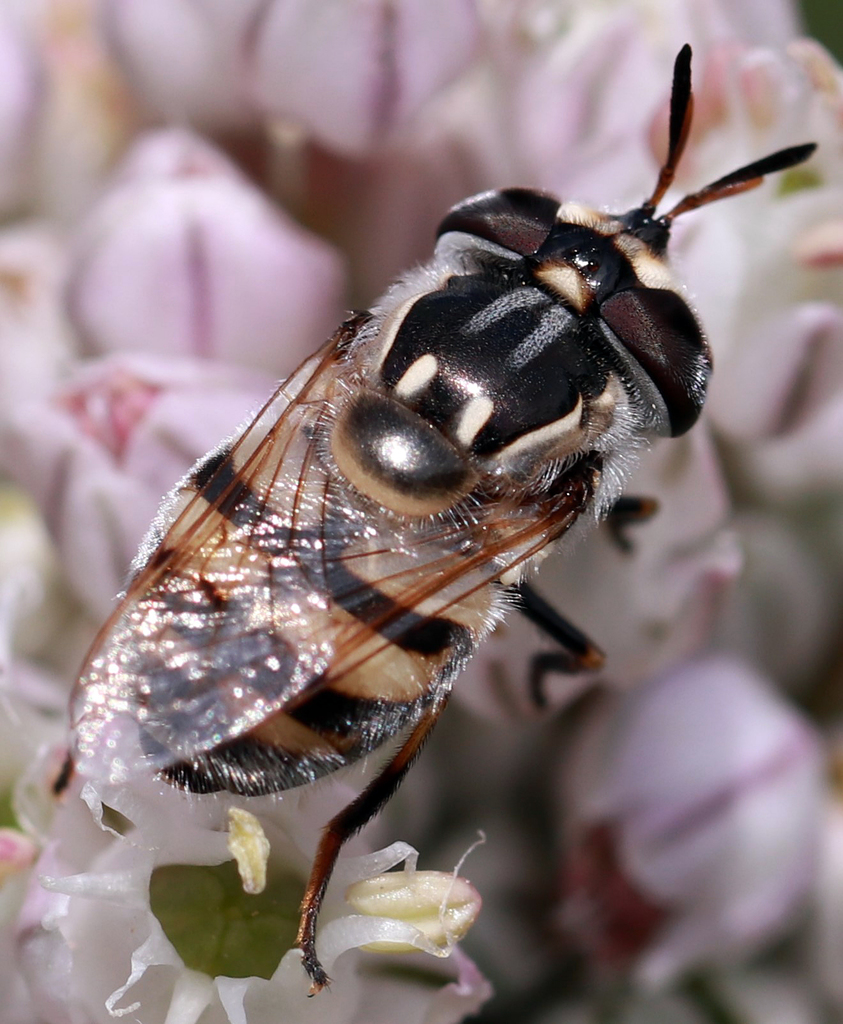
(c) Catherine C. Galley, some rights reserved (CC BY) · licence
Family: Syrphidae · Class: Insecta · Order: Diptera
Copestylum marginatum is a California animal in the Syrphidae family.
Copestylum marginatum is a medium-sized hover fly in the family Syrphidae, belonging to the marginatum species group within the genus Copestylum. This species is distinguished by the presence of two distinctive spots positioned in front of the scutellum, a key diagnostic feature that separates it from other Copestylum species (BugGuide 2008). Like other members of the Syrphidae family, adults exhibit the characteristic wasp-like coloration with yellow and black markings that provide Batesian mimicry protection from predators. Copestylum marginatum occurs in California, with documented records from multiple counties including Alameda County in the San Francisco Bay Area and Orange County in Southern California (BugGuide 2008, 2024). The species has been photographed in locations ranging from Fremont in the northern part of the state to Laguna Beach along the southern coast. Additional records extend the range into Arizona, with observations from Santa Cruz County, indicating a broader southwestern distribution pattern (BugGuide 2025). This hover fly inhabits diverse California ecosystems, from coastal areas to inland valleys. Observations span from near sea level in coastal Orange County to higher elevation areas. The species appears to be active across different seasons, with documented sightings ranging from February through August, suggesting either an extended flight period or multiple generations annually. Adults have been observed in both urban and semi-natural environments, indicating habitat flexibility. As with other Syrphidae species, Copestylum marginatum adults are likely pollinators that feed on nectar and pollen from various flowering plants. The larvae of most Copestylum species are saprophagous, developing in decaying organic matter such as rotting wood, tree holes, or other decomposing plant material. Adult females presumably seek appropriate breeding sites in dead or dying wood where larvae can complete their development. The species exhibits sexual dimorphism typical of hover flies, with distinguishable male and female forms documented in photographic records (BugGuide 2024). Copestylum marginatum does not appear on any federal or state conservation lists and is not assigned a conservation rank, suggesting stable populations. However, like many native insect species in California, it may face pressures from habitat loss, urbanization, and changes in plant communities that affect both adult nectar sources and larval breeding sites. The species' apparent adaptability to various habitats, including urban areas, may provide some resilience against environmental changes. Continued documentation through citizen science platforms like BugGuide helps track the distribution and status of this and other native hover fly species. The taxonomic status within the marginatum species group requires further study, as species boundaries within this complex may need refinement through molecular and morphological analysis.
Classification
Class: Insecta · Order: Diptera · Family: Syrphidae
Frequently asked questions
How is Copestylum marginatum classified?
Copestylum marginatum belongs to class Insecta, order Diptera, family Syrphidae.
What family does Copestylum marginatum belong to?
Copestylum marginatum is in the Syrphidae family.
What is Copestylum marginatum?
Copestylum marginatum is a medium-sized hover fly in the family Syrphidae, belonging to the marginatum species group within the genus Copestylum.
Is Copestylum marginatum found in California?
Yes. Copestylum marginatum is recorded in California in The California Species Project's catalogue.
Related species
Other California species in the same genus, family, or bioregion.
Data from The California Species Project — 14,000+ California species with verified data from CNPS, CDFW, USFWS, and more.