Corambe pacifica
Pacific Corambe
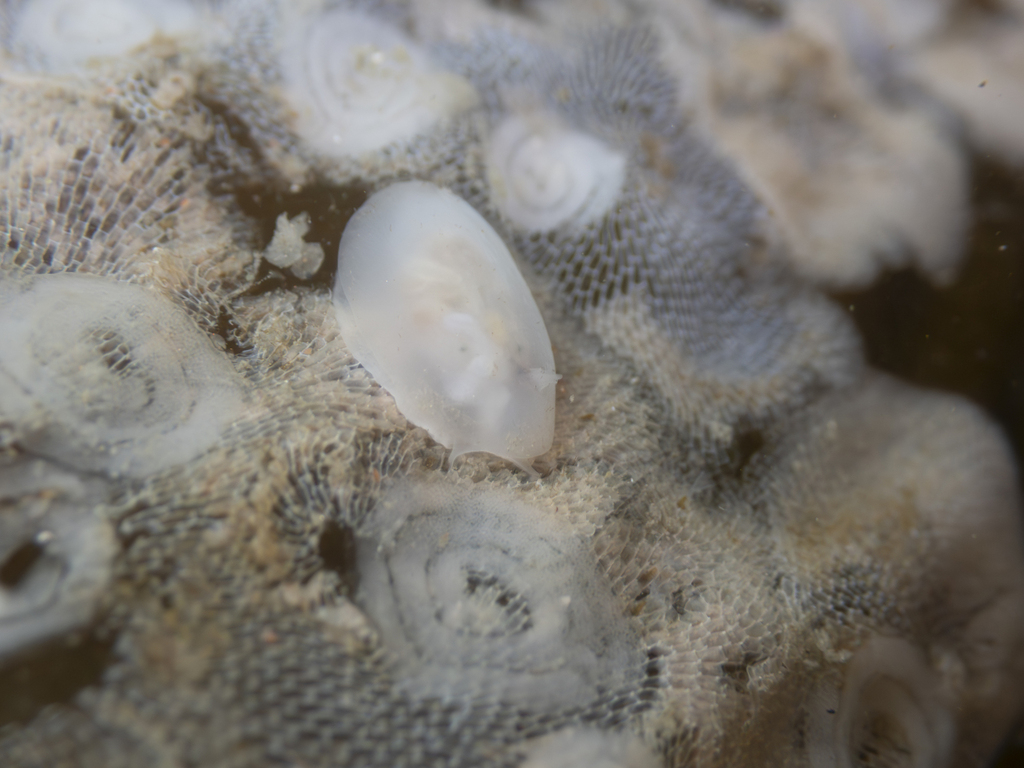
(c) Nathan, some rights reserved (CC BY) · licence
Family: Corambidae · Class: Gastropoda · Order: Nudibranchia
Corambe pacifica (Pacific Corambe) is a California animal in the Corambidae family.
The Pacific Corambe (Corambe pacifica) is a small marine nudibranch gastropod in the family Corambidae. This soft-bodied sea slug exhibits the characteristic features of nudibranchs, lacking a shell and possessing external gills or cerata for respiration. Like other members of the genus Corambe, this species displays a flattened, oval body form adapted for life on hard substrates in marine environments. The Pacific Corambe occurs along the Pacific Coast of North America, inhabiting rocky intertidal and shallow subtidal zones. Based on the broader distribution patterns of related Corambidae species, this nudibranch likely ranges from central California to at least the Pacific Northwest, though specific distributional limits require further documentation. The species appears to be associated with temperate Pacific coastal waters where suitable prey organisms are available. This nudibranch inhabits rocky marine environments, typically found on hard substrates including rock faces, boulders, and artificial structures in intertidal and shallow subtidal zones. Pacific Corambe likely occurs from the low intertidal zone to depths of several meters, where water movement and prey availability support viable populations. The species may show preferences for areas with moderate to strong water flow that facilitates feeding and respiration. Like other Corambidae nudibranchs, Pacific Corambe is presumed to be a specialized predator, likely feeding on hydroids, bryozoans, or other small sessile invertebrates. The family Corambidae is known for members that graze on encrusting organisms using their radula, a rasping feeding structure typical of gastropods. Reproductive biology follows the general nudibranch pattern of hermaphroditism, with individuals capable of both male and female functions. Spawning likely involves the deposition of gelatinous egg masses attached to hard substrates, though specific details of reproductive timing and larval development for this species remain undocumented. There appears to be some taxonomic uncertainty regarding this species, as USFWS databases show both Corambe pacifica and Quasicorambe pacifica, with the latter listed as "Frost-spot Corambe." This suggests possible taxonomic revision or synonymy that requires clarification. Currently, neither Corambe pacifica nor related taxa appear on federal or state endangered species lists, and no specific conservation status has been assigned. However, like many marine invertebrates in California's coastal waters, this species may face pressures from habitat degradation, pollution, climate change effects such as ocean acidification, and coastal development impacts. The small size and specialized habitat requirements of nudibranchs can make populations vulnerable to localized disturbances. Detailed ecological studies of Pacific Corambe remain limited, and much of the basic biological information for this species requires further research. The taxonomic status, precise distributional range, specific prey relationships, and population status all warrant additional investigation to better understand this Pacific Coast nudibranch.
Classification
Class: Gastropoda · Order: Nudibranchia · Family: Corambidae
Frequently asked questions
How is Corambe pacifica classified?
Corambe pacifica belongs to class Gastropoda, order Nudibranchia, family Corambidae.
What family does Corambe pacifica belong to?
Corambe pacifica is in the Corambidae family.
What is Corambe pacifica?
The Pacific Corambe (Corambe pacifica) is a small marine nudibranch gastropod in the family Corambidae.
Is Corambe pacifica found in California?
Yes. Corambe pacifica is recorded in California in The California Species Project's catalogue.
More California species
This species has no close relatives in our California data — here are other species to explore.
Data from The California Species Project — 14,000+ California species with verified data from CNPS, CDFW, USFWS, and more.