Cornu aspersum
Garden Snail
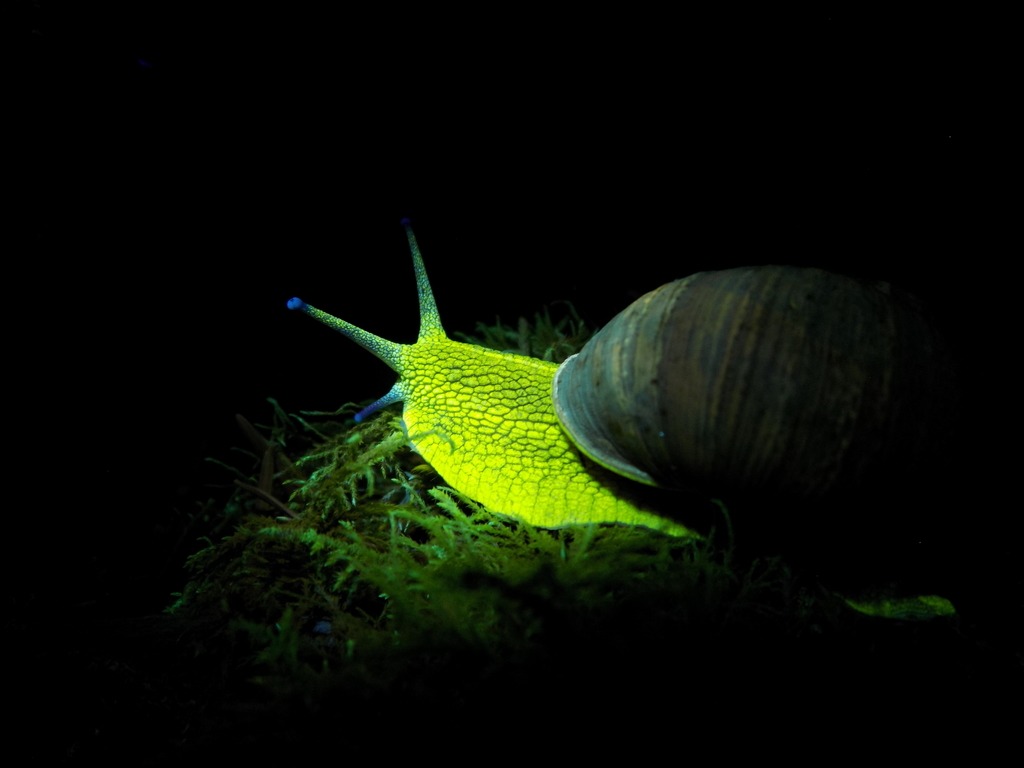
(c) Rand Workman, some rights reserved (CC BY-SA) · licence
Family: Helicidae · Class: Gastropoda · Order: Stylommatophora
Cornu aspersum (Garden Snail) is a California animal in the Helicidae family.
The garden snail is a medium-sized terrestrial gastropod with a globular, brownish shell typically measuring 25 to 40 mm (1.0 to 1.6 inches) in diameter. The shell displays a characteristic coiled spiral pattern with 4.5 to 5 whorls and exhibits variable coloration from light brown to dark brown, often with darker spiral bands. The soft body is grayish-brown and can be extended well beyond the shell opening when active. Two pairs of retractile tentacles project from the head, with the longer upper pair bearing eyes at their tips. Originally native to the Mediterranean region of Europe and North Africa, Cornu aspersum has established widespread populations throughout California and much of North America. This introduced species occurs from sea level to moderate elevations across diverse California habitats, with populations documented from urban gardens to wildland areas. The species has proven highly adaptable to California's Mediterranean climate, particularly in coastal and valley regions. Garden snails inhabit a broad range of environments, from cultivated gardens and agricultural areas to natural plant communities including coastal sage scrub, chaparral, and oak woodlands. They show a preference for areas with adequate moisture and shelter, commonly found under rocks, woody debris, at the base of vegetation, and in leaf litter. The species demonstrates considerable tolerance for both disturbed and undisturbed habitats, thriving in locations with diverse vegetation that provides both food and cover. This species is primarily herbivorous, feeding on a wide variety of live plant material including leaves, stems, flowers, and fruits of both cultivated and native plants. Garden snails are most active during cool, moist conditions, typically emerging at night or during periods of high humidity. They estivate during dry periods by sealing themselves within their shells using a temporary calcium carbonate barrier called an epiphragm. Reproduction occurs through hermaphroditic mating, with each individual capable of laying clutches of 50 to 100 spherical, white eggs in shallow soil depressions. Multiple reproductive cycles can occur annually under favorable conditions. As a non-native species, the garden snail is not protected under state or federal endangered species legislation. However, it is recognized as having significant ecological and agricultural impacts in California. The species poses documented threats to native plant communities and rare native mollusks through competition and herbivory. Federal documents identify garden snails as impacting federally endangered species including the island marble butterfly, where their herbivory destroys critical habitat (USFWS 2018). Studies have also examined potential competition with native snails such as the endangered Morro shoulderband snail, though research suggests limited direct competition due to different feeding preferences, with garden snails consuming live plant material while native species primarily feed on dead plant materials (USFWS 2022). Management efforts focus on control rather than conservation, with various mechanical and biological control methods employed to reduce populations in sensitive areas.
Classification
Class: Gastropoda · Order: Stylommatophora · Family: Helicidae
Frequently asked questions
How is Cornu aspersum classified?
Cornu aspersum belongs to class Gastropoda, order Stylommatophora, family Helicidae.
What family does Cornu aspersum belong to?
Cornu aspersum is in the Helicidae family.
What is Cornu aspersum?
The garden snail is a medium-sized terrestrial gastropod with a globular, brownish shell typically measuring 25 to 40 mm (1.0 to 1.6 inches) in diameter.
Is Cornu aspersum found in California?
Yes. Cornu aspersum is recorded in California in The California Species Project's catalogue.
Related species
Other California species in the same genus, family, or bioregion.
Data from The California Species Project — 14,000+ California species with verified data from CNPS, CDFW, USFWS, and more.