Coronula diadema
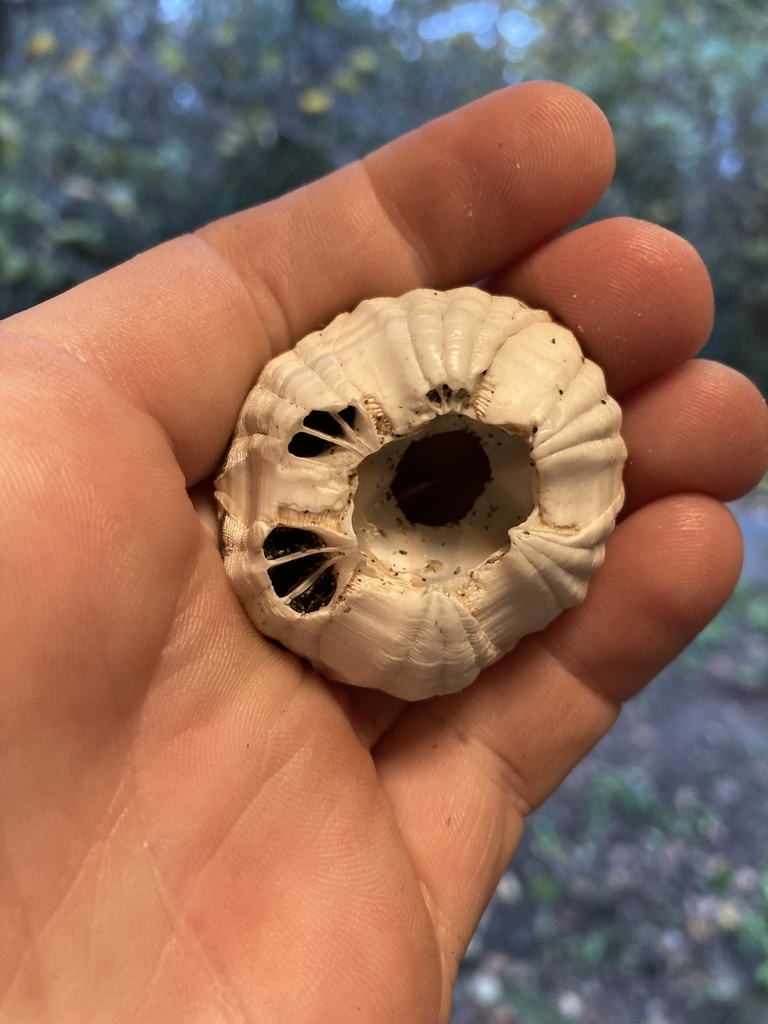
(c) Catie Clune, some rights reserved (CC BY) · licence
Family: Coronulidae · Class: Maxillopoda · Order: Balanomorpha
Coronula diadema is a California animal in the Coronulidae family.
Coronula diadema is a marine barnacle belonging to the family Coronulidae within the order Balanomorpha. This species is a whale barnacle, representing one of the specialized crustaceans that have evolved to live as obligate symbionts on large marine mammals. The barnacle exhibits the characteristic conical shell structure typical of acorn barnacles, with a calcareous base that allows permanent attachment to the host's skin. Coronula diadema occurs in marine waters where its whale hosts are found, though specific distribution records for this species in California waters are limited in available databases. As a whale barnacle, its range is determined by the migration patterns and habitat preferences of its cetacean hosts rather than by traditional biogeographic boundaries. The species likely occurs in offshore California waters when whales carrying these barnacles migrate through or reside in the region. This barnacle inhabits the skin surface of large whales, particularly in areas where water flow and feeding conditions are optimal. Unlike free-living barnacles that attach to rocky substrates, intertidal zones, or ship hulls, Coronula diadema has evolved specifically for life on whale skin. The barnacle creates a semi-permanent attachment that moves with its host through various marine environments, from surface waters to diving depths. As a filter-feeding crustacean, Coronula diadema extends its cirri (feathery appendages) from its shell to capture plankton, small crustaceans, and organic particles from the water column. The barnacle benefits from its host's movement through plankton-rich waters, which provides a continuous supply of food particles. Reproduction follows typical cirripede patterns, with individuals functioning as simultaneous hermaphrodites. Larvae are released into the water column where they must successfully locate and attach to an appropriate whale host to complete their life cycle. The conservation status of Coronula diadema has not been formally assessed, and the species does not appear on federal or state threatened and endangered species lists as of December 2025. However, as an obligate symbiont, the species' conservation is inherently linked to the health and abundance of its whale host populations. Threats to whale populations, including ship strikes, entanglement in fishing gear, ocean noise pollution, and climate change impacts on prey availability, indirectly affect whale barnacle populations. Marine pollution, particularly chemical contaminants that accumulate in whale tissues, may also impact these specialized symbionts. Scientific documentation for this species remains limited, particularly regarding its specific host preferences, population dynamics, and distribution patterns in California waters. The taxonomic classification places this species within a highly specialized group of crustaceans that have evolved unique adaptations for their symbiotic lifestyle, representing an important component of marine biodiversity that is closely tied to cetacean conservation efforts.
Classification
Class: Maxillopoda · Order: Balanomorpha · Family: Coronulidae
Frequently asked questions
How is Coronula diadema classified?
Coronula diadema belongs to class Maxillopoda, order Balanomorpha, family Coronulidae.
What family does Coronula diadema belong to?
Coronula diadema is in the Coronulidae family.
What is Coronula diadema?
Coronula diadema is a marine barnacle belonging to the family Coronulidae within the order Balanomorpha.
Is Coronula diadema found in California?
Yes. Coronula diadema is recorded in California in The California Species Project's catalogue.
More California species
This species has no close relatives in our California data — here are other species to explore.
Data from The California Species Project — 14,000+ California species with verified data from CNPS, CDFW, USFWS, and more.