Corydalus texanus
Western Dobsonfly
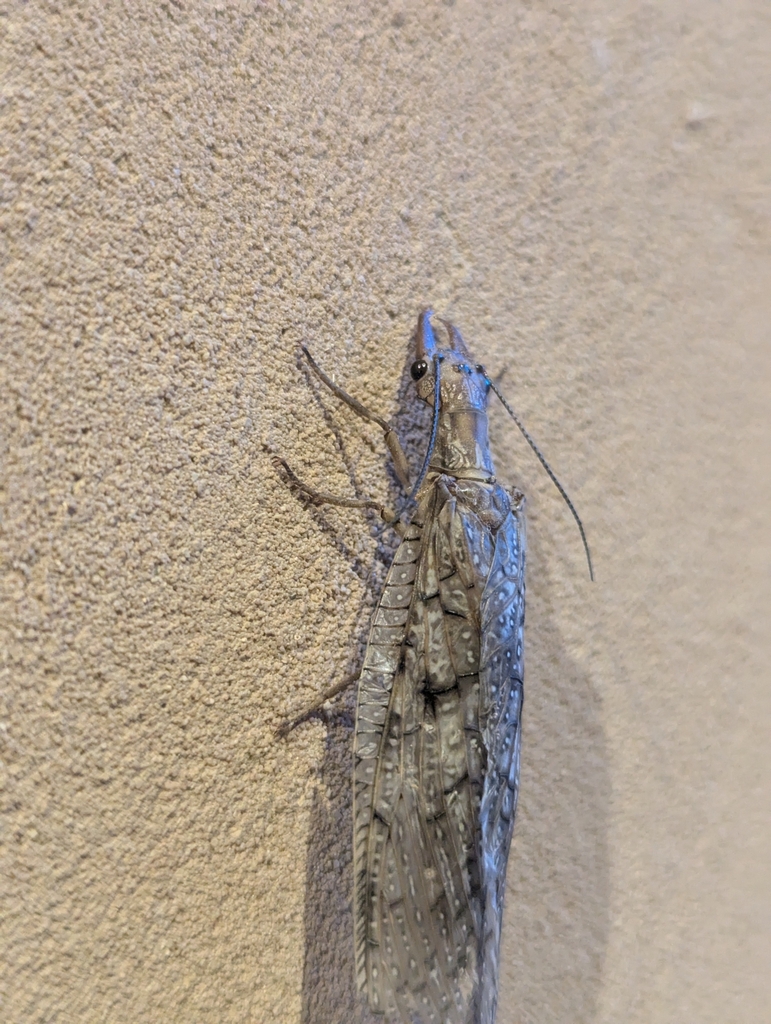
(c) velodrome, some rights reserved (CC BY) · licence
Family: Corydalidae · Class: Insecta · Order: Megaloptera
Corydalus texanus (Western Dobsonfly) is a California animal in the Corydalidae family.
The Western Dobsonfly (Corydalus texanus) is a large aquatic insect in the order Megaloptera, distinguished by its prominent mandibles and robust build. Adults are substantial insects, with females typically larger than males. Males possess elongated, sickle-shaped mandibles that can exceed the length of their head, while females have shorter, more functional mandibles capable of delivering a painful bite. The species displays pale markings on the head and conspicuous pale spots on the wings, differentiating it from other Corydalus species (BugGuide.Net). The Western Dobsonfly ranges across the southwestern United States, including Arizona, California, Colorado, Nevada, New Mexico, and Utah. In California, the species represents the westernmost extent of its distribution. The species was originally described from a specimen collected in Texas, though it is one of three dobsonfly species found in that state (BugGuide.Net). Despite its common name "Texas Dobsonfly," this designation can be misleading given its broader western range. Adults inhabit areas near permanent water sources, as their aquatic larvae, known as hellgrammites, require flowing streams and rivers for development. The larvae are predatory and live under rocks and debris in well-oxygenated water. Adult dobsonflies are typically found near riparian zones and may be attracted to artificial lights during their brief adult stage. Western Dobsonfly larvae are voracious predators, feeding on various aquatic invertebrates including mayfly nymphs, caddisfly larvae, and other soft-bodied insects. Adults have vestigial mouthparts and do not feed during their short reproductive phase. The larval stage can extend for several years, with the insects undergoing multiple molts before pupating in chambers they construct in soil or under objects near water. Adult emergence is synchronized with environmental cues, typically occurring during warmer months. Phenology data from citizen science observations shows peak adult activity from May through August across their range, with Arizona populations showing the highest activity levels in August (BugGuide.Net). Adults live only long enough to mate and reproduce, usually less than a week. The Western Dobsonfly currently holds no federal or state conservation status and appears to maintain stable populations across its range. However, like many aquatic insects, the species faces potential threats from water diversions, stream channelization, pollution, and habitat modification that affect water quality and flow regimes. Climate change may also impact the species through altered precipitation patterns and increased temperatures affecting stream ecosystems. The species serves as an indicator of healthy aquatic ecosystems, as the larvae require clean, well-oxygenated water for successful development. Maintaining riparian buffers and protecting watershed integrity remains important for continued population viability.
Classification
Class: Insecta · Order: Megaloptera · Family: Corydalidae
Frequently asked questions
How is Corydalus texanus classified?
Corydalus texanus belongs to class Insecta, order Megaloptera, family Corydalidae.
What family does Corydalus texanus belong to?
Corydalus texanus is in the Corydalidae family.
What is Corydalus texanus?
The Western Dobsonfly (Corydalus texanus) is a large aquatic insect in the order Megaloptera, distinguished by its prominent mandibles and robust build.
Is Corydalus texanus found in California?
Yes. Corydalus texanus is recorded in California in The California Species Project's catalogue.
Related species
Other California species in the same genus, family, or bioregion.
Data from The California Species Project — 14,000+ California species with verified data from CNPS, CDFW, USFWS, and more.