Coryphella trilineata
Three-lined Aeolid
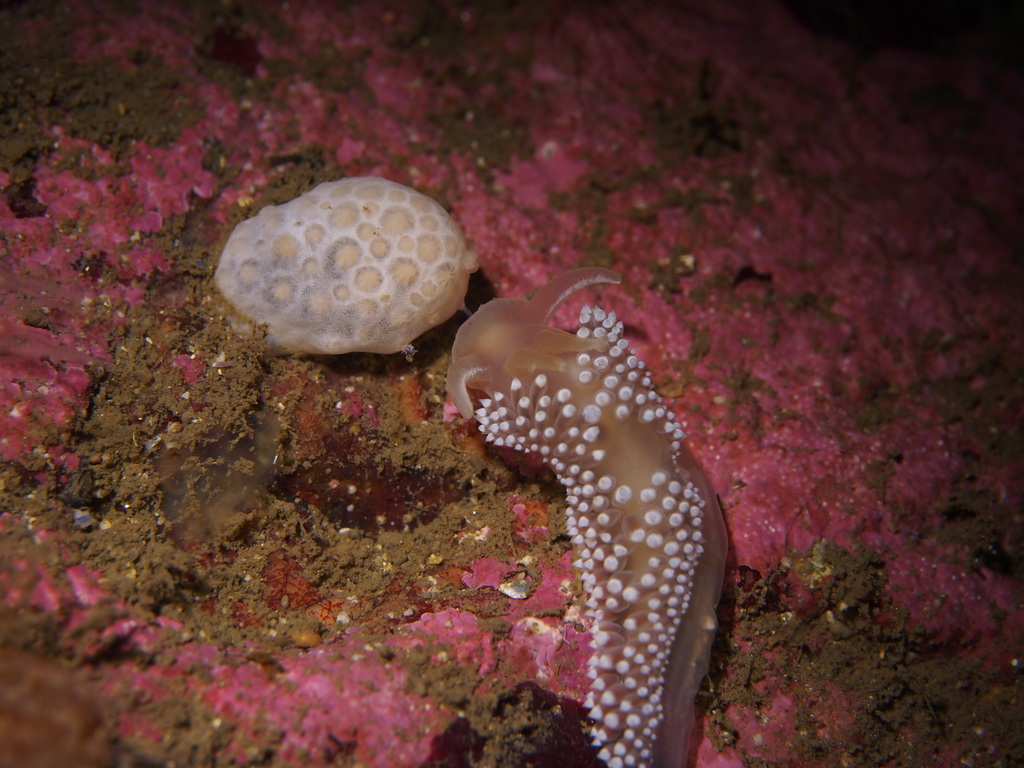
(c) Tine Kinn Kvamme, some rights reserved (CC BY) · licence
Family: Coryphellidae · Class: Gastropoda · Order: Nudibranchia
Coryphella trilineata (Three-lined Aeolid) is a California animal in the Coryphellidae family.
Coryphella trilineata, commonly known as the three-lined aeolid, is a small marine gastropod mollusk belonging to the nudibranch family Coryphellidae. This sea slug is characterized by its distinctive cerata (finger-like projections) that extend from its dorsal surface and its three prominent longitudinal lines that give the species its common name. The body is typically translucent to semi-transparent, allowing internal structures to be visible through the integument. The three-lined aeolid occurs along the Pacific coast of North America, with documented populations in California waters. The species has been observed and photographed in several California Marine Protected Areas, including Richardson Rock State Marine Reserve northwest of San Miguel Island, Campus Point State Marine Conservation Area near Santa Barbara, Naples State Marine Conservation Area, and Carmel Pinnacles State Marine Reserve off the Monterey Peninsula. These observations indicate the species has a range extending from at least central California to the Channel Islands region. This nudibranch inhabits rocky subtidal environments, typically found on or near hard substrates in kelp forest ecosystems. Depth records from California MPAs indicate the species occurs from shallow nearshore waters to depths exceeding 200 feet. The three-lined aeolid appears to prefer areas with complex topography, including granite pinnacles, reef walls, and rocky outcroppings that provide suitable habitat for its hydrozoan prey. These environments are characterized by strong water movement and high biodiversity, supporting the diverse invertebrate communities upon which aeolid nudibranchs depend. Like other members of the Coryphellidae family, C. trilineata is a specialized predator that feeds primarily on hydrozoans (small colonial cnidarians). The species uses its radula to scrape prey organisms from hard surfaces, and its cerata contain extensions of the digestive system that allow for efficient nutrient processing. The cerata also serve a defensive function, as many aeolid species can sequester stinging cells (cnidocytes) from their hydrozoan prey and concentrate them in specialized structures called cnidosacs located at the tips of the cerata. Reproduction in nudibranchs is typically hermaphroditic, with individuals capable of both male and female reproductive functions, though cross-fertilization is the norm. The conservation status of the three-lined aeolid has not been formally assessed by state or federal agencies, and the species does not appear on current threatened or endangered species lists. However, like many marine invertebrates in California waters, this species faces potential threats from habitat degradation, ocean acidification, and climate change impacts on marine ecosystems. The presence of C. trilineata in multiple Marine Protected Areas provides some level of habitat protection, as these areas prohibit the take of living marine resources and help preserve the rocky reef ecosystems upon which the species depends. Long-term monitoring within these protected areas may provide valuable data on population trends and ecological requirements for this and other marine invertebrate species.
Classification
Class: Gastropoda · Order: Nudibranchia · Family: Coryphellidae
Frequently asked questions
How is Coryphella trilineata classified?
Coryphella trilineata belongs to class Gastropoda, order Nudibranchia, family Coryphellidae.
What family does Coryphella trilineata belong to?
Coryphella trilineata is in the Coryphellidae family.
What is Coryphella trilineata?
Coryphella trilineata, commonly known as the three-lined aeolid, is a small marine gastropod mollusk belonging to the nudibranch family Coryphellidae.
Is Coryphella trilineata found in California?
Yes. Coryphella trilineata is recorded in California in The California Species Project's catalogue.
More California species
This species has no close relatives in our California data — here are other species to explore.
Data from The California Species Project — 14,000+ California species with verified data from CNPS, CDFW, USFWS, and more.