Cosipara tricoloralis
Tricolored Cosipara
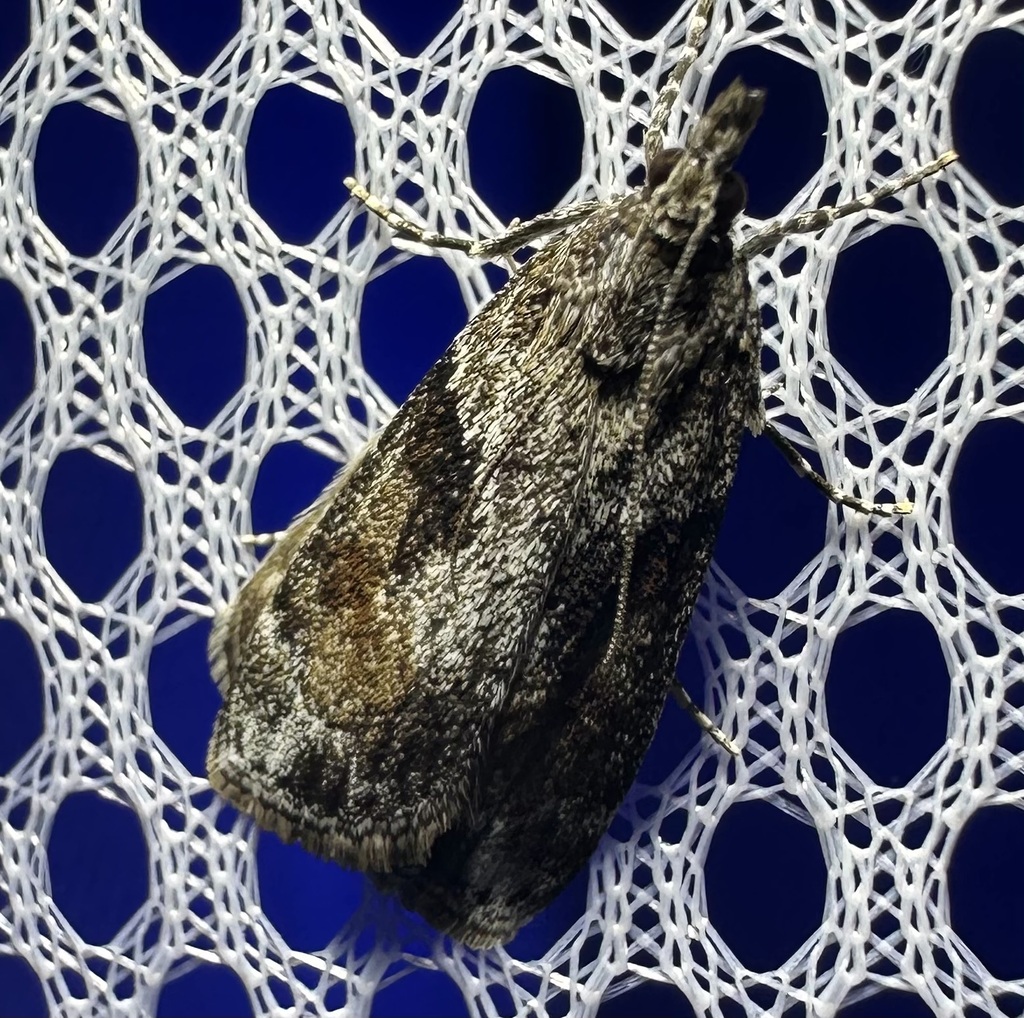
(c) Barbara Banfield, some rights reserved (CC BY) · licence
Family: Crambidae · Class: Insecta · Order: Lepidoptera
Cosipara tricoloralis (Tricolored Cosipara) is a California animal in the Crambidae family.
The tricolored cosipara moth (Cosipara tricoloralis) is a small moth in the family Crambidae, described by Harrison Gray Dyar Jr. in 1904. This species exhibits the typical crambid moth body plan with narrow forewings and relatively broad hindwings. The common name "tricolored" refers to the distinctive three-color pattern displayed on the wings, though specific morphological details remain poorly documented in the scientific literature. Cosipara tricoloralis occurs across western North America, with confirmed records from British Columbia, California, Colorado, Montana, Oregon, and Washington (iNaturalist). Within California, the species' specific distribution and county-level occurrence patterns have not been comprehensively mapped. The species appears to have a relatively broad latitudinal range, extending from the Pacific Northwest through the Rocky Mountain region. Habitat requirements for the tricolored cosipara moth remain largely undocumented in available scientific literature. Like many crambid moths, the species likely occupies diverse habitats across its range, potentially including forest edges, shrublands, and grassland areas. Elevation preferences and specific microhabitat requirements have not been established through systematic study. The life history and ecological requirements of C. tricoloralis are poorly known. Adult flight periods, larval host plants, and developmental biology have not been well documented in peer-reviewed literature. The species presumably follows the typical crambid pattern of complete metamorphosis, with larvae likely feeding on herbaceous plants or grasses, though specific host plant associations remain unconfirmed. Seasonal activity patterns, breeding behavior, and population dynamics require further research to establish basic ecological parameters. The tricolored cosipara moth currently holds no federal or state conservation listing status. The species does not appear on the U.S. Fish and Wildlife Service's list of threatened or endangered species, nor does it have a designated conservation rank from NatureServe or the International Union for Conservation of Nature. Population trends and conservation threats remain unknown due to limited survey data and taxonomic research focus on this group. The species may benefit from broader moth survey efforts that could establish baseline population data and habitat associations. Given the limited scientific documentation available for this species, many aspects of its biology, ecology, and conservation status require further investigation. The information presented here represents current knowledge compiled from available taxonomic and citizen science sources. Systematic field studies focusing on crambid moth diversity in western North America would help establish more comprehensive species accounts for C. tricoloralis and related taxa. Additional research priorities include documenting host plant relationships, flight periods, and habitat preferences across the species' geographic range.
Classification
Class: Insecta · Order: Lepidoptera · Family: Crambidae
Frequently asked questions
How is Cosipara tricoloralis classified?
Cosipara tricoloralis belongs to class Insecta, order Lepidoptera, family Crambidae.
What family does Cosipara tricoloralis belong to?
Cosipara tricoloralis is in the Crambidae family.
What is Cosipara tricoloralis?
The tricolored cosipara moth (Cosipara tricoloralis) is a small moth in the family Crambidae, described by Harrison Gray Dyar Jr.
Is Cosipara tricoloralis found in California?
Yes. Cosipara tricoloralis is recorded in California in The California Species Project's catalogue.
Related species
Other California species in the same genus, family, or bioregion.
Data from The California Species Project — 14,000+ California species with verified data from CNPS, CDFW, USFWS, and more.