Cosmopterix molybdina
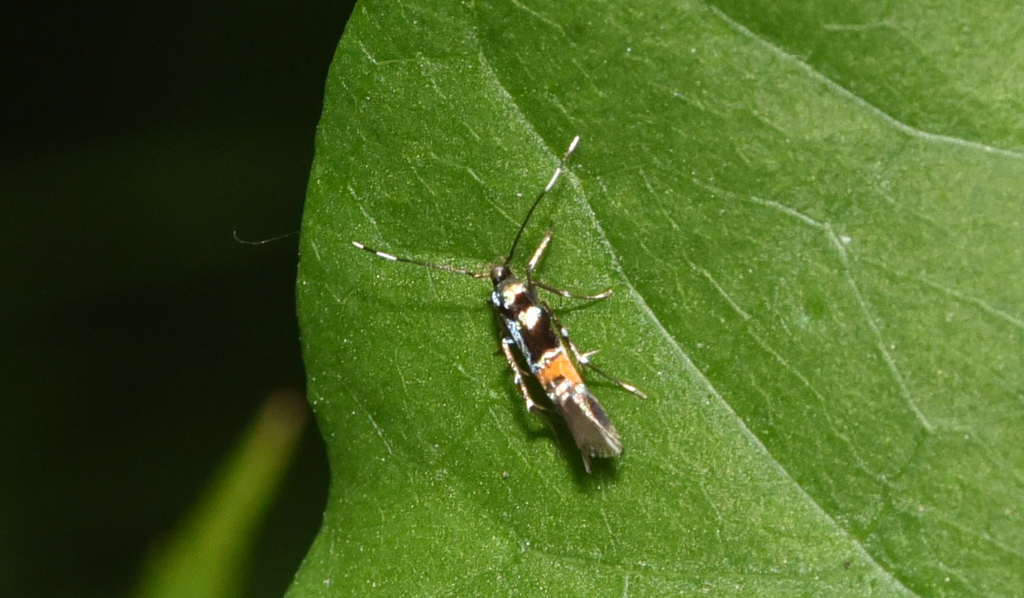
(c) Marcel_Pepin, some rights reserved (CC BY) · licence
Family: Cosmopterigidae · Class: Insecta · Order: Lepidoptera
Cosmopterix molybdina is a California animal in the Cosmopterigidae family.
Cosmopterix molybdina is a small moth in the family Cosmopterigidae, a group commonly known as cosmet moths. This species belongs to a diverse genus of micromoths distributed worldwide, with many species exhibiting narrow host plant associations and specialized ecological requirements. The physical characteristics of C. molybdina follow the typical cosmopterigid body plan, featuring a slender build with narrow forewings and reduced hindwings. Adult moths in this genus typically measure 4-8 mm in wingspan, with forewings displaying metallic or iridescent scaling patterns. The specific epithet 'molybdina' suggests metallic coloration, likely referring to a lead-gray or bluish-metallic sheen on the wing surfaces, though detailed morphological descriptions require verification from taxonomic literature. The geographic range and distribution of Cosmopterix molybdina remain poorly documented in accessible databases. Many Cosmopterix species demonstrate restricted distributions, often associated with specific host plants or microhabitat conditions. Without verified locality records, the species' range within California and broader distribution cannot be definitively stated. The genus Cosmopterix includes both native and introduced species in North America, with some species having very localized populations. Habitat requirements for C. molybdina are not well-documented in current literature. Cosmopterix species typically inhabit areas where their specific host plants occur, which can include various terrestrial plant communities ranging from coastal scrub to montane forests. Many species in this genus are associated with herbaceous plants, shrubs, or trees, with larvae often mining leaves, stems, or developing within plant galls. The life history and ecological behavior of C. molybdina follow the general pattern observed in Cosmopterigidae. Adults are typically active during warmer months, with flight periods varying by species and geographic location. Larvae are usually leaf miners, stem borers, or gall makers, depending on the species and host plant relationship. Development from egg to adult typically requires one to several months, with some species completing multiple generations per year in favorable conditions. Many Cosmopterix species exhibit high host plant specificity, with larvae developing on single plant species or closely related plants within a genus or family. This specialization can make species vulnerable to habitat loss or changes in plant community composition. Adult moths are generally weak fliers and may have limited dispersal capabilities, potentially restricting population connectivity. The conservation status of Cosmopterix molybdina is unknown, as the species lacks formal conservation assessment. Many microlepidoptera species remain understudied, with limited information on population trends, threats, or conservation needs. Given the potential for narrow ecological requirements typical of the genus, habitat preservation and maintenance of native plant communities would likely benefit this species. Further taxonomic and ecological research is needed to assess the species' distribution, abundance, and conservation requirements within California's diverse ecosystems.
Classification
Class: Insecta · Order: Lepidoptera · Family: Cosmopterigidae
Frequently asked questions
How is Cosmopterix molybdina classified?
Cosmopterix molybdina belongs to class Insecta, order Lepidoptera, family Cosmopterigidae.
What family does Cosmopterix molybdina belong to?
Cosmopterix molybdina is in the Cosmopterigidae family.
What is Cosmopterix molybdina?
Cosmopterix molybdina is a small moth in the family Cosmopterigidae, a group commonly known as cosmet moths.
Is Cosmopterix molybdina found in California?
Yes. Cosmopterix molybdina is recorded in California in The California Species Project's catalogue.
Related species
Other California species in the same genus, family, or bioregion.
Data from The California Species Project — 14,000+ California species with verified data from CNPS, CDFW, USFWS, and more.