Cotinis mutabilis
Figeater Beetle
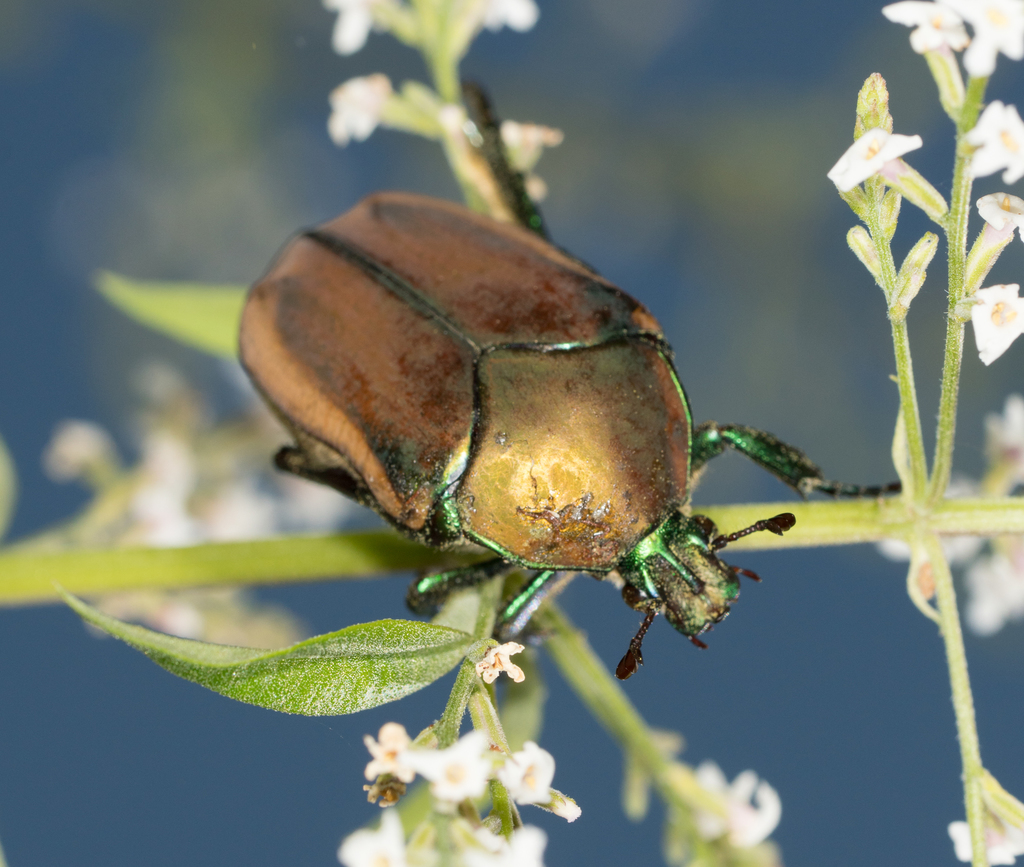
no rights reserved · CC0
Family: Scarabaeidae · Class: Insecta · Order: Coleoptera
Cotinis mutabilis (Figeater Beetle) is a California animal in the Scarabaeidae family.
The figeater beetle is a large scarab beetle in the subfamily Cetoniinae, distinguished by its metallic green coloration and robust build. Adults typically measure 20 to 35 mm (0.8 to 1.4 inches) in length, making them one of the larger beetles commonly encountered in California gardens and urban areas. The dorsal surface displays an iridescent green sheen that may appear bronze or copper under certain lighting conditions. The body is broadly oval and somewhat flattened, with strong legs adapted for walking and climbing. Males and females are similar in appearance, though males may have slightly more pronounced tarsal claws. Cotinis mutabilis occurs throughout much of California, from sea level to approximately 1,500 meters (4,900 feet) elevation. The species ranges from Baja California, Mexico, northward through California into southern Oregon. In California, populations are most abundant in the Central Valley, coastal regions, and lower elevation foothill areas. The beetle has adapted well to urban and suburban environments, often becoming common in residential gardens and parks. Figeater beetles inhabit a variety of environments including riparian woodlands, chaparral, oak savannas, and extensively modified landscapes such as agricultural areas and urban gardens. Adults are frequently found in areas with abundant fruit trees, particularly figs, grapes, stone fruits, and citrus. They show a preference for warm, sunny locations and are often observed on or near their preferred food sources during peak activity periods. Adults are primarily frugivorous, feeding on overripe and fermenting fruits including figs, grapes, peaches, plums, and other soft fruits (BugGuide). Their feeding behavior contributes to their common name, as they are frequently observed consuming figs and other garden fruits. Adults are strong but somewhat clumsy fliers, often producing a distinctive loud buzzing sound during flight. Their flight pattern appears erratic, and they frequently collide with windows, screens, and other obstacles. Activity peaks during warm summer months, typically from June through September. Larvae develop in compost piles, decaying organic matter, and rich garden soil, feeding on decomposing plant material. The life cycle is annual in most areas, with adults emerging in summer to mate and lay eggs. Cotinis mutabilis is not listed under state or federal endangered species legislation and appears to maintain stable populations throughout its range. The species has actually benefited from human modification of landscapes, particularly the introduction of fruit trees and garden plantings that provide abundant food resources. Urban and suburban environments often support higher densities than natural habitats. While specific population data are not available, the beetle remains common and widely distributed across California as of December 2025. No significant conservation concerns have been identified, and the species continues to expand its range in association with human development and fruit cultivation.
Classification
Class: Insecta · Order: Coleoptera · Family: Scarabaeidae
Frequently asked questions
How is Cotinis mutabilis classified?
Cotinis mutabilis belongs to class Insecta, order Coleoptera, family Scarabaeidae.
What family does Cotinis mutabilis belong to?
Cotinis mutabilis is in the Scarabaeidae family.
What is Cotinis mutabilis?
The figeater beetle is a large scarab beetle in the subfamily Cetoniinae, distinguished by its metallic green coloration and robust build.
Is Cotinis mutabilis found in California?
Yes. Cotinis mutabilis is recorded in California in The California Species Project's catalogue.
Related species
Other California species in the same genus, family, or bioregion.
Data from The California Species Project — 14,000+ California species with verified data from CNPS, CDFW, USFWS, and more.