Cottus aleuticus
Coast Range sculpin
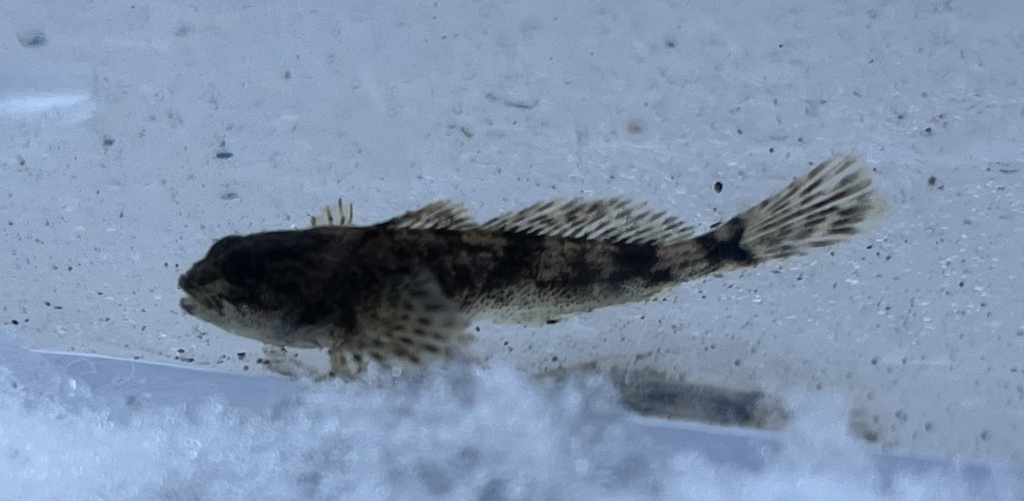
(c) Zakqary Roy, some rights reserved (CC BY) · licence
Family: Cottidae · Class: Actinopterygii · Order: Perciformes
Cottus aleuticus (Coast Range sculpin) is a California animal in the Cottidae family.
The Coast Range sculpin is a small freshwater fish endemic to coastal streams of California and Oregon. Adults typically measure 60 to 100 millimeters (2.4 to 3.9 inches) in total length, with a robust, laterally compressed body characteristic of the sculpin family. The species displays mottled brown and gray coloration with darker bands across the body, providing effective camouflage against rocky stream bottoms. The head is broad and flattened with large pectoral fins that extend when the fish rests on substrate. Males develop more pronounced breeding tubercles during spawning season. Cottus aleuticus occurs along the Pacific Coast from northern California through Oregon and into Washington. In California, populations are found in coastal drainages from the Russian River system north to the Oregon border, including streams in Sonoma, Mendocino, Humboldt, and Del Norte counties. The species inhabits both main stem rivers and smaller tributaries within these watersheds. Historically, the range may have extended further south, but urban development and habitat modification have eliminated populations from some southern coastal streams. Coast Range sculpins require cool, clear streams with rocky or gravelly substrates and adequate canopy cover. They are typically found in riffle areas and pools with moderate to swift current velocity. Water temperatures generally remain below 18 degrees Celsius (64 degrees Fahrenheit) throughout their habitat range. The species shows preference for areas with large cobble and boulder substrates that provide hiding places and foraging opportunities. Stream gradients in occupied habitat typically range from 0.5 to 4 percent. These sculpins are benthic predators that feed primarily on aquatic invertebrates including mayfly nymphs, caddisfly larvae, chironomid larvae, and small crustaceans. They are ambush predators that remain motionless on the substrate before striking at passing prey. Spawning occurs from March through May, with males establishing territories under large rocks or logs. Females deposit clusters of adhesive eggs on the undersides of rocks, which males guard until hatching. Larvae remain in the gravel for several weeks before emerging as free-swimming juveniles. The species is not known to undertake significant migrations, typically completing its entire life cycle within short stream reaches. The Coast Range sculpin is not federally or state listed and maintains stable populations throughout most of its range. The species' IUCN rank of N5 indicates it is demonstrably secure globally. However, localized threats include habitat degradation from logging activities, urban development, water diversions, and sedimentation. Climate change may affect the species through increased water temperatures and altered precipitation patterns that could reduce suitable habitat. Stream restoration efforts in coastal watersheds benefit this species by improving water quality and restoring natural flow regimes. The Coast Range sculpin serves as an indicator species for healthy coldwater stream ecosystems in the Pacific Northwest coastal region.
Classification
Class: Actinopterygii · Order: Perciformes · Family: Cottidae
Frequently asked questions
How is Cottus aleuticus classified?
Cottus aleuticus belongs to class Actinopterygii, order Perciformes, family Cottidae.
What family does Cottus aleuticus belong to?
Cottus aleuticus is in the Cottidae family.
What is Cottus aleuticus?
The Coast Range sculpin is a small freshwater fish endemic to coastal streams of California and Oregon.
Is Cottus aleuticus found in California?
Yes. Cottus aleuticus is recorded in California in The California Species Project's catalogue.
Related species
Other California species in the same genus, family, or bioregion.
Data from The California Species Project — 14,000+ California species with verified data from CNPS, CDFW, USFWS, and more.