Cottus asper
Prickly sculpin
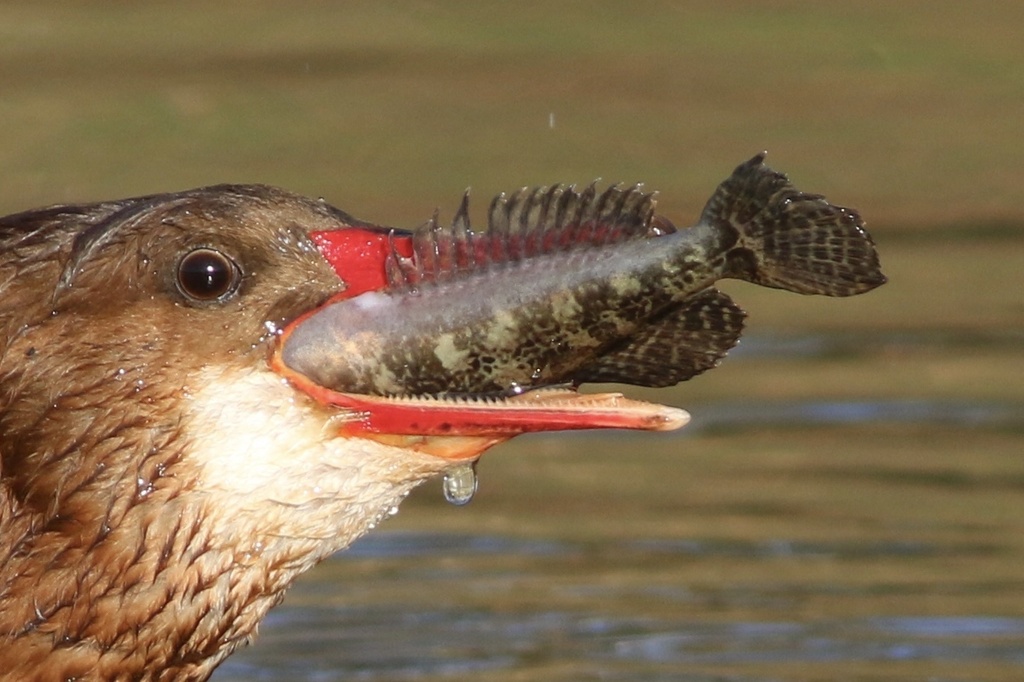
(c) Cricket Raspet, some rights reserved (CC BY) · licence
Family: Cottidae · Class: Actinopterygii · Order: Perciformes
Cottus asper (Prickly sculpin) is a California animal in the Cottidae family.
The prickly sculpin is a freshwater fish species belonging to the family Cottidae, characterized by its distinctive spiny appearance and bottom-dwelling behavior. Adults typically measure 76 to 102 mm (3 to 4 inches) in total length, with a maximum recorded length of 305 mm (12 inches). The species displays a robust, laterally compressed body with a broad, flattened head comprising approximately 30% of the total body length. The skin lacks scales but is covered with numerous small prickles, giving the species its common name. Coloration varies from olive-brown to dark gray dorsally, with lighter ventral surfaces and irregular dark blotting or banding patterns that provide effective camouflage against rocky substrates. Historically, prickly sculpin occurred throughout the Columbia River system from the Pacific Ocean to the Snake River drainage, and in coastal streams from Alaska to central California. In California, the species is found in the Sacramento-San Joaquin Delta system, San Francisco Bay tributaries, and select coastal watersheds from Mendocino County south to Monterey County. Current distribution has contracted significantly from historical ranges, with many populations extirpated from urbanized watersheds in the San Francisco Bay Area. Prickly sculpin inhabit cool, well-oxygenated waters in both freshwater and brackish environments. The species occurs in streams, rivers, lakes, and estuarine areas with rocky or gravelly bottoms. Adults prefer areas with moderate to swift current and substantial cover provided by rocks, woody debris, or aquatic vegetation. Water temperatures typically range from 4 to 20°C (39 to 68°F), with optimal conditions between 10 to 15°C (50 to 59°F). The species demonstrates tolerance for salinity levels up to 10 parts per thousand, allowing movement between freshwater and brackish habitats. Prickly sculpin are benthic predators that feed primarily on aquatic invertebrates including mayfly nymphs, caddisfly larvae, chironomid larvae, amphipods, and small crayfish. Adults also consume fish eggs and small fish, including their own species. Spawning occurs from December through April, with peak activity in February and March. Males establish territories under rocks or in crevices where females deposit 500 to 1,500 adhesive eggs in a single layer. Males provide parental care by guarding the nest and aerating eggs with fin movements until hatching occurs after 6 to 10 weeks. The prickly sculpin is not federally listed but faces conservation challenges throughout its California range. Primary threats include habitat modification through urbanization, water diversions, and channelization that eliminate essential rocky substrates and reduce flow regimes. Water quality degradation from agricultural runoff, urban stormwater, and point source pollution affects survival and reproduction. Climate change impacts include increased water temperatures and altered precipitation patterns that reduce suitable habitat. Dam construction has fragmented populations and blocked migration corridors. Several California populations have experienced significant declines, particularly in the San Francisco Bay Area where urban development has eliminated much of the historical habitat.
Classification
Class: Actinopterygii · Order: Perciformes · Family: Cottidae
Frequently asked questions
How is Cottus asper classified?
Cottus asper belongs to class Actinopterygii, order Perciformes, family Cottidae.
What family does Cottus asper belong to?
Cottus asper is in the Cottidae family.
What is Cottus asper?
The prickly sculpin is a freshwater fish species belonging to the family Cottidae, characterized by its distinctive spiny appearance and bottom-dwelling behavior.
Is Cottus asper found in California?
Yes. Cottus asper is recorded in California in The California Species Project's catalogue.
Related species
Other California species in the same genus, family, or bioregion.
Data from The California Species Project — 14,000+ California species with verified data from CNPS, CDFW, USFWS, and more.