Cottus asperrimus
Rough sculpin
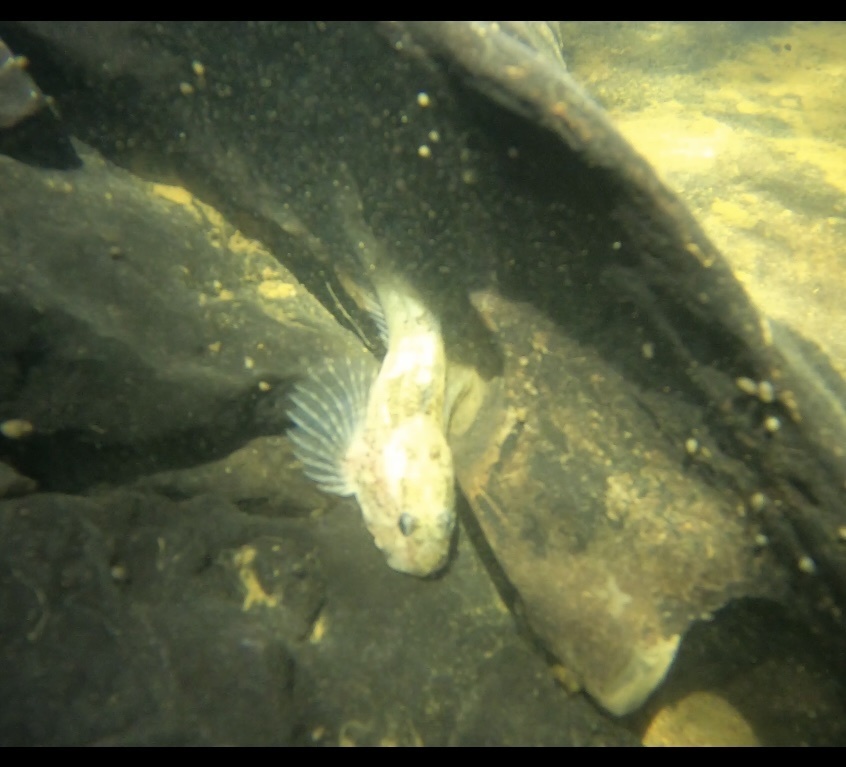
no rights reserved · CC0
Family: Cottidae · Class: Actinopterygii · Order: Perciformes
Conservation status: FP · G2 S2
Cottus asperrimus (Rough sculpin) is a California animal in the Cottidae family.
The rough sculpin is a small freshwater fish endemic to the Pit River system in northeastern California. Adults typically measure 50 to 100 mm (2.0 to 3.9 inches) in total length, with a robust, laterally compressed body and a large head comprising approximately one-third of the total body length. The species is characterized by a broad, flattened head with prominent eyes positioned dorsally, and a wide mouth extending to below the anterior margin of the eye. The body is covered with small, embedded scales and numerous small prickles, giving the fish its rough texture and common name. Coloration varies from dark brown to olive-green dorsally, with irregular dark blotches and bars, while the ventral surface is pale yellow to cream. The pectoral fins are large and fan-shaped, adapted for bottom-dwelling life. Historically, the rough sculpin occurred throughout the Pit River drainage system in Shasta, Lassen, and Modoc counties, California. The species inhabited approximately 640 kilometers of stream habitat within this watershed. Currently, the distribution has been severely reduced, with populations confirmed in only a few tributaries of the upper Pit River, including portions of Ash Creek, Burney Creek, and Hat Creek. The species has been extirpated from much of its historical range due to habitat modification and water diversions. Rough sculpin inhabit cool, clear streams with gravel and cobble substrates, typically at elevations between 610 and 1,220 meters (2,000 to 4,000 feet). The species requires well-oxygenated water with temperatures below 20°C (68°F) and moderate to swift current velocities. Adults are commonly found in pools and runs with overhanging vegetation or undercut banks that provide cover from predators and current. Juveniles utilize shallow riffle areas with smaller substrate materials. Rough sculpin are benthic carnivores, feeding primarily on aquatic invertebrates including mayfly nymphs, caddisfly larvae, chironomid larvae, and small crustaceans. The species exhibits sedentary behavior, remaining motionless on the substrate until prey approaches within striking distance. Spawning occurs from February through April when water temperatures reach 10 to 15°C (50 to 59°F). Males construct nests under rocks or logs in shallow areas, where females deposit 200 to 400 adhesive eggs. Males guard the nest and fan the eggs until hatching occurs after 4 to 6 weeks. The rough sculpin is designated as a Fully Protected species under California law and holds a global conservation rank of G2 (imperiled) and state rank of S2 (imperiled). Population estimates suggest fewer than 2,500 individuals remain across all known locations. Primary threats include habitat fragmentation from dams and diversions, water quality degradation from agricultural runoff and logging activities, competition and predation from introduced species, and climate change effects on stream temperatures and flow patterns. The California Department of Fish and Wildlife has identified habitat restoration and water management as critical conservation priorities for the species' recovery.
Classification
Class: Actinopterygii · Order: Perciformes · Family: Cottidae
Conservation status
FP · G2 S2
Frequently asked questions
How is Cottus asperrimus classified?
Cottus asperrimus belongs to class Actinopterygii, order Perciformes, family Cottidae.
What family does Cottus asperrimus belong to?
Cottus asperrimus is in the Cottidae family.
Is Cottus asperrimus protected or of conservation concern?
Cottus asperrimus carries the following status: FP · G2 S2.
What is Cottus asperrimus?
The rough sculpin is a small freshwater fish endemic to the Pit River system in northeastern California.
Is Cottus asperrimus found in California?
Yes. Cottus asperrimus is recorded in California in The California Species Project's catalogue.
Related species
Other California species in the same genus, family, or bioregion.
Data from The California Species Project — 14,000+ California species with verified data from CNPS, CDFW, USFWS, and more.