Cottus beldingi
Paiute sculpin
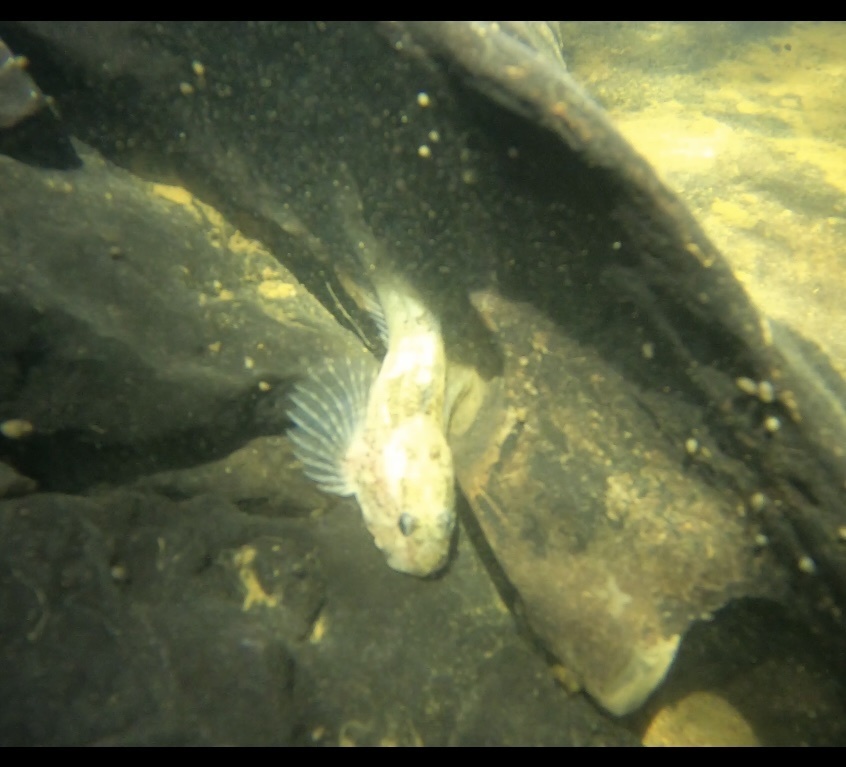
no rights reserved · CC0
Family: Cottidae · Class: Actinopterygii · Order: Perciformes
Cottus beldingi (Paiute sculpin) is a California animal in the Cottidae family.
The Paiute sculpin is a small freshwater fish endemic to California's eastern Sierra Nevada region. Adults typically measure 50 to 90 mm (2.0 to 3.5 inches) in total length, with a maximum recorded length of approximately 100 mm (3.9 inches). The species exhibits the characteristic sculpin body plan: a large, flattened head comprising roughly one-third of total body length, tapering to a slender caudal peduncle. The body is mottled brown and gray with darker irregular bands and spots that provide camouflage against rocky substrates. The large pectoral fins are fan-shaped and used for maneuvering among rocks. Males develop more pronounced coloration during breeding season, with intensified patterns and darker pigmentation. Historically, the Paiute sculpin inhabited numerous tributaries and lakes throughout the Owens River basin in Mono and Inyo counties. The species was documented in Owens River tributaries including Rock Creek, Pine Creek, Bishop Creek, Big Pine Creek, Oak Creek, Independence Creek, Lone Pine Creek, and Cottonwood Creek. Populations also occurred in several high-elevation lakes connected to these drainages. Currently, the species persists in a significantly reduced range due to extensive water diversions that began in the early 1900s. Remaining populations are found primarily in upper watershed areas that retain adequate flows. Paiute sculpin occupy cold, clear mountain streams and associated lakes at elevations ranging from approximately 1,200 to 3,400 meters (3,900 to 11,200 feet). The species requires well-oxygenated waters with rocky or gravelly substrates that provide shelter and foraging opportunities. Adults prefer areas with moderate to swift current, while juveniles utilize shallow, slower-moving sections with cobble and boulder cover. Water temperatures in occupied habitats typically range from 4 to 18 degrees Celsius (39 to 64 degrees Fahrenheit), with the species showing particular sensitivity to elevated temperatures. This benthic species feeds primarily on aquatic invertebrates including mayfly nymphs, caddisfly larvae, midge larvae, and small crustaceans. Paiute sculpin are opportunistic predators that hunt by ambushing prey from concealed positions among rocks. Spawning occurs from April through July, with timing dependent on water temperature and elevation. Females deposit 100 to 300 adhesive eggs in nests constructed under rocks or in crevices. Males guard the nest site and provide parental care by fanning eggs to maintain oxygen flow. Eggs hatch after 4 to 6 weeks, and juveniles remain in shallow areas for their first year. The Paiute sculpin faces significant conservation challenges despite lacking formal listing status. Major threats include water diversions for municipal and agricultural use that have eliminated or severely reduced flows in much of the species' historical range. Habitat fragmentation from diversions has isolated remaining populations, reducing genetic diversity and increasing extinction risk. Climate change poses additional threats through altered precipitation patterns, increased temperatures, and reduced snowpack that supplies stream flows. Non-native trout species compete for resources and may prey on sculpin, though the extent of these impacts requires further study.
Classification
Class: Actinopterygii · Order: Perciformes · Family: Cottidae
Frequently asked questions
How is Cottus beldingi classified?
Cottus beldingi belongs to class Actinopterygii, order Perciformes, family Cottidae.
What family does Cottus beldingi belong to?
Cottus beldingi is in the Cottidae family.
What is Cottus beldingi?
The Paiute sculpin is a small freshwater fish endemic to California's eastern Sierra Nevada region.
Is Cottus beldingi found in California?
Yes. Cottus beldingi is recorded in California in The California Species Project's catalogue.
Related species
Other California species in the same genus, family, or bioregion.
Data from The California Species Project — 14,000+ California species with verified data from CNPS, CDFW, USFWS, and more.