Cottus klamathensis
Marbled sculpin
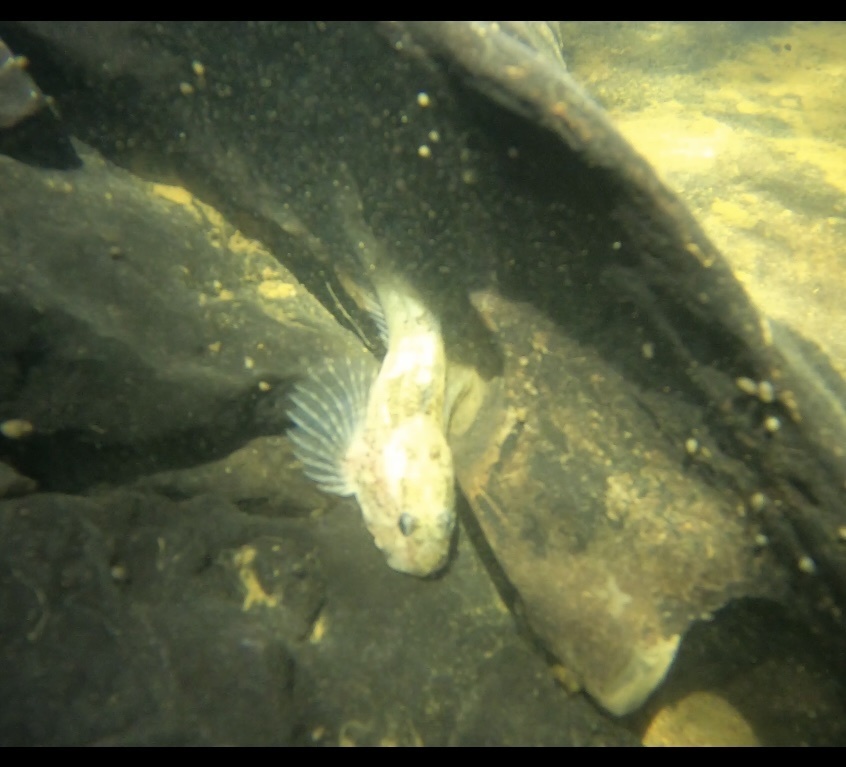
no rights reserved · CC0
Family: Cottidae · Class: Actinopterygii · Order: Perciformes
Cottus klamathensis (Marbled sculpin) is a California animal in the Cottidae family.
The marbled sculpin is a small freshwater fish endemic to the Klamath River basin in northern California and southern Oregon. Adults typically measure 60 to 100 mm (2.4 to 3.9 inches) in total length, with a robust, laterally compressed body. The species exhibits mottled brown and gray coloration with darker bands across the body, providing effective camouflage against rocky substrates. The head is broad and flattened, comprising approximately one-third of the total body length, with large pectoral fins that are well-adapted for life in fast-flowing waters. Males develop enlarged heads and more pronounced coloration during breeding season. Historically, the marbled sculpin occurred throughout tributaries of the Klamath River system, including the Shasta, Scott, and Salmon rivers in Siskiyou County, California. The species also inhabits portions of the upper Klamath River basin in Oregon. Current distribution appears more fragmented than historically, with populations concentrated in higher elevation streams that maintain suitable water quality and habitat conditions. Marbled sculpins inhabit cool, clear mountain streams with rocky or cobble substrates at elevations ranging from 300 to 1,500 meters (1,000 to 4,900 feet). They prefer areas with moderate to swift current and high dissolved oxygen levels, typically found in riffles and pools with abundant cover provided by boulders, undercut banks, and woody debris. Water temperatures in occupied habitat generally remain below 20°C (68°F) during summer months. The species is a benthic predator, feeding primarily on aquatic invertebrates including mayfly nymphs, caddisfly larvae, stonefly nymphs, and chironomid larvae. Adults are largely sedentary, occupying specific territories among rocks and logs. Spawning occurs from February through May, with males preparing nests under large rocks or in crevices. Females deposit clutches of 100 to 400 adhesive eggs, which males guard until hatching occurs after 4 to 6 weeks. Juvenile sculpins remain in shallow areas with fine substrates before moving to adult habitat. The marbled sculpin faces significant conservation challenges despite lacking formal listing status. Primary threats include habitat degradation from mining activities, particularly gold dredging operations that disturb streambed substrates essential for reproduction and feeding. Water diversions and dam construction have altered natural flow regimes and blocked migration corridors. Climate change poses additional risks through increased water temperatures and altered precipitation patterns that may reduce suitable habitat. Sedimentation from logging and agricultural practices degrades water quality and fills interstitial spaces in rocky substrates that the species requires. Population monitoring is limited, making it difficult to assess current trends, though anecdotal reports suggest declines in some watersheds where mining and water development have been most intensive.
Classification
Class: Actinopterygii · Order: Perciformes · Family: Cottidae
Frequently asked questions
How is Cottus klamathensis classified?
Cottus klamathensis belongs to class Actinopterygii, order Perciformes, family Cottidae.
What family does Cottus klamathensis belong to?
Cottus klamathensis is in the Cottidae family.
What is Cottus klamathensis?
The marbled sculpin is a small freshwater fish endemic to the Klamath River basin in northern California and southern Oregon.
Is Cottus klamathensis found in California?
Yes. Cottus klamathensis is recorded in California in The California Species Project's catalogue.
Related species
Other California species in the same genus, family, or bioregion.
Data from The California Species Project — 14,000+ California species with verified data from CNPS, CDFW, USFWS, and more.