Cottus klamathensis macrops
Bigeye marbled sculpin
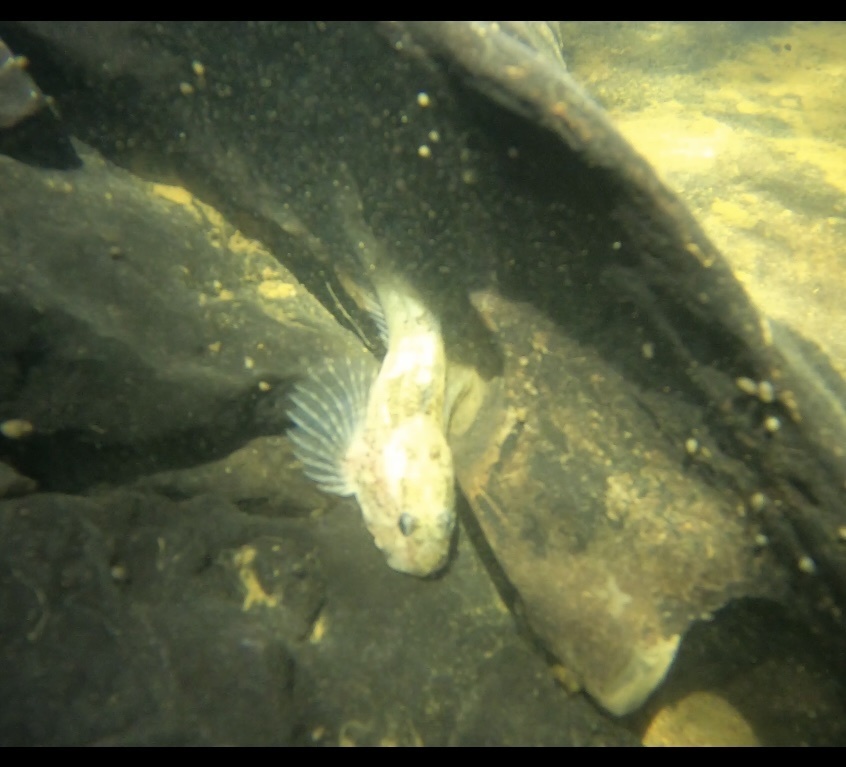
no rights reserved · CC0
Family: Cottidae · Class: Actinopterygii · Order: Perciformes
Conservation status: G4T3 S2S3
Cottus klamathensis macrops (Bigeye marbled sculpin) is a California animal in the Cottidae family.
The bigeye marbled sculpin (Cottus klamathensis macrops) is a subspecies of the marbled sculpin, a small freshwater fish in the family Cottidae. This sculpin is characterized by its notably enlarged eyes relative to other marbled sculpin populations, which gives the subspecies its common name. Adults typically reach 75 to 100 mm (3.0 to 3.9 inches) in total length. The body is elongated and laterally compressed, with a large, flattened head comprising approximately one-third of the total body length. Coloration consists of mottled brown and gray patterns that provide camouflage against rocky substrates. The pectoral fins are large and fan-shaped, adapted for maintaining position in flowing water. The bigeye marbled sculpin has a highly restricted range within the upper Klamath River basin in northern California and southern Oregon. In California, populations are documented in tributaries of the Klamath River system, primarily in Siskiyou County. The subspecies occupies headwater streams and their immediate tributaries at elevations ranging from 900 to 1,800 meters (2,950 to 5,900 feet). Historical records suggest the range may have been more extensive, but current populations are fragmented and limited to specific watershed areas. This subspecies inhabits clear, cold mountain streams with rocky or gravel substrates. Preferred habitat features include areas with moderate to swift current, water temperatures below 20°C (68°F), and abundant cover provided by boulders, undercut banks, and woody debris. Stream gradients typically range from 2 to 8 percent. The species requires high water quality with dissolved oxygen levels above 7 mg/L and minimal sedimentation. Riparian canopy cover is important for maintaining cool water temperatures and providing terrestrial insect inputs. Bigeye marbled sculpins are benthic predators that feed primarily on aquatic invertebrates including mayfly nymphs, caddisfly larvae, midge larvae, and small crustaceans. Adults are largely sedentary, occupying specific territories beneath rocks or in crevices. Spawning occurs from March through May when water temperatures reach 8 to 12°C (46 to 54°F). Males establish nesting sites under large rocks or in cavities, where females deposit 50 to 200 adhesive eggs. Males guard the nest until eggs hatch after 4 to 6 weeks. Juveniles remain in shallow, low-velocity areas for their first year. The bigeye marbled sculpin has a NatureServe global rank of G4T3, indicating the subspecies is vulnerable to extirpation. In California, the rank of S2S3 reflects imperiled to vulnerable status within the state. Primary threats include habitat degradation from logging activities, cattle grazing, water diversions, and sedimentation. Climate change poses additional risks through increased water temperatures and altered precipitation patterns. Stream channelization and removal of riparian vegetation have degraded habitat quality in some watersheds. The subspecies' limited range and small population sizes make it particularly susceptible to environmental disturbances and genetic isolation.
Classification
Class: Actinopterygii · Order: Perciformes · Family: Cottidae
Conservation status
G4T3 S2S3
Frequently asked questions
How is Cottus klamathensis macrops classified?
Cottus klamathensis macrops belongs to class Actinopterygii, order Perciformes, family Cottidae.
What family does Cottus klamathensis macrops belong to?
Cottus klamathensis macrops is in the Cottidae family.
Is Cottus klamathensis macrops protected or of conservation concern?
Cottus klamathensis macrops carries the following status: G4T3 S2S3.
What is Cottus klamathensis macrops?
The bigeye marbled sculpin (Cottus klamathensis macrops) is a subspecies of the marbled sculpin, a small freshwater fish in the family Cottidae.
Is Cottus klamathensis macrops found in California?
Yes. Cottus klamathensis macrops is recorded in California in The California Species Project's catalogue.
Related species
Other California species in the same genus, family, or bioregion.
Data from The California Species Project — 14,000+ California species with verified data from CNPS, CDFW, USFWS, and more.