Cottus klamathensis polyporus
Lower Klamath marbled sculpin
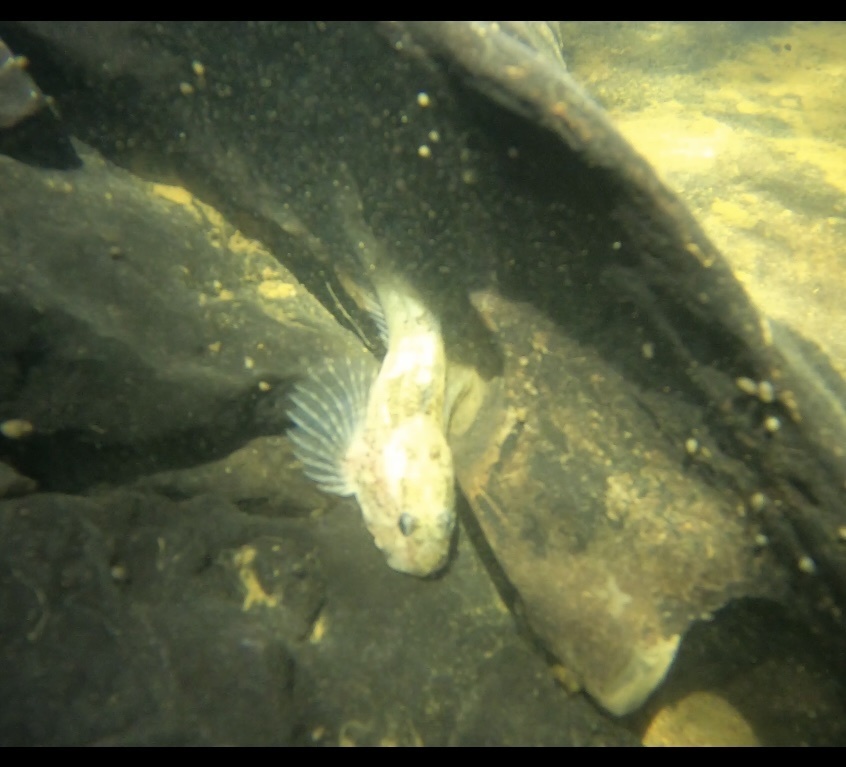
no rights reserved · CC0
Family: Cottidae · Class: Actinopterygii · Order: Perciformes
Conservation status: G4T2T4 S2S4
Cottus klamathensis polyporus (Lower Klamath marbled sculpin) is a California animal in the Cottidae family.
The Lower Klamath marbled sculpin (Cottus klamathensis polyporus) is a small freshwater fish subspecies in the family Cottidae. This sculpin typically measures 50 to 100 mm (2.0 to 3.9 inches) in total length. The body exhibits a mottled brown and gray coloration with irregular dark markings that provide effective camouflage against rocky substrates. The head is broad and flattened with large pectoral fins and a tapering body toward the tail. Like other sculpins, it lacks scales and has a smooth, somewhat slimy skin surface. This subspecies is endemic to the lower Klamath River basin in northern California and southern Oregon. The range extends from the mainstem Klamath River downstream of Iron Gate Dam to the river's mouth, including tributary streams within this watershed. Historical distributions may have been more extensive before dam construction altered riverine connectivity. The subspecies occupies portions of Siskiyou and Humboldt counties in California. Lower Klamath marbled sculpin inhabit cool, well-oxygenated waters with rocky or gravel substrates. They prefer areas with moderate to swift current and are typically found in riffles, runs, and shallow pools of streams and rivers. Water temperatures in occupied habitats generally remain below 20°C (68°F) during summer months. The species requires clean gravel and cobble substrates for spawning and juvenile development, as well as overhead cover provided by rocks, logs, or undercut banks. These sculpins are benthic predators that feed primarily on aquatic invertebrates including mayfly nymphs, caddisfly larvae, chironomid larvae, and small crustaceans. Adults are largely sedentary and territorial, typically remaining within small home ranges. Spawning occurs in late winter or early spring when males establish territories under rocks or in crevices. Females deposit adhesive eggs in clusters, which males guard until hatching. Juveniles remain in shallow, protected areas before moving to deeper waters as they mature. The subspecies carries conservation significance with a global rank of G4T2T4 and California state rank of S2S4, indicating moderate vulnerability to extinction. Population trends are not well documented, but potential threats include habitat degradation from agricultural runoff, logging activities, water diversions, and altered flow regimes from upstream dams. Climate change may further stress populations through increased water temperatures and modified precipitation patterns affecting stream flows. The Klamath River basin has experienced significant ecological changes due to dam construction, water management, and land use practices that have affected native fish communities. Water quality issues, including algal blooms and temperature increases in the lower river, pose ongoing challenges. Conservation efforts focus on habitat restoration, water quality improvement, and fish passage enhancement projects throughout the Klamath basin.
Classification
Class: Actinopterygii · Order: Perciformes · Family: Cottidae
Conservation status
G4T2T4 S2S4
Frequently asked questions
How is Cottus klamathensis polyporus classified?
Cottus klamathensis polyporus belongs to class Actinopterygii, order Perciformes, family Cottidae.
What family does Cottus klamathensis polyporus belong to?
Cottus klamathensis polyporus is in the Cottidae family.
Is Cottus klamathensis polyporus protected or of conservation concern?
Cottus klamathensis polyporus carries the following status: G4T2T4 S2S4.
What is Cottus klamathensis polyporus?
The Lower Klamath marbled sculpin (Cottus klamathensis polyporus) is a small freshwater fish subspecies in the family Cottidae.
Is Cottus klamathensis polyporus found in California?
Yes. Cottus klamathensis polyporus is recorded in California in The California Species Project's catalogue.
Related species
Other California species in the same genus, family, or bioregion.
Data from The California Species Project — 14,000+ California species with verified data from CNPS, CDFW, USFWS, and more.