Cottus perplexus
Reticulate sculpin
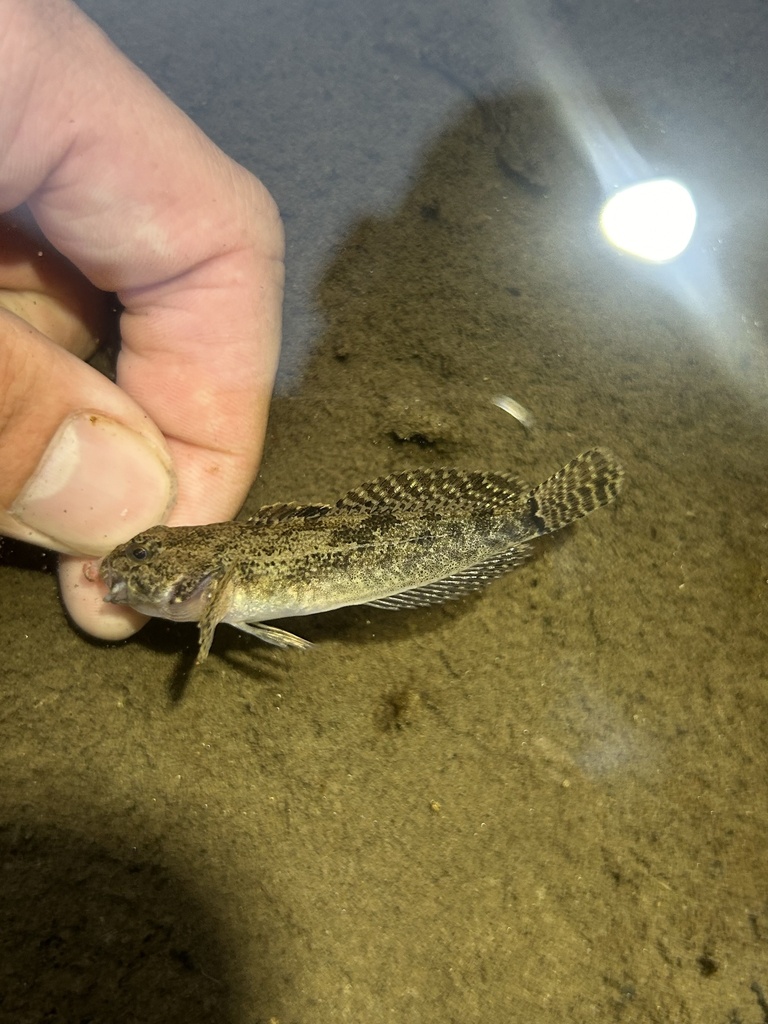
(c) James-LaFontaine, some rights reserved (CC BY) · licence
Family: Cottidae · Class: Actinopterygii · Order: Perciformes
Conservation status: G4 S2S3
Cottus perplexus (Reticulate sculpin) is a California animal in the Cottidae family.
The reticulate sculpin (Cottus perplexus) is a small freshwater fish belonging to the family Cottidae. Adults typically measure 75 to 100 mm (3.0 to 3.9 inches) in total length, with a robust, laterally compressed body that tapers toward a narrow caudal peduncle. The species displays a distinctive reticulate pattern of dark brown or black markings against a lighter brown or olive background, which gives the fish its common name. The head is broad and flattened, comprising approximately one-third of the total body length, with prominent eyes positioned dorsally. Two dorsal fins are present, with the first containing 7 to 9 spines and the second having 16 to 19 soft rays. The pectoral fins are large and fan-shaped, extending nearly to the anal fin origin. Reticulate sculpin are endemic to California, occurring in coastal drainages from the Russian River system in Sonoma County south to the Salinas River system in Monterey County. The species historically occupied tributaries of San Francisco Bay, including streams in Marin, San Francisco, San Mateo, and Santa Clara counties. Current populations are documented in the Russian River, Napa River, Petaluma River, and several smaller coastal streams. The species has been extirpated from many urban watersheds within its historical range. This sculpin inhabits cool, clear streams and creeks with rocky or gravelly substrates. Preferred habitat includes pools, runs, and riffles with moderate to swift current velocity and water temperatures typically below 20°C (68°F). The species requires well-oxygenated water and is often found in areas with overhanging vegetation or undercut banks that provide cover. Elevation range extends from near sea level to approximately 400 meters (1,312 feet) in foothill streams. Reticulate sculpin are benthic predators that feed primarily on aquatic invertebrates, including mayfly nymphs, caddisfly larvae, chironomid larvae, and small crustaceans. Adults are territorial and largely sedentary, remaining within a small home range throughout their lives. Spawning occurs from late winter through early spring, typically between February and April when water temperatures reach 10 to 15°C (50 to 59°F). Males prepare nests under rocks or logs, where females deposit 100 to 300 adhesive eggs. Males guard the nest and fan the eggs until hatching occurs after 3 to 4 weeks. The reticulate sculpin has a global rank of G4 (apparently secure globally) but a California state rank of S2S3 (imperiled to vulnerable), reflecting significant population declines within its limited range. Primary threats include habitat degradation from urbanization, agricultural practices, water diversions, and sedimentation. Stream channelization and removal of riparian vegetation have eliminated suitable habitat in many watersheds. Climate change poses additional risks through altered precipitation patterns and increased water temperatures that exceed the species' thermal tolerance.
Classification
Class: Actinopterygii · Order: Perciformes · Family: Cottidae
Conservation status
G4 S2S3
Frequently asked questions
How is Cottus perplexus classified?
Cottus perplexus belongs to class Actinopterygii, order Perciformes, family Cottidae.
What family does Cottus perplexus belong to?
Cottus perplexus is in the Cottidae family.
Is Cottus perplexus protected or of conservation concern?
Cottus perplexus carries the following status: G4 S2S3.
What is Cottus perplexus?
The reticulate sculpin (Cottus perplexus) is a small freshwater fish belonging to the family Cottidae.
Is Cottus perplexus found in California?
Yes. Cottus perplexus is recorded in California in The California Species Project's catalogue.
Related species
Other California species in the same genus, family, or bioregion.
Data from The California Species Project — 14,000+ California species with verified data from CNPS, CDFW, USFWS, and more.