Cottus pitensis
Pit sculpin
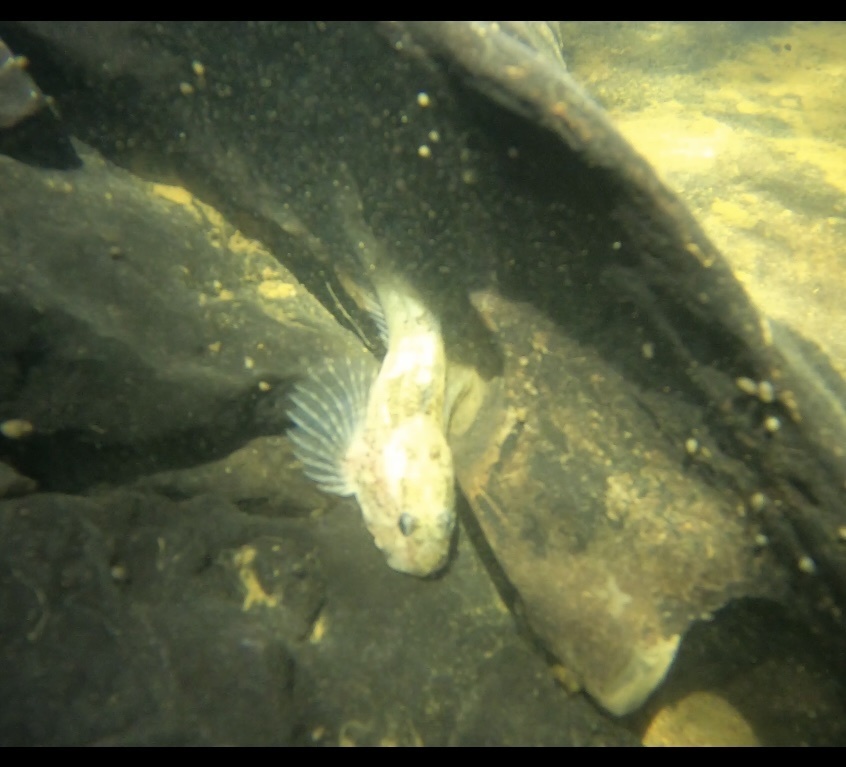
no rights reserved · CC0
Family: Cottidae · Class: Actinopterygii · Order: Perciformes
Cottus pitensis (Pit sculpin) is a California animal in the Cottidae family.
The pit sculpin (Cottus pitensis) is a small freshwater fish endemic to the Pit River drainage system in northeastern California. Adults typically measure 50 to 100 mm (2.0 to 3.9 inches) in total length, with a robust, cylindrical body that tapers toward the caudal peduncle. The species exhibits the characteristic sculpin morphology with a broad, flattened head comprising approximately 25% of the total body length, large pectoral fins, and eyes positioned on the dorsal surface. Coloration consists of mottled brown and gray patterns that provide camouflage against rocky substrates, with darker vertical bars along the sides and lighter ventral surfaces. The pit sculpin is restricted to the Pit River system within the upper Sacramento River basin in Modoc, Lassen, and Shasta counties, California. This drainage encompasses approximately 13,000 square kilometers and includes tributaries such as the South Fork Pit River, Burney Creek, and Hat Creek. The species occurs at elevations ranging from 610 to 1,370 meters (2,000 to 4,500 feet) throughout this montane watershed. Habitat requirements include cool, clear streams and rivers with rocky or gravelly substrates and moderate to swift current velocities. Pit sculpins prefer areas with abundant cover provided by boulders, cobble, and undercut banks. Water temperatures typically remain below 20°C (68°F) during summer months, with the species showing sensitivity to thermal pollution and habitat degradation. Pool-riffle sequences and areas with interstitial spaces in the substrate are essential for foraging and reproduction. Pit sculpins are benthic predators that feed primarily on aquatic invertebrates including mayfly nymphs, caddisfly larvae, chironomid larvae, and small crustaceans. Adults are largely sedentary, occupying territories under rocks and logs from which they ambush prey. Reproduction occurs from March through June, with males establishing and defending nesting sites under large rocks or in crevices. Females deposit 200 to 800 adhesive eggs in clusters, which males guard until hatching occurs after 4 to 6 weeks. Juveniles remain in shallow, protected areas with fine substrates before moving to adult habitats. The pit sculpin currently maintains stable populations throughout most of its range, with no federal or state listing status. The species benefits from the relatively pristine condition of much of the Pit River system, particularly in headwater areas within national forest lands. However, localized threats include habitat modification from water diversions, livestock grazing impacts on riparian vegetation, and potential climate change effects on stream temperatures and flows. The species' restricted range makes it vulnerable to large-scale disturbances such as wildfire or extended drought periods. Continued monitoring and habitat protection measures are important for maintaining viable populations of this endemic California sculpin.
Classification
Class: Actinopterygii · Order: Perciformes · Family: Cottidae
Frequently asked questions
How is Cottus pitensis classified?
Cottus pitensis belongs to class Actinopterygii, order Perciformes, family Cottidae.
What family does Cottus pitensis belong to?
Cottus pitensis is in the Cottidae family.
What is Cottus pitensis?
The pit sculpin (Cottus pitensis) is a small freshwater fish endemic to the Pit River drainage system in northeastern California.
Is Cottus pitensis found in California?
Yes. Cottus pitensis is recorded in California in The California Species Project's catalogue.
Related species
Other California species in the same genus, family, or bioregion.
Data from The California Species Project — 14,000+ California species with verified data from CNPS, CDFW, USFWS, and more.