Coturnicops noveboracensis
Yellow Rail
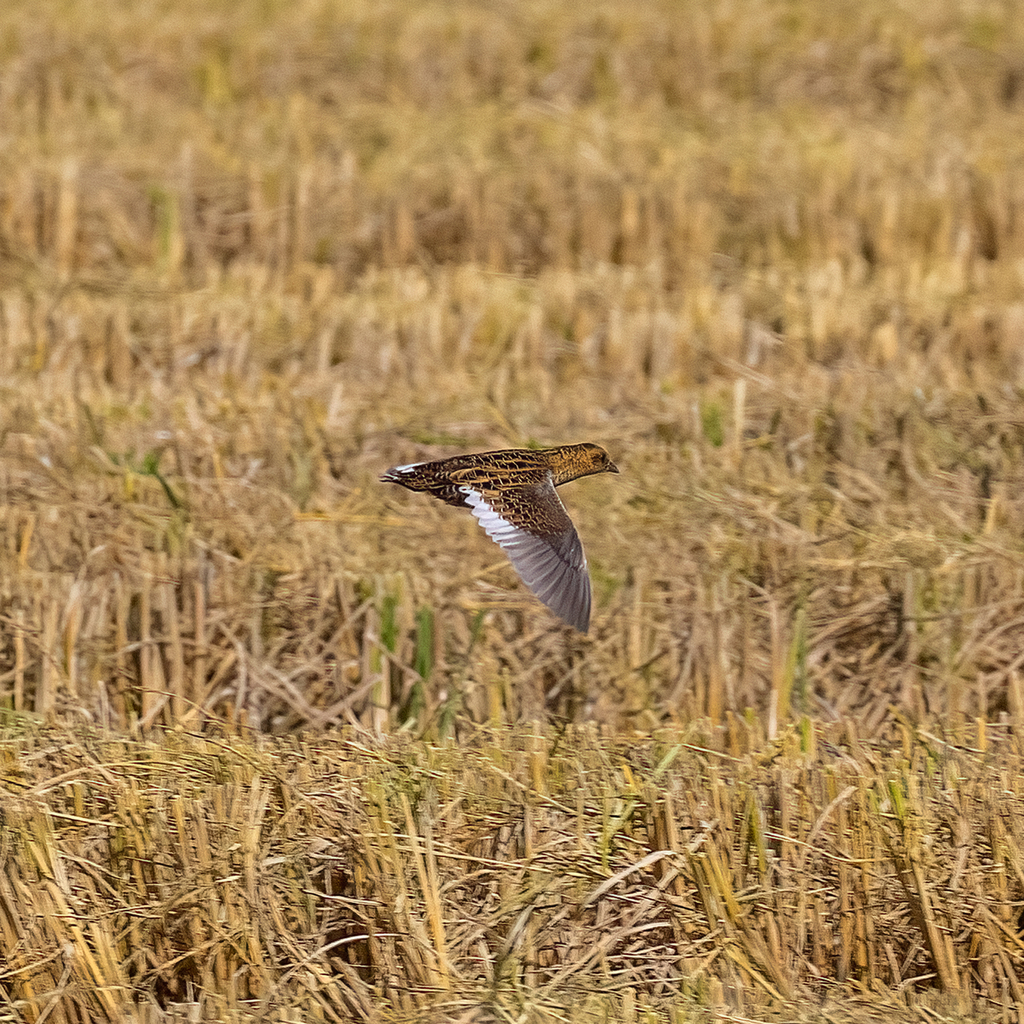
(c) Dan Vickers, some rights reserved (CC BY) · licence
Family: Rallidae · Class: Aves · Order: Gruiformes
Conservation status: G4 S2
Coturnicops noveboracensis (Yellow Rail) is a California animal in the Rallidae family.
The Yellow Rail is a small, secretive marsh bird measuring 15 to 19 cm (6 to 7.5 inches) in length with a wingspan of 28 to 35 cm (11 to 14 inches). Adults weigh 40 to 55 grams (1.4 to 1.9 ounces). The upperparts display a distinctive pattern of dark brown and black streaks alternating with buff and white stripes. The underparts are pale buff to yellowish-white with darker barring on the flanks. The short, yellow-orange bill is slightly decurved, and the legs are yellowish-green. In flight, the species shows distinctive white patches on the trailing edge of the wings, a key field mark distinguishing it from other rail species. Males and females appear similar, though males may be slightly larger. Historically, Yellow Rails bred across much of northern North America from southern Canada to the northern United States. The species currently maintains a patchy distribution, with breeding populations concentrated in the Prairie Pothole Region, Great Lakes states, and eastern Canada. In California, Yellow Rails are extremely rare visitors, with documented occurrences primarily during migration periods. Records exist from scattered locations including the San Francisco Bay Area, Central Valley, and coastal regions. The species' California status reflects its position at the extreme western edge of its continental range. Yellow Rails inhabit shallow wetlands dominated by emergent vegetation, particularly sedge meadows, wet prairies, and the margins of shallow ponds and marshes. They prefer areas with water depths of 2 to 15 cm (0.8 to 6 inches) and dense overhead cover provided by sedges, rushes, and grasses. The species shows strong affinity for wetlands with Carex species and other fine-leaved sedges. During migration, individuals may use temporarily flooded grasslands and agricultural areas adjacent to wetland complexes. Yellow Rails are primarily crepuscular and nocturnal, remaining hidden in dense vegetation during daylight hours. Their diet consists mainly of small invertebrates including beetles, flies, snails, and spiders, supplemented by seeds of wetland plants. The species walks deliberately through shallow water, picking prey from vegetation and water surface. Breeding occurs from May through July, with females constructing platform nests of woven grasses and sedges elevated slightly above water level. Clutch size ranges from 6 to 12 eggs, with an average of 8 to 10. The distinctive call, described as resembling two stones tapped together in groups of five, is often the only indication of the species' presence. The Yellow Rail holds a Global rank of G4 (apparently secure) but is ranked S2 (imperiled) in California, reflecting its rarity in the state. While not federally listed, the species faces significant conservation challenges throughout its range due to wetland loss and degradation. According to the North American Bird Conservation Initiative, Yellow Rail populations have declined substantially over recent decades, with breeding habitat loss estimated at over 50 percent since European settlement. In California, the species' extreme rarity makes it a conservation concern despite its lack of formal protection status. Climate change poses additional threats through altered precipitation patterns affecting wetland hydrology and seasonal flooding cycles.
Classification
Class: Aves · Order: Gruiformes · Family: Rallidae
Conservation status
G4 S2
Frequently asked questions
How is Coturnicops noveboracensis classified?
Coturnicops noveboracensis belongs to class Aves, order Gruiformes, family Rallidae.
What family does Coturnicops noveboracensis belong to?
Coturnicops noveboracensis is in the Rallidae family.
Is Coturnicops noveboracensis protected or of conservation concern?
Coturnicops noveboracensis carries the following status: G4 S2.
What is Coturnicops noveboracensis?
The Yellow Rail is a small, secretive marsh bird measuring 15 to 19 cm (6 to 7.5 inches) in length with a wingspan of 28 to 35 cm (11 to 14 inches).
Is Coturnicops noveboracensis found in California?
Yes. Coturnicops noveboracensis is recorded in California in The California Species Project's catalogue.
Related species
Other California species in the same genus, family, or bioregion.
Data from The California Species Project — 14,000+ California species with verified data from CNPS, CDFW, USFWS, and more.