Crabro latipes
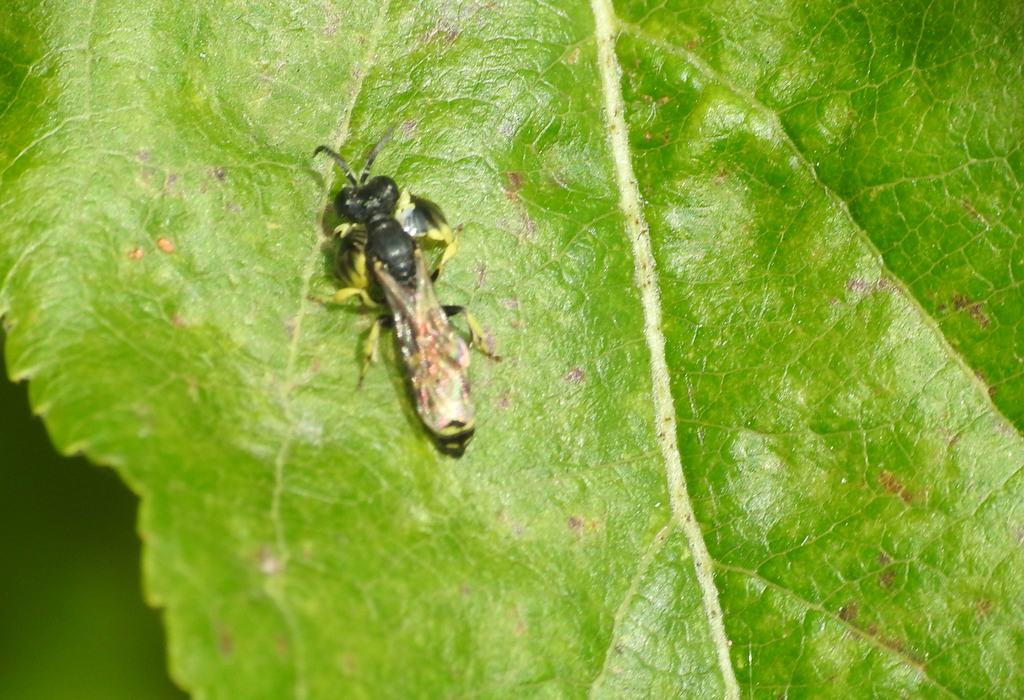
(c) Pete Lypkie, some rights reserved (CC BY) · licence
Family: Crabronidae · Class: Insecta · Order: Hymenoptera
Crabro latipes is a California animal in the Crabronidae family.
Crabro latipes is a solitary wasp species in the family Crabronidae, subfamily Crabroninae. This species belongs to a diverse group of predatory wasps commonly known as square-headed wasps or sand wasps. Adult specimens typically measure 8-12 mm in length, with females generally larger than males. The body exhibits the characteristic robust build of crabronid wasps, with a relatively large head compared to body size and well-developed mandibles adapted for prey capture and nest excavation. Crabro latipes has a broad distribution across North America, with documented occurrences from Alaska south through much of the continental United States. According to the U.S. Fish and Wildlife Service taxonomic database, this species is tracked within federal wildlife monitoring systems, though specific population data remains limited. In California, the species likely occurs in suitable habitat throughout much of the state, though detailed distributional records are sparse. This wasp species inhabits diverse terrestrial environments, typically favoring areas with sandy or loose soil suitable for nest construction. Adults are commonly found in open woodlands, forest edges, meadows, and riparian areas where prey insects are abundant. The species shows preference for sunny locations with exposed soil banks or gentle slopes where females can excavate nesting burrows. Elevation ranges and specific microhabitat requirements have not been comprehensively documented for this species. Like other members of the genus Crabro, C. latipes exhibits solitary nesting behavior. Females construct individual burrows in sandy soil, typically 10-20 cm deep with one or more brood chambers. The species is a specialist predator, primarily hunting small flies (Diptera) which are paralyzed with venom and provisioned as food for developing larvae. Hunting females patrol vegetation and flowers where they capture prey using their powerful mandibles. After paralysis, prey items are transported to the nest burrow and stored in brood cells alongside single eggs. Adults are active during warm months, with peak activity typically occurring from late spring through early fall. Males emerge slightly earlier than females and engage in territorial behavior around nesting sites. Crabro latipes currently has no formal conservation status designation at federal or state levels. NatureServe lists the species' global conservation status as GNR (Global Status Not Ranked), indicating insufficient data for comprehensive assessment. Like many native solitary wasps, populations may face localized threats from habitat loss, pesticide applications, and changes in prey availability. The species' apparent broad distribution suggests overall population stability, though specific population trends have not been systematically monitored. Climate change and urbanization may impact suitable nesting habitat in some regions, but comprehensive threat assessments have not been conducted. Additional research is needed to better understand this species' ecological requirements, population status, and potential conservation needs across its range.
Classification
Class: Insecta · Order: Hymenoptera · Family: Crabronidae
Frequently asked questions
How is Crabro latipes classified?
Crabro latipes belongs to class Insecta, order Hymenoptera, family Crabronidae.
What family does Crabro latipes belong to?
Crabro latipes is in the Crabronidae family.
What is Crabro latipes?
Crabro latipes is a solitary wasp species in the family Crabronidae, subfamily Crabroninae.
Is Crabro latipes found in California?
Yes. Crabro latipes is recorded in California in The California Species Project's catalogue.
Related species
Other California species in the same genus, family, or bioregion.
Data from The California Species Project — 14,000+ California species with verified data from CNPS, CDFW, USFWS, and more.