Crambus cypridalis
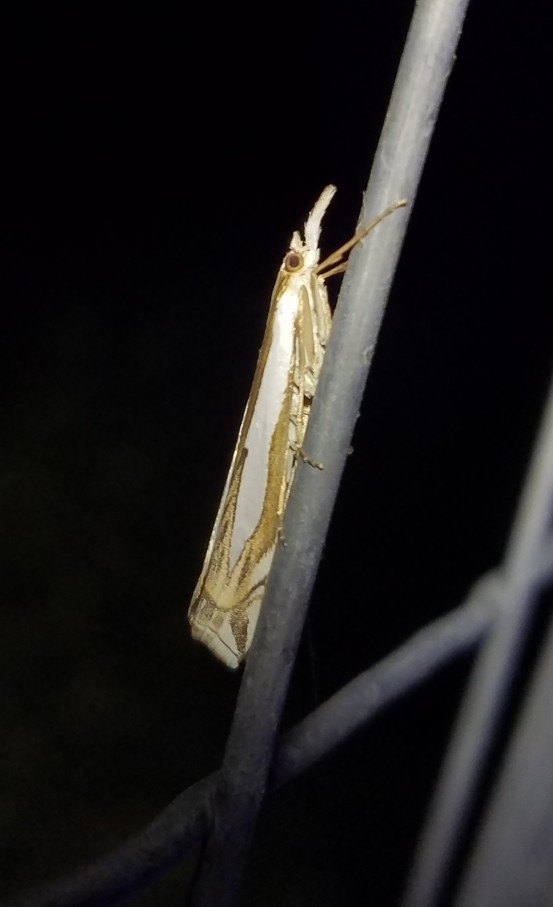
(c) RJ Baltierra, some rights reserved (CC BY) · licence
Family: Crambidae · Class: Insecta · Order: Lepidoptera
Crambus cypridalis is a California animal in the Crambidae family.
Crambus cypridalis is a small moth in the family Crambidae, commonly known as grass moths or snout moths. This species belongs to the genus Crambus, which comprises numerous small moths typically associated with graminoid vegetation. Adults display the characteristic features of crambid moths, with narrow forewings held close to the body at rest, giving them an elongated appearance. The forewings are typically pale brown to grayish-brown with subtle darker markings and pale longitudinal streaks. The hindwings are generally lighter in coloration, often whitish or pale gray. The moths have prominent labial palps that project forward, creating the distinctive "snout" appearance characteristic of many Crambidae species. The distribution of Crambus cypridalis in California is not well-documented in current literature, and comprehensive range data for this species remains limited. Many Crambus species have restricted distributions and may be endemic to specific geographic regions or habitat types. Without detailed survey data, the precise range of C. cypridalis within California cannot be definitively established. The species may occur in localized populations associated with specific host plant communities or microhabitats. Habitat requirements for Crambus cypridalis likely follow the general pattern observed in other Crambus species, which typically inhabit grasslands, meadows, and areas with abundant graminoid vegetation. These moths are generally associated with open or semi-open habitats where their larval host plants occur. The larvae of most Crambus species are stem borers or root feeders in grasses and sedges, creating tunnels within the plant tissue. Adults are typically active during warmer months and are attracted to artificial lights at night. The life cycle of Crambus cypridalis likely follows the typical crambid pattern, with larvae developing within grass stems or roots. Females deposit eggs on or near host plants, and the resulting larvae bore into plant tissues where they complete development. Pupation may occur within the larval tunnel or in nearby soil. Adults emerge to mate and continue the cycle, with timing dependent on local climate conditions and host plant phenology. Many Crambus species are univoltine, producing one generation per year, though some may have multiple generations in favorable conditions. The conservation status of Crambus cypridalis is not well-established, as comprehensive population assessments have not been conducted for this species. Like many specialized moths, this species may face threats from habitat loss, fragmentation, and changes in land use practices that affect native grassland communities. The conversion of natural grasslands to agricultural or urban uses can eliminate both larval host plants and adult habitat. Climate change may also affect the distribution and abundance of this species through altered precipitation patterns and temperature regimes that influence both the moth and its host plants. Without dedicated surveys and research, the current population status and conservation needs of Crambus cypridalis remain uncertain.
Classification
Class: Insecta · Order: Lepidoptera · Family: Crambidae
Frequently asked questions
How is Crambus cypridalis classified?
Crambus cypridalis belongs to class Insecta, order Lepidoptera, family Crambidae.
What family does Crambus cypridalis belong to?
Crambus cypridalis is in the Crambidae family.
What is Crambus cypridalis?
Crambus cypridalis is a small moth in the family Crambidae, commonly known as grass moths or snout moths.
Is Crambus cypridalis found in California?
Yes. Crambus cypridalis is recorded in California in The California Species Project's catalogue.
Related species
Other California species in the same genus, family, or bioregion.
Data from The California Species Project — 14,000+ California species with verified data from CNPS, CDFW, USFWS, and more.