Crambus rickseckerellus
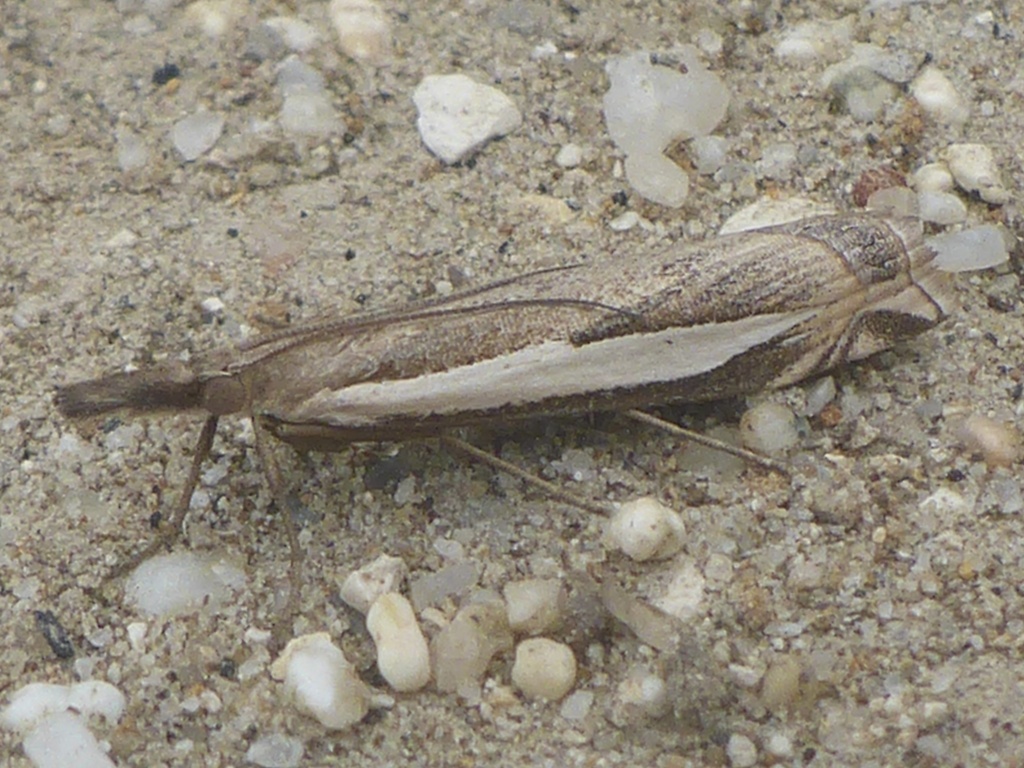
(c) Cricket Raspet, some rights reserved (CC BY) · licence
Family: Crambidae · Class: Insecta · Order: Lepidoptera
Crambus rickseckerellus is a California animal in the Crambidae family.
Crambus rickseckerellus is a small moth in the family Crambidae, commonly known as grass moths or snout moths. This species belongs to the genus Crambus, which contains numerous small, cryptically colored moths found throughout North America. Adult moths typically measure 8 to 12 mm in wingspan, displaying the characteristic elongated appearance of crambid moths. The forewings are narrow and typically pale brown to grayish-brown with darker longitudinal streaks and subtle crosslines. The hindwings are lighter in coloration, often whitish or pale gray. When at rest, the wings are held close to the body in a tubular fashion, giving the moth a stick-like appearance that provides effective camouflage against grass stems and plant debris. The current distribution and range of Crambus rickseckerellus remain poorly documented in the scientific literature. Limited collection records suggest the species occurs in western North America, though specific localities and the extent of its California distribution require further investigation. The species may have a restricted range, as many Crambus species exhibit narrow geographic distributions tied to specific host plant communities. Habitat requirements for this species are not well-documented, though members of the genus Crambus typically inhabit grasslands, meadows, and areas with abundant graminoid vegetation. These moths are generally associated with native grass communities and may require specific microhabitat conditions including appropriate soil moisture levels and vegetation structure. Elevation preferences and specific plant community associations for C. rickseckerellus have not been established through published research. The life history and ecological behavior of Crambus rickseckerellus follow the general pattern observed in related species. Adults are nocturnal and are attracted to artificial lights during their flight period. The larvae are root feeders that construct silk-lined tunnels in the soil near the base of host plants, where they feed on grass roots and lower stem portions. Pupation occurs within the larval feeding tunnels or in nearby soil chambers. The species likely has one generation per year, with adults emerging during summer months, though specific flight periods for this species have not been documented. The conservation status of Crambus rickseckerellus is unknown, as insufficient data exist to assess population trends or conservation needs. The species has not been evaluated for federal or state listing status. Many small moth species face threats from habitat loss due to urban development, agricultural conversion, and altered fire regimes that affect native grassland communities. Without detailed knowledge of the species' distribution, abundance, and habitat requirements, it is difficult to assess specific conservation threats or needs. Further research is needed to establish baseline population data, clarify taxonomic status, document habitat preferences, and assess potential conservation concerns for this poorly known species.
Classification
Class: Insecta · Order: Lepidoptera · Family: Crambidae
Frequently asked questions
How is Crambus rickseckerellus classified?
Crambus rickseckerellus belongs to class Insecta, order Lepidoptera, family Crambidae.
What family does Crambus rickseckerellus belong to?
Crambus rickseckerellus is in the Crambidae family.
What is Crambus rickseckerellus?
Crambus rickseckerellus is a small moth in the family Crambidae, commonly known as grass moths or snout moths.
Is Crambus rickseckerellus found in California?
Yes. Crambus rickseckerellus is recorded in California in The California Species Project's catalogue.
Related species
Other California species in the same genus, family, or bioregion.
Data from The California Species Project — 14,000+ California species with verified data from CNPS, CDFW, USFWS, and more.